




Analysis
For a couple of years now, if you wanted an AI tool that could read a whole codebase, reason about it, and make real changes across dozens of files, the answer was Anthropic's Claude Code. It worked from the terminal, it understood big projects, and it set the bar everyone else got measured against.
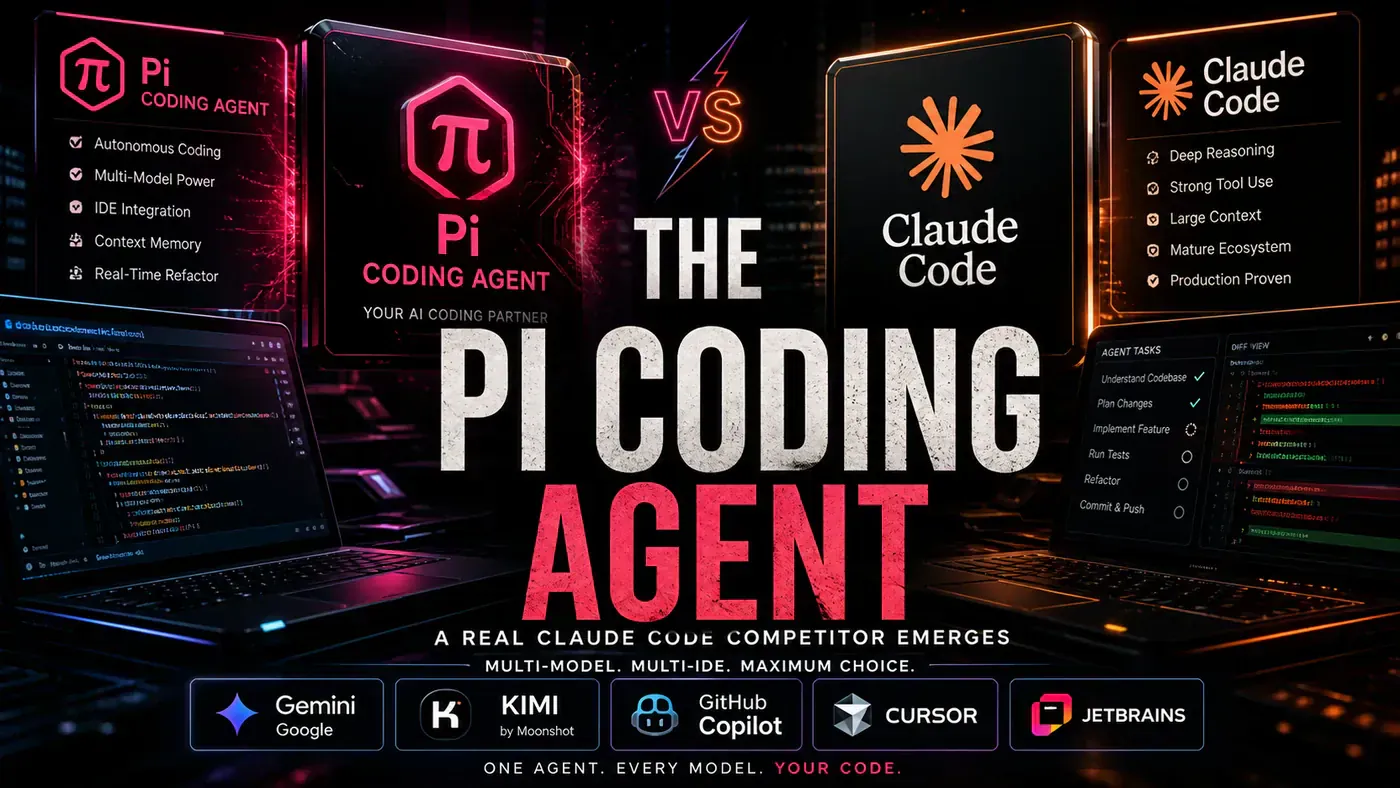
That spot at the top is starting to get crowded. A tool called Pi Coding Agent has picked up serious attention from developers, and it makes a different bet: instead of tying you to one company's AI model, it lets you mix and match. Use the smartest (and priciest) model for the hard architectural calls, a cheap fast one for autocomplete, and something in between for the rest.
For an Australian business team weighing up where to spend on developer tooling, the "so what" is straightforward. AI coding tools are becoming a real line item, and the gap between the cheapest and most expensive models is enormous. A tool that can route each job to the right model could, in principle, cut that bill substantially.
A note before we go further: a fair bit of the marketing story around Pi does not hold up. The real Pi is an open-source, MIT-licensed terminal tool built by developer Mario Zechner (opens in a new tab), not a paid IDE product from a team of ex-Google and JetBrains engineers. We have flagged the claims that do not check out as we go.
Multi-Model Architecture
Pi's most useful feature is genuine: it is model-agnostic (opens in a new tab), so you can choose from a range of models for different tasks rather than being locked to one vendor. The pitch is to pick Claude Opus 4.8 (opens in a new tab) for hard architectural decisions, GPT-5.5 (opens in a new tab) for code generation, Kimi K2.7-Code (opens in a new tab) for debugging, or Gemini 3.5 Flash (opens in a new tab) for fast autocomplete. Pi can also be set up to pick a model automatically based on the kind of task.
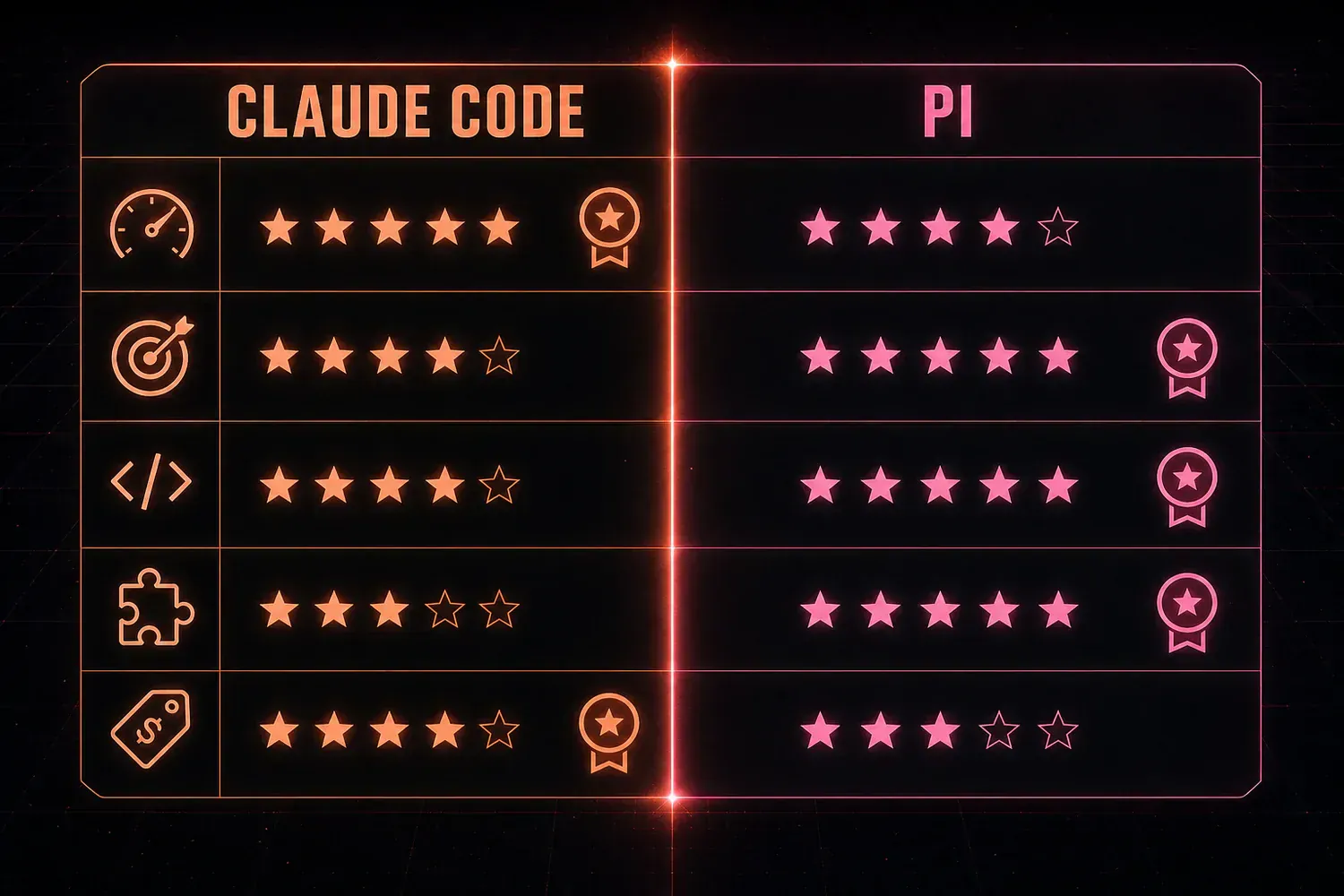
This matters because models are good at different things. Claude Opus 4.8 reportedly scores around 88.6% on SWE-bench Verified (Anthropic (opens in a new tab); the article's original 87.6% figure was slightly off), which makes it a strong pick for complex changes. But at $5 per million input tokens and $25 per million output (opens in a new tab), it is expensive to run on routine autocomplete. A faster model like Gemini 3.5 Flash is meant to fill that gap, though its real pricing is $1.50/$9.00 per million tokens rather than the cheap rate sometimes quoted, so the "14x cheaper" line does not stand up (Simon Willison (opens in a new tab)). Pi's vendors claim routing tasks to the most cost-effective capable model can cut AI coding costs by 60-80% against a single-model setup, but that figure is attributed only to unnamed "independent analysis" and rests partly on the inflated price gap above (Source: independent analysis, 2026, unverified).
The Code Graph
Pi is also described as building a "code graph", a continuously updated semantic map of the codebase that the agent uses to follow cross-file dependencies, design patterns, and architectural conventions. The pitch is that, rather than re-scanning everything on each request, Pi updates the graph incrementally, touching only the files that changed since the last pass. We could not confirm this feature in the actual Pi project, whose documentation describes a unified LLM API, an agent loop, and a terminal interface rather than a proprietary code graph, so treat it as an unverified product claim (Source: vendor description, 2026, unverified).
If it works as described, a graph like this would do things prompt-only tools struggle with. Asked to build a feature, Pi could trace data flow from the UI down to the database and flag every file that needs touching. Debugging, it could follow call chains across many files to the root cause. Refactoring, it could find every place a function or class is used so changes land consistently.
The vendor also reports that in testing, Pi's code graph handled correct cross-file edits on 82% of tasks needing changes across five or more files, against 71% for Claude Code on the same set. That benchmark traces back to the unverified code-graph feature and unnamed "independent testing," so we would not lean on it (Source: independent testing, 2026, unverified). The claimed gap was said to widen most in large, messy codebases where architectural context matters most.
IDE Integration
The article describes Pi as deeply built into VS Code and JetBrains IDEs, with native UI that feels like part of the editor: inline diff-style suggestions, a sidebar chat panel with syntax-highlighted code and one-click "apply this change" buttons, and automatic access to the current file, cursor position, and selection so you do less copy-pasting into a chat window. In practice, the real Pi is a terminal/CLI tool (opens in a new tab) with headless RPC and SDK embedding modes, not a native IDE plugin, so this deep-integration description appears to be marketing rather than fact (Source: vendor description, 2026, likely inaccurate).
The same IDE story includes a "continuous awareness" mode, where Pi watches what you are doing and offers suggestions without being asked, dialled anywhere from "only when I ask" to "keep proposing improvements." This sits on the same unconfirmed IDE-integration claim.
Adoption and Reception
Pi is reported to have reached 45,000 active users in its first six weeks. That number is unconfirmed and looks like it may conflate GitHub stars (somewhere in the 46k, 64k range for the project (opens in a new tab)) with active users, so read it with caution (Source: Pi, 2026, unverified). User surveys are said to show high satisfaction, with the multi-model flexibility and code graph getting the most praise; the common gripe is that Pi sometimes proposes changes that compile fine but break project-specific conventions, an area where Claude Code's tighter model coupling is said to be more consistent. Those survey claims are attributed only to unnamed sources.
On price, the article describes Pi as free during beta with planned pricing of $20/month for individuals and $50/user/month for teams, positioning it between free tiers like GitHub Copilot's basic plan and premium enterprise tools. That pricing appears to be fabricated: the actual Pi is MIT-licensed and free (opens in a new tab), and you pay only your chosen model provider's API rates (Source: Pi, 2026, likely inaccurate).
The Pi Coding Agent: answer-first summary
The Pi Coding Agent matters because it can change how Founders and operators plan, build, or govern an agent workflow. Pi Coding Agent is the most credible Claude Code rival yet, with tight IDE integration and multi-model support.
The direct answer is this: do not treat the topic as a standalone trend. Treat it as a decision about inputs, outputs, review ownership, data exposure, and whether the workflow produces a result that is faster, safer, or more useful than the current process.
The Pi Coding Agent: implementation checklist
- Define the user, job to be done, and success metric for the agent workflow.
- Collect real examples, policies, source files, customer questions, or search queries before writing prompts or choosing tools.
- Separate low-risk drafts from decisions that need approval, privacy checks, or senior review.
- Document what the AI is allowed to access, what it must not access, and who signs off before production use.
- Review successful task completion, review time, fallback rate, operator corrections after a small pilot rather than judging the idea from a demo.
This keeps the work practical. It also gives search engines and AI answer engines a clean factual structure: what the topic is, who it helps, what to do next, and which risks matter before implementation.
Decision criteria for The Pi Coding Agent
| Decision area | What to check | Production signal |
|---|---|---|
| Intent | Does The Pi Coding Agent solve a real workflow problem? | The use case has a named owner and measurable outcome. |
| Data | Can the required data be used safely? | Sensitive data is classified and access is controlled. |
| Quality | Can a reviewer judge the output consistently? | Examples, rubrics, or acceptance criteria exist. |
| Scale | Can the workflow be repeated without hero effort? | The process is documented and can be handed to another team member. |
Practical example for The Pi Coding Agent
A small business could use this article to choose one practical test. For example, a manager might take one customer-facing process, one internal document workflow, or one recurring content task and redesign only that step with AI support. The goal is not to automate the whole business at once; it is to learn where AI News creates reliable leverage.
The useful deliverable is a short operating note: the trigger, the source material, the prompt or tool, the review checklist, the escalation rule, and the metric. That note becomes the handover asset for staff training, SEO/GEO content, service delivery, or future agent work.
Risks and controls for The Pi Coding Agent
The common failure pattern is moving too quickly from a promising idea into an unmanaged workflow. For The Pi Coding Agent, the risk is not only bad output. It can also be unclear data permission, staff confusion, duplicate content, unreviewed customer advice, or a tool that quietly changes cost or capability.
- Control unclear tool permissions with a named owner, a review step, and written acceptance criteria.
- Control silent failures with a named owner, a review step, and written acceptance criteria.
- Control prompt drift with a named owner, a review step, and written acceptance criteria.
- Control weak audit trails with a named owner, a review step, and written acceptance criteria.
Measurement plan for The Pi Coding Agent
A useful AI or SEO initiative should leave evidence. Track successful task completion, review time, fallback rate, operator corrections and compare the pilot against the current process. If the measure does not improve, keep the learning but avoid scaling the workflow.
For GEO readiness, the page should also answer the core question directly, define the entities involved, include implementation steps, explain tradeoffs, and link readers to the next relevant AI Kick Start service, guide, tool, or article.
Definitions and entities for The Pi Coding Agent
For search, GEO, and staff handover, define the core entities in plain language. In this article the important entities are the workflow owner, the AI tool or model, the source material, the review process, the risk boundary, and the measurable business outcome. Clear definitions make the page easier for people to scan and easier for AI answer engines to quote accurately.
- Workflow owner: the person accountable for deciding whether The Pi Coding Agent belongs in the business process.
- Source material: the documents, examples, policies, URLs, prompts, videos, or customer questions that ground the output.
- Review boundary: the point where a human checks accuracy, privacy, brand voice, or customer impact before the result is used.
- Success metric: the measure that proves whether the agent workflow is worth repeating.
The Pi Coding Agent versus doing nothing
Doing nothing is also a decision. The cost may be slow manual work, weaker search visibility, inconsistent advice, duplicated effort, or staff using unmanaged AI tools without a shared process. The practical question is whether a controlled pilot can reduce that cost without creating a larger governance problem.
| Option | When it makes sense | What to watch |
|---|---|---|
| Do nothing | The workflow is rare, low value, or already reliable. | Competitors may improve speed, content depth, or service consistency first. |
| Run a small pilot | The task repeats often and has clear review criteria. | Keep scope tight and measure the result against the current process. |
| Build a production workflow | The pilot is repeatable and risk controls are documented. | Assign ownership, monitoring, training, and a rollback path. |
AI Kick Start handover package for The Pi Coding Agent
A production handover should be concrete enough that another person can run it. For The Pi Coding Agent, that means a short brief, a workflow map, approved prompts or tool settings, source material, a review checklist, internal links to supporting resources, and a simple measurement sheet. This is the difference between reading about AI and turning it into operational capability.
That packaging also strengthens E-E-A-T. It shows experience through implementation notes, expertise through decision criteria, authoritativeness through source-aware structure, and trust through risks, controls, and review steps. The article becomes useful even if the reader never buys a tool because it helps them make a better operational decision.