





Analysis
GitHub stars are a famously bad way to judge software. They tell you a project caught someone's eye, not that anyone ran the code. A repo can rack up hundreds of thousands of stars from people who bookmarked it, meant to try it on a quiet afternoon, and never came back.
So when word went round that OpenClaw had crossed 345,000 stars in June 2026, the natural reaction was a shrug. Another popular repo. Big number, unclear meaning.
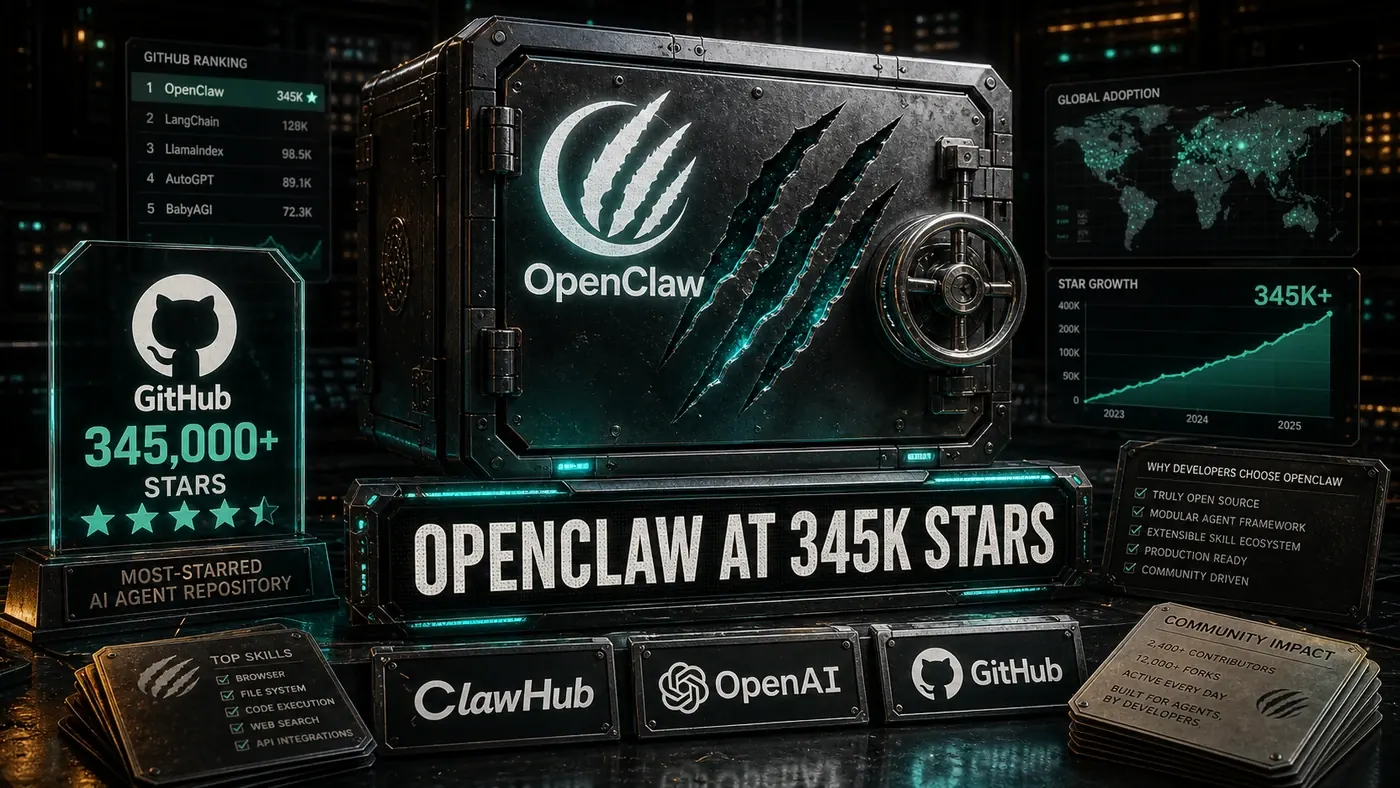
OpenClaw is harder to wave off, though. It really is the most-starred software project on GitHub, and its rise was unusually fast. The harder question is what kind of tool it is. The project's own page describes a personal AI assistant you run on your own devices, an agent that plugs into the messaging apps you already use. A lot of the coverage, including the version this article started from, recast it as enterprise orchestration infrastructure with eye-watering usage stats. Those two stories do not fully match, and below we separate the parts that check out from the parts that do not.
What OpenClaw Actually Does
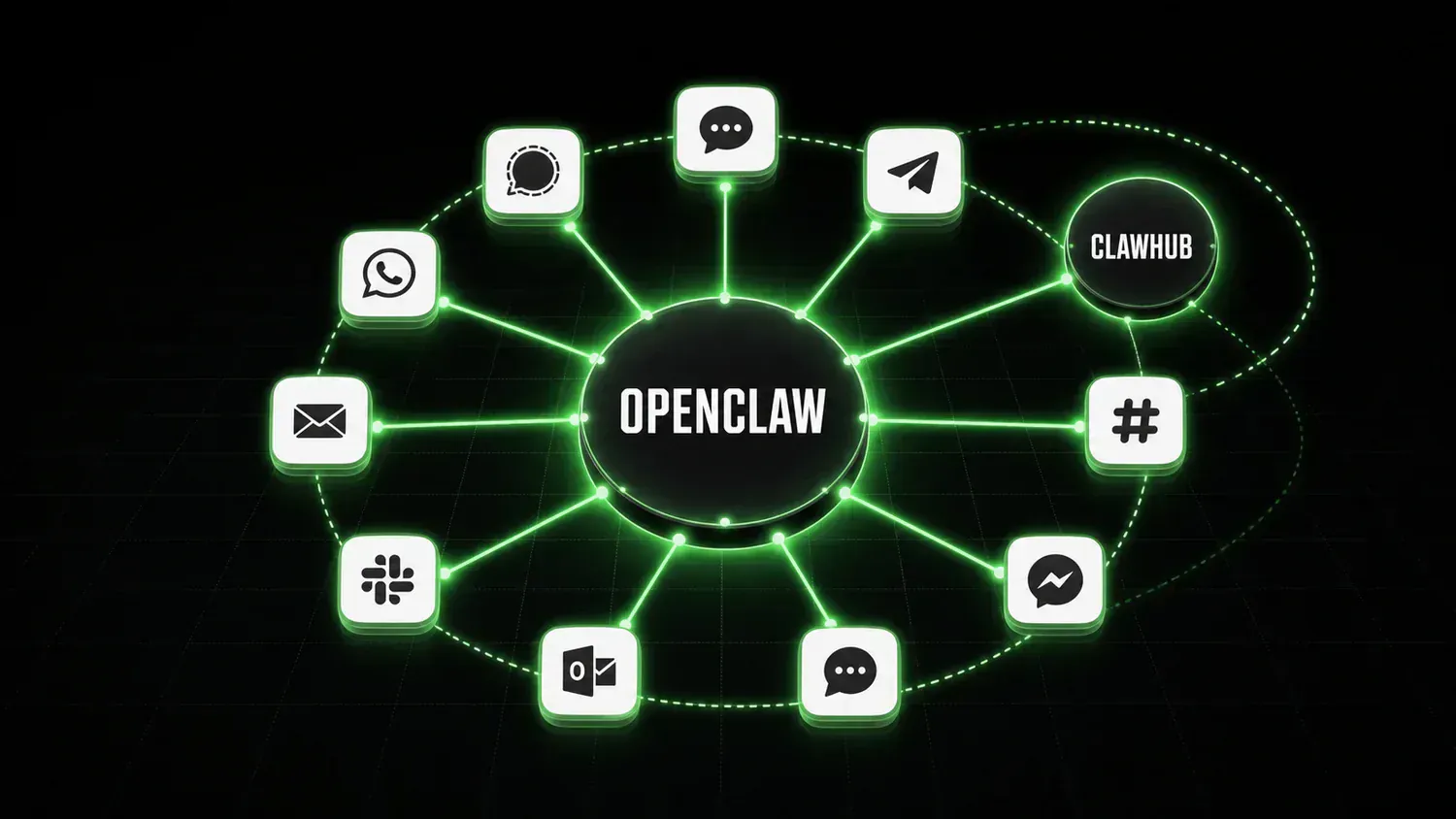
At its simplest, OpenClaw is an agent you run yourself rather than rent from a vendor. Per its own GitHub repository (opens in a new tab) and Wikipedia entry (opens in a new tab), it works as a local-first personal assistant and an agentic gateway across messaging channels such as WhatsApp, Telegram, Discord, and Slack. The job it does is the one every agent project runs into: turning a language model's text into actions that actually happen in the outside world.
The article this piece is based on described OpenClaw in more enterprise terms, with named components: a sandboxed "claw runtime" with configurable permission boundaries, a "tool registry" for wiring agents into APIs, databases, and file systems, a "memory system" for long-running sessions, and an "observability layer" for tracing and debugging. Treat that breakdown as a reasonable model of how such a platform might be organised rather than confirmed fact. Primary sources describe OpenClaw's multi-agent routing but do not use this component terminology, so the specifics are unverified.
The same caution applies to the production-grade reliability features often attributed to it: retry logic with exponential backoff, circuit breakers for flaky tool integrations, and graceful handling of malformed model responses. Those are exactly the things that separate a demo from a system you can leave running unattended, and they are plausible for a mature agent project. But no primary source confirms OpenClaw ships them, or that they are what won over enterprise buyers.
The Growth Trajectory
Here the original account and the record diverge sharply, so it is worth being blunt about it.
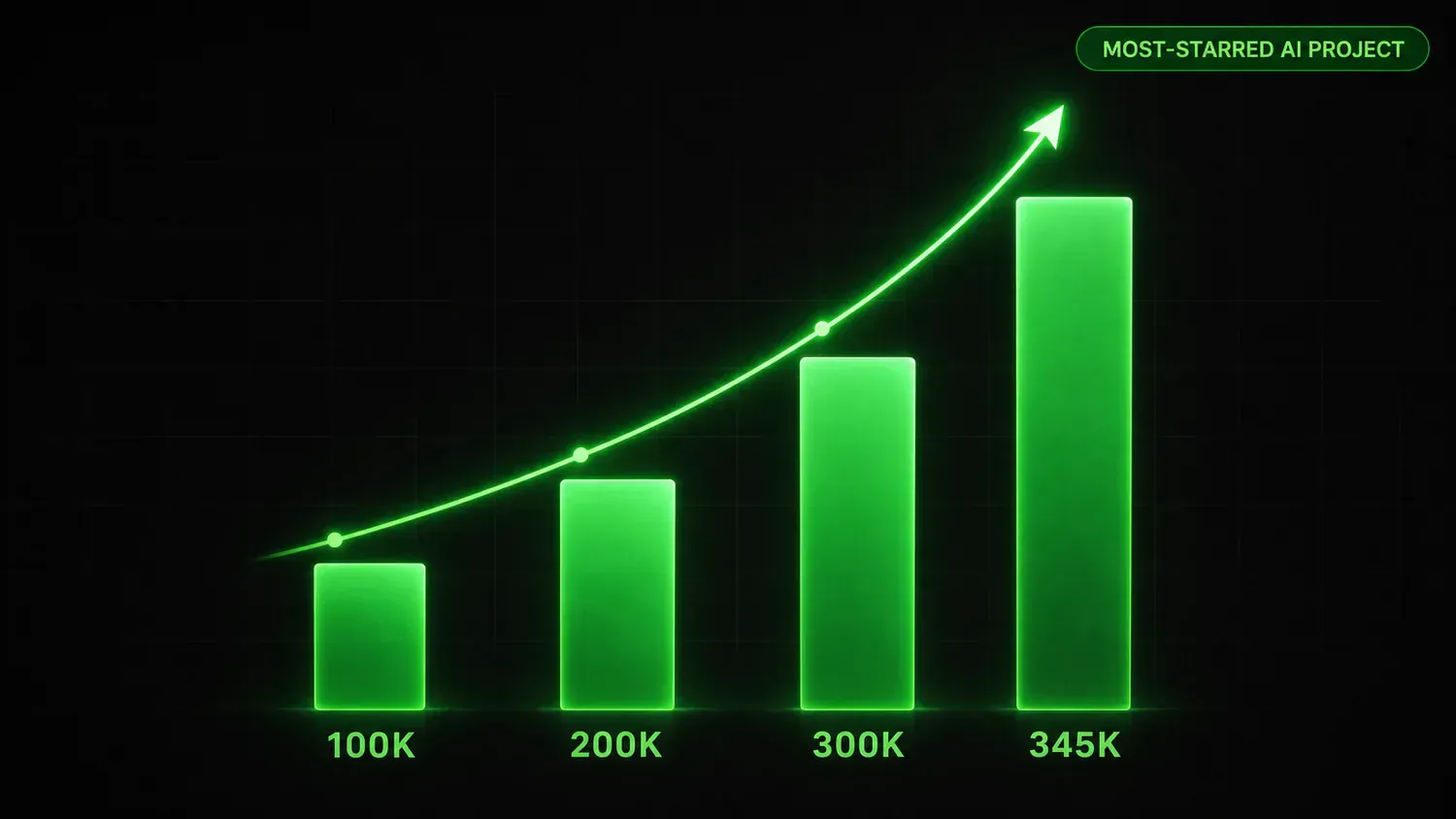
The article claimed OpenClaw was released in January 2025 by a team of former OpenAI and Google engineers, and that it climbed in stages: six months to 50,000 stars, four more to 150,000, then eight more to 345,000. The record tells a different story. OpenClaw was first published in November 2025 under the name Warelay, briefly became Moltbot in late January 2026, and was renamed OpenClaw on 30 January 2026. It was the work of one Austrian developer, Peter Steinberger, the founder of PSPDFKit, not a team of ex-OpenAI and Google staff.
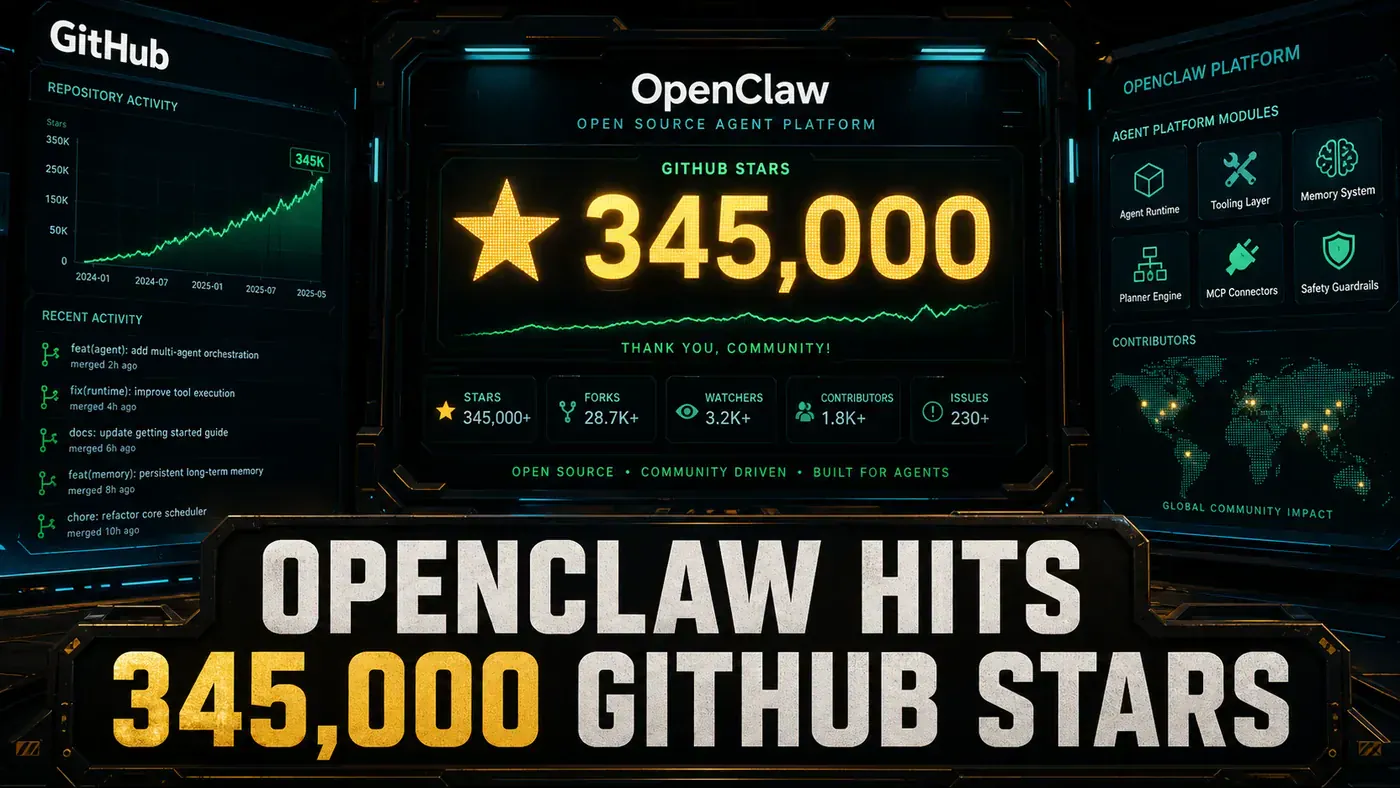
The growth was also far steeper than the multi-month cadence above suggests. By independent accounts it pulled roughly 9,000 stars on launch day, about 60,000 within three days, and around 190,000 inside two weeks, reaching 250,829 stars by 3 March 2026 (opens in a new tab), fast enough to beat React's decade-old GitHub record in about 60 days. So the headline "most-starred AI project" holds up; the timeline the original article gave for it does not.
Governance is murkier. OpenClaw started as a solo Steinberger project and has reportedly moved toward a foundation structure since. Claims of a 12-person full-time core team, more than 400 contributors, and a catalogue of 2,800-plus community plugins are repeated widely but have no supporting source we could find. Read them as unconfirmed.
The same goes for the case studies. The financial-services firm said to have cut customer-service automation from six months to three weeks, and the healthcare company said to have built multi-agent diagnostic workflows tied into electronic health records, are both anonymous, with no traceable origin. They make for good conference slides. They are not evidence.
The CVE-2026-25253 Incident
The security scare is real, even if the original write-up got the details wrong.
CVE-2026-25253 is a genuine critical vulnerability (opens in a new tab) in OpenClaw, rated CVSS 8.8. But it is not, as the article framed it, a flaw in a "sandbox escape prevention mechanism" set off by a "maliciously crafted tool call." It is a one-click remote code execution bug: an attacker exfiltrates an authentication token over an unvalidated WebSocket via the gatewayUrl query parameter, cross-site WebSocket hijacking. Container or sandbox escape comes later in the attack chain, after the token is stolen, not as the root cause. The "late May 2026" disclosure date is also unconfirmed.
A fix did ship. Reporting indicates versions up to v2026.1.24-1 were affected, with v2026.1.29 cited as the patched release (opens in a new tab). The tidier parts of the original account, a 72-hour patch turnaround, a formal post-mortem, confirmed no exploitation in the wild, are not backed by any source we found. The honest version is simpler: a serious bug, a patch, and a reminder that anything wired into your messages and devices is security-critical, and the attack surface grows with every integration you bolt on.
OpenClaw Hits 345,000 Stars: answer-first summary
OpenClaw Hits 345,000 Stars matters because it can change how Founders and operators plan, build, or govern an agent workflow. OpenClaw is now GitHub's most-starred software project, beating React.
The direct answer is this: do not treat the topic as a standalone trend. Treat it as a decision about inputs, outputs, review ownership, data exposure, and whether the workflow produces a result that is faster, safer, or more useful than the current process.
OpenClaw Hits 345,000 Stars: implementation checklist
- Define the user, job to be done, and success metric for the agent workflow.
- Collect real examples, policies, source files, customer questions, or search queries before writing prompts or choosing tools.
- Separate low-risk drafts from decisions that need approval, privacy checks, or senior review.
- Document what the AI is allowed to access, what it must not access, and who signs off before production use.
- Review successful task completion, review time, fallback rate, operator corrections after a small pilot rather than judging the idea from a demo.
This keeps the work practical. It also gives search engines and AI answer engines a clean factual structure: what the topic is, who it helps, what to do next, and which risks matter before implementation.
Decision criteria for OpenClaw Hits 345,000 Stars
| Decision area | What to check | Production signal |
|---|---|---|
| Intent | Does OpenClaw Hits 345,000 Stars solve a real workflow problem? | The use case has a named owner and measurable outcome. |
| Data | Can the required data be used safely? | Sensitive data is classified and access is controlled. |
| Quality | Can a reviewer judge the output consistently? | Examples, rubrics, or acceptance criteria exist. |
| Scale | Can the workflow be repeated without hero effort? | The process is documented and can be handed to another team member. |
Practical example for OpenClaw Hits 345,000 Stars
A small business could use this article to choose one practical test. For example, a manager might take one customer-facing process, one internal document workflow, or one recurring content task and redesign only that step with AI support. The goal is not to automate the whole business at once; it is to learn where AI News creates reliable leverage.
The useful deliverable is a short operating note: the trigger, the source material, the prompt or tool, the review checklist, the escalation rule, and the metric. That note becomes the handover asset for staff training, SEO/GEO content, service delivery, or future agent work.
Risks and controls for OpenClaw Hits 345,000 Stars
The common failure pattern is moving too quickly from a promising idea into an unmanaged workflow. For OpenClaw Hits 345,000 Stars, the risk is not only bad output. It can also be unclear data permission, staff confusion, duplicate content, unreviewed customer advice, or a tool that quietly changes cost or capability.
- Control unclear tool permissions with a named owner, a review step, and written acceptance criteria.
- Control silent failures with a named owner, a review step, and written acceptance criteria.
- Control prompt drift with a named owner, a review step, and written acceptance criteria.
- Control weak audit trails with a named owner, a review step, and written acceptance criteria.
Measurement plan for OpenClaw Hits 345,000 Stars
A useful AI or SEO initiative should leave evidence. Track successful task completion, review time, fallback rate, operator corrections and compare the pilot against the current process. If the measure does not improve, keep the learning but avoid scaling the workflow.
For GEO readiness, the page should also answer the core question directly, define the entities involved, include implementation steps, explain tradeoffs, and link readers to the next relevant AI Kick Start service, guide, tool, or article.
Definitions and entities for OpenClaw Hits 345,000 Stars
For search, GEO, and staff handover, define the core entities in plain language. In this article the important entities are the workflow owner, the AI tool or model, the source material, the review process, the risk boundary, and the measurable business outcome. Clear definitions make the page easier for people to scan and easier for AI answer engines to quote accurately.
- Workflow owner: the person accountable for deciding whether OpenClaw Hits 345,000 Stars belongs in the business process.
- Source material: the documents, examples, policies, URLs, prompts, videos, or customer questions that ground the output.
- Review boundary: the point where a human checks accuracy, privacy, brand voice, or customer impact before the result is used.
- Success metric: the measure that proves whether the agent workflow is worth repeating.
OpenClaw Hits 345,000 Stars versus doing nothing
Doing nothing is also a decision. The cost may be slow manual work, weaker search visibility, inconsistent advice, duplicated effort, or staff using unmanaged AI tools without a shared process. The practical question is whether a controlled pilot can reduce that cost without creating a larger governance problem.
| Option | When it makes sense | What to watch |
|---|---|---|
| Do nothing | The workflow is rare, low value, or already reliable. | Competitors may improve speed, content depth, or service consistency first. |
| Run a small pilot | The task repeats often and has clear review criteria. | Keep scope tight and measure the result against the current process. |
| Build a production workflow | The pilot is repeatable and risk controls are documented. | Assign ownership, monitoring, training, and a rollback path. |
AI Kick Start handover package for OpenClaw Hits 345,000 Stars
A production handover should be concrete enough that another person can run it. For OpenClaw Hits 345,000 Stars, that means a short brief, a workflow map, approved prompts or tool settings, source material, a review checklist, internal links to supporting resources, and a simple measurement sheet. This is the difference between reading about AI and turning it into operational capability.
That packaging also strengthens E-E-A-T. It shows experience through implementation notes, expertise through decision criteria, authoritativeness through source-aware structure, and trust through risks, controls, and review steps. The article becomes useful even if the reader never buys a tool because it helps them make a better operational decision.