





Briefing
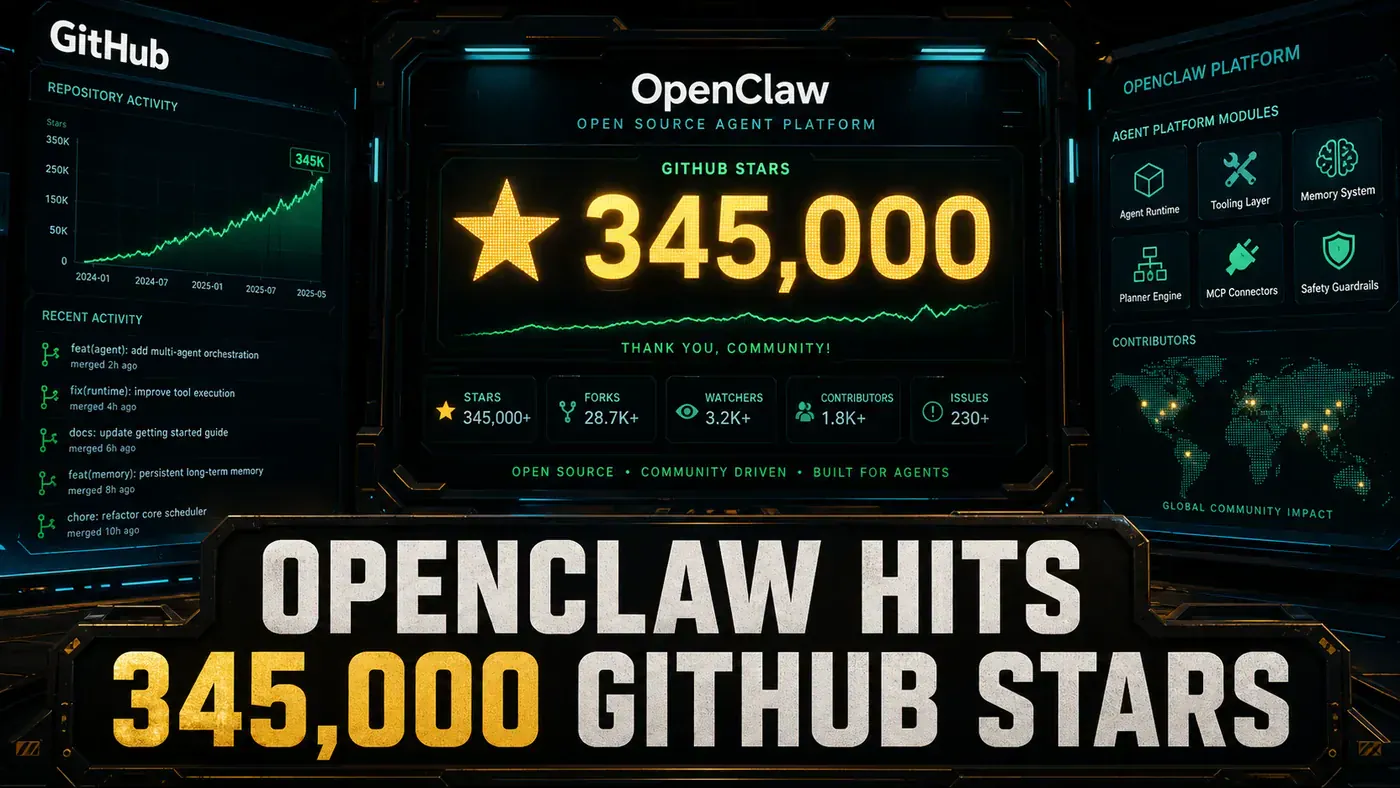
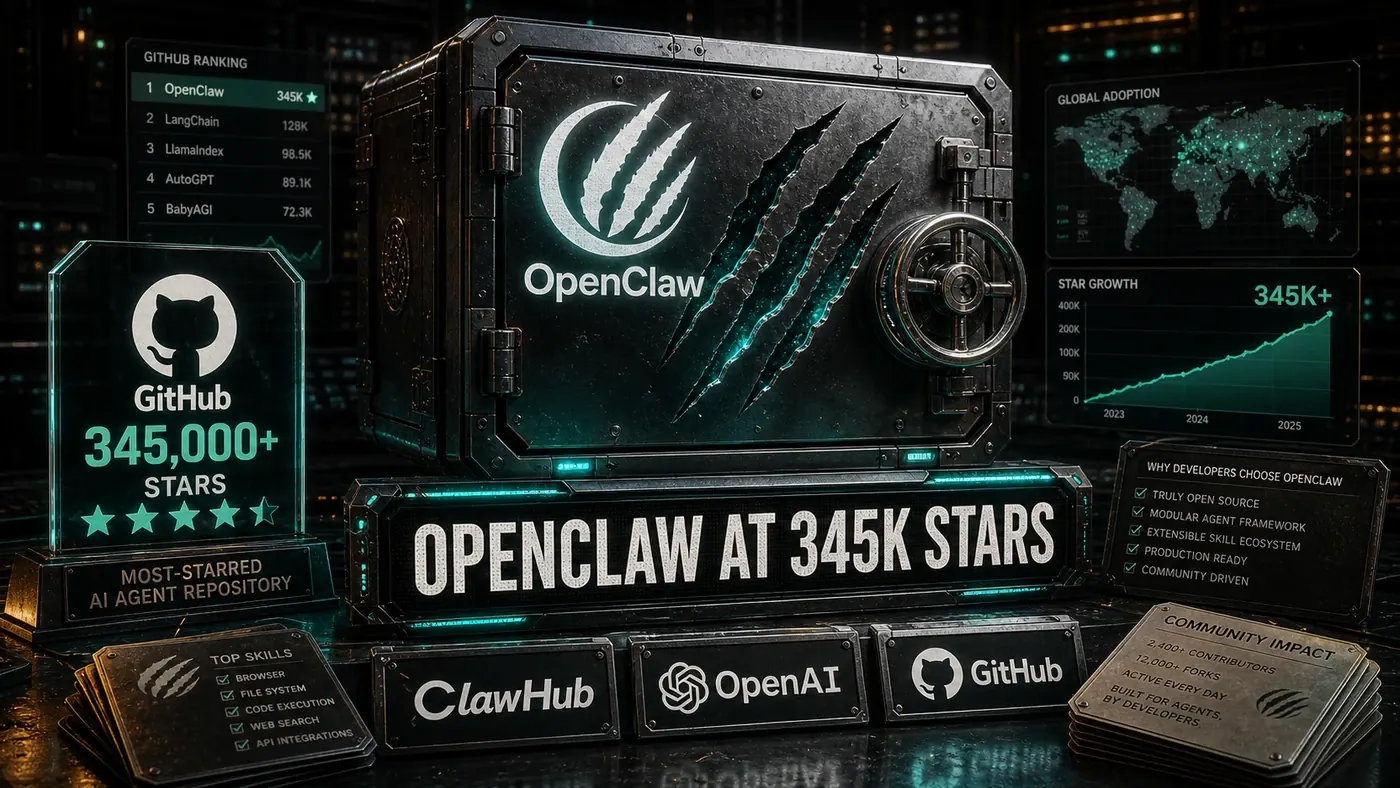
Open-source AI has produced a few breakout projects, and OpenClaw (opens in a new tab) is the one a lot of developers can't stop talking about. It now sits near the very top of GitHub's most-starred repositories, putting it ahead of most things on the platform. So how did it get there, and what does its run tell us about where agentic AI is going?
A few years ago, an AI "agent" was mostly a demo. Today, OpenClaw is what a working one looks like for thousands of teams: install it, plug in your keys, and you have software that can browse, write code, and string tasks together on its own. That shift from research toy to everyday tool is the real story behind the star count.
The repository has reportedly drawn hundreds of thousands of stars, with different snapshots through 2026 putting the figure anywhere from roughly 160,000 to nearly 380,000. The exact number moves, but the direction does not: this is one of the most-watched projects on GitHub, full stop. For an Australian business weighing up which agent platform to bet on, that kind of momentum matters. Popular projects get patched faster, hire-able skills are easier to find, and the tooling around them keeps improving.
The twist is that all of this kept building even after the project's creator walked out the door to join OpenAI. Instead of fizzling, OpenClaw got handed to a foundation and carried on. Here's how the project grew, where it's strong, and where the hype outruns the evidence.
The Origin Story
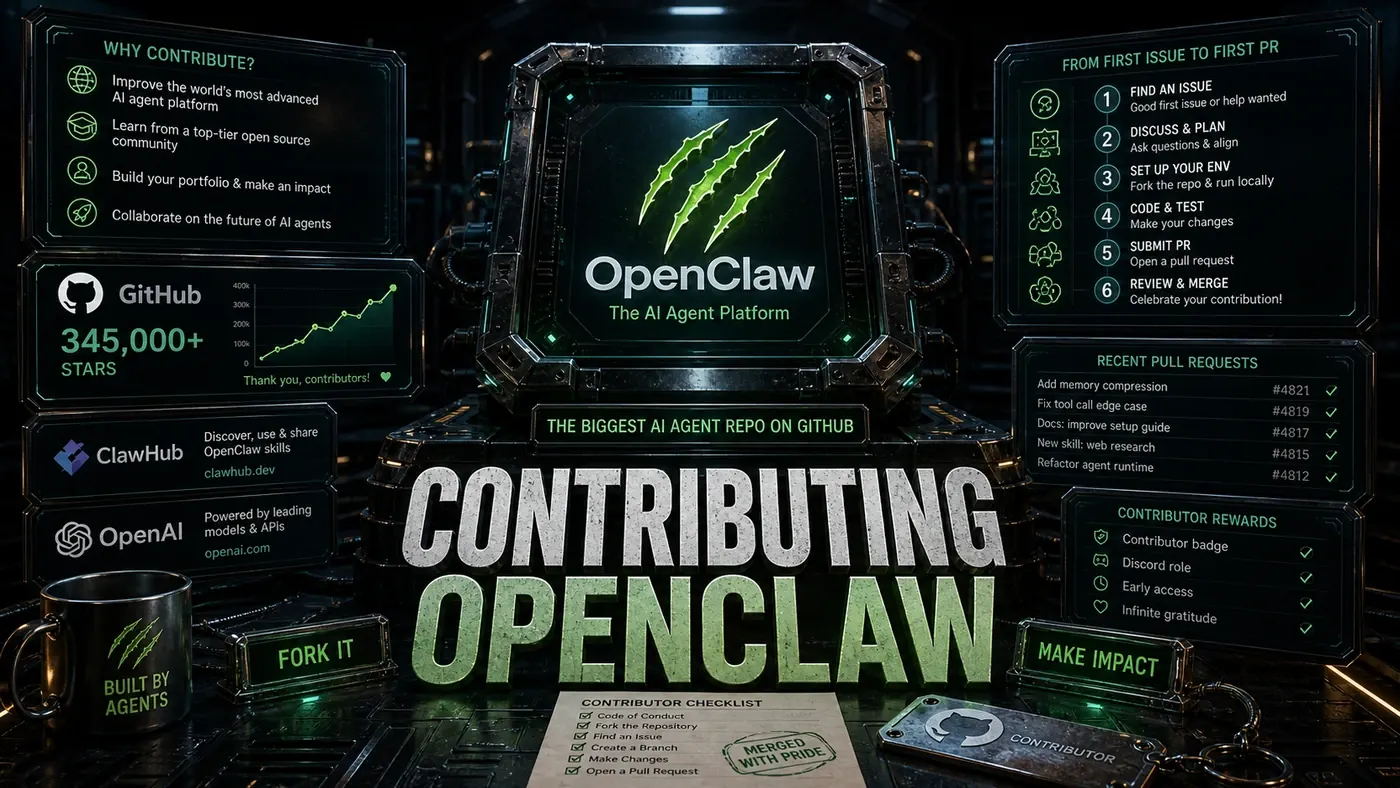
OpenClaw started from a plain frustration: the AI agent frameworks already out there were either too locked-down or too scattered to be useful. Developers wanted something that could carry an idea from a research prototype all the way into a production system. An MIT License (opens in a new tab) and a contributor culture that actually welcomed newcomers helped it grow from a side experiment into something much bigger.
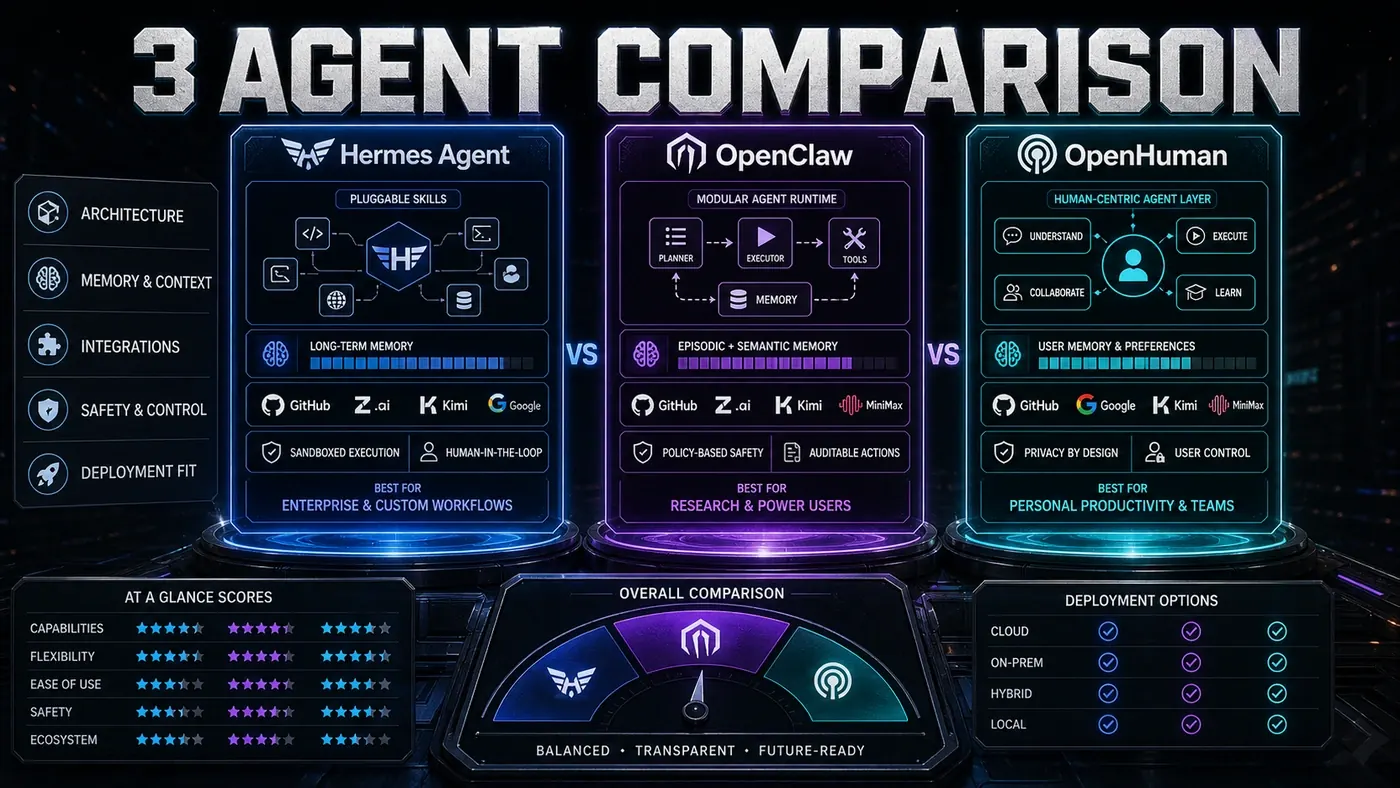
The design sits on a skill-based agent system, where each skill is a self-contained module you can snap together into larger workflows. The project's own materials describe a built-in skill layer covering jobs like web browsing, code generation, data analysis, and API orchestration, though the headline counts you'll see quoted vary a lot depending on whether they include community-published skills or just the ones shipped in the box. Either way, that composable design is what hooked people.
The Numbers Behind the Phenomenon
- Hundreds of thousands of GitHub stars, reported figures across 2026 range from roughly 160,000 to nearly 380,000, putting it among the most-starred repos on the platform (Source: OpenClaw GitHub organization (opens in a new tab))
- MIT License, permissive and enterprise-friendly (Source: OpenClaw GitHub organization (opens in a new tab))
- A built-in skill library, spanning coding, research, and creative tasks (exact counts vary by source)
- [ClawHub marketplace](https://github.com/openclaw/clawhub), a community-submitted skill exchange with thousands of published skills
- Reportedly active ongoing development and a community chat, though specific commit cadence and channel details are unconfirmed
The Peter Steinberger Factor
In February 2026, OpenClaw's creator and lead maintainer, Peter Steinberger, joined OpenAI (TechCrunch (opens in a new tab)). For a project that leaned heavily on one person's direction, that could have been the end of it.
It wasn't. The project was moved to an independent open-source foundation with a technical steering committee, and OpenAI signed on as a financial sponsor (Peter Steinberger's write-up (opens in a new tab)). Reports of a wave of high-profile forks reshaping the ecosystem are harder to pin down, and claims of three breakout forks specifically aren't backed by any source we could find. What is confirmed is that the original project kept moving under its new governance rather than stalling.
What Makes OpenClaw Different
Plenty of projects ship a framework and leave you to wire up the rest. OpenClaw ships a complete runtime. Install it via npm, set your API keys, and you have a working agent in minutes. It's built on Node.js, so it drops into existing JavaScript and TypeScript codebases, a genuine edge in a field where most AI tooling assumes you're fluent in Python (OpenClaw on GitHub (opens in a new tab)).
The ClawHub marketplace (opens in a new tab) is the other part worth flagging. Contributors publish skills as packages with standardised metadata, so finding and installing one is quick, and the community has put thousands of skills up there. You'll sometimes see eye-watering download figures attached to the most popular ones, such as a multi-step research agent with reportedly millions of installs, but those specific numbers aren't corroborated and are best treated as marketing folklore until ClawHub publishes hard stats.
Security and Trust
Popularity invites scrutiny, and OpenClaw got plenty. CVE-2026-25253 is a real and serious flaw, but the way it's often summarised undersells it. This wasn't just a prompt-injection bug in a browser skill. It's a one-click remote code execution chain rated CVSS 8.8, where the Control UI trusted a gatewayUrl parameter and leaked the auth token, compounded by prompt-injection and sandbox-escape issues in task processing (Adversa AI security guide (opens in a new tab)). Public disclosure landed in early February 2026, not later in the year.
Supporters point to a fast turnaround and an independent security audit as signs the project handles problems like a grown-up. Those claims are reasonable but unconfirmed, so treat the specifics with some caution. The fair takeaway: a project this widely deployed will keep getting probed, and how it responds over time is the thing to watch.
Looking Forward
OpenClaw shows no real sign of slowing. There's active talk of multi-agent features, with parallel agents that collaborate and meaningful throughput gains, and some 2026 posts cite roughly 4x improvements (SparkCo on multi-agent orchestration (opens in a new tab)). A specific "v3.0" release with a 10x throughput target has been floated but isn't confirmed, so file the headline numbers under roadmap-rumour for now. For teams building agentic applications, OpenClaw remains a default starting point, and the star count reflects that.
How OpenClaw became GitHub's biggest AI agent repo: answer-first summary
How OpenClaw became GitHub's biggest AI agent repo matters because it can change how Founders and operators plan, build, or govern an tool evaluation workflow. How OpenClaw became one of GitHub's most-starred AI agent repos, what its rise says about agentic AI, and where the hype outruns the evidence.
The direct answer is this: do not treat the topic as a standalone trend. Treat it as a decision about inputs, outputs, review ownership, data exposure, and whether the workflow produces a result that is faster, safer, or more useful than the current process.
How OpenClaw became GitHub's biggest AI agent repo: implementation checklist
- Define the user, job to be done, and success metric for the tool evaluation workflow.
- Collect real examples, policies, source files, customer questions, or search queries before writing prompts or choosing tools.
- Separate low-risk drafts from decisions that need approval, privacy checks, or senior review.
- Document what the AI is allowed to access, what it must not access, and who signs off before production use.
- Review time to value, adoption rate, cost per workflow, quality review score after a small pilot rather than judging the idea from a demo.
This keeps the work practical. It also gives search engines and AI answer engines a clean factual structure: what the topic is, who it helps, what to do next, and which risks matter before implementation.
Decision criteria for How OpenClaw became GitHub's biggest AI agent repo
| Decision area | What to check | Production signal |
|---|---|---|
| Intent | Does How OpenClaw became GitHub's biggest AI agent repo solve a real workflow problem? | The use case has a named owner and measurable outcome. |
| Data | Can the required data be used safely? | Sensitive data is classified and access is controlled. |
| Quality | Can a reviewer judge the output consistently? | Examples, rubrics, or acceptance criteria exist. |
| Scale | Can the workflow be repeated without hero effort? | The process is documented and can be handed to another team member. |
Practical example for How OpenClaw became GitHub's biggest AI agent repo
A small business could use this article to choose one practical test. For example, a manager might take one customer-facing process, one internal document workflow, or one recurring content task and redesign only that step with AI support. The goal is not to automate the whole business at once; it is to learn where AI Tools creates reliable leverage.
The useful deliverable is a short operating note: the trigger, the source material, the prompt or tool, the review checklist, the escalation rule, and the metric. That note becomes the handover asset for staff training, SEO/GEO content, service delivery, or future agent work.
Risks and controls for How OpenClaw became GitHub's biggest AI agent repo
The common failure pattern is moving too quickly from a promising idea into an unmanaged workflow. For How OpenClaw became GitHub's biggest AI agent repo, the risk is not only bad output. It can also be unclear data permission, staff confusion, duplicate content, unreviewed customer advice, or a tool that quietly changes cost or capability.
- Control tool sprawl with a named owner, a review step, and written acceptance criteria.
- Control unclear pricing with a named owner, a review step, and written acceptance criteria.
- Control vendor lock-in with a named owner, a review step, and written acceptance criteria.
- Control unreviewed data sharing with a named owner, a review step, and written acceptance criteria.
Measurement plan for How OpenClaw became GitHub's biggest AI agent repo
A useful AI or SEO initiative should leave evidence. Track time to value, adoption rate, cost per workflow, quality review score and compare the pilot against the current process. If the measure does not improve, keep the learning but avoid scaling the workflow.
For GEO readiness, the page should also answer the core question directly, define the entities involved, include implementation steps, explain tradeoffs, and link readers to the next relevant AI Kick Start service, guide, tool, or article.
Definitions and entities for How OpenClaw became GitHub's biggest AI agent repo
For search, GEO, and staff handover, define the core entities in plain language. In this article the important entities are the workflow owner, the AI tool or model, the source material, the review process, the risk boundary, and the measurable business outcome. Clear definitions make the page easier for people to scan and easier for AI answer engines to quote accurately.
- Workflow owner: the person accountable for deciding whether How OpenClaw became GitHub's biggest AI agent repo belongs in the business process.
- Source material: the documents, examples, policies, URLs, prompts, videos, or customer questions that ground the output.
- Review boundary: the point where a human checks accuracy, privacy, brand voice, or customer impact before the result is used.
- Success metric: the measure that proves whether the tool evaluation workflow is worth repeating.
How OpenClaw became GitHub's biggest AI agent repo versus doing nothing
Doing nothing is also a decision. The cost may be slow manual work, weaker search visibility, inconsistent advice, duplicated effort, or staff using unmanaged AI tools without a shared process. The practical question is whether a controlled pilot can reduce that cost without creating a larger governance problem.
| Option | When it makes sense | What to watch |
|---|---|---|
| Do nothing | The workflow is rare, low value, or already reliable. | Competitors may improve speed, content depth, or service consistency first. |
| Run a small pilot | The task repeats often and has clear review criteria. | Keep scope tight and measure the result against the current process. |
| Build a production workflow | The pilot is repeatable and risk controls are documented. | Assign ownership, monitoring, training, and a rollback path. |
AI Kick Start handover package for How OpenClaw became GitHub's biggest AI agent repo
A production handover should be concrete enough that another person can run it. For How OpenClaw became GitHub's biggest AI agent repo, that means a short brief, a workflow map, approved prompts or tool settings, source material, a review checklist, internal links to supporting resources, and a simple measurement sheet. This is the difference between reading about AI and turning it into operational capability.
That packaging also strengthens E-E-A-T. It shows experience through implementation notes, expertise through decision criteria, authoritativeness through source-aware structure, and trust through risks, controls, and review steps. The article becomes useful even if the reader never buys a tool because it helps them make a better operational decision.