





Briefing
By early 2026, the open-source agent scene had stopped sprawling and settled into a real contest. Three projects pulled ahead, and each one answers the same question in a completely different way: where should an AI agent actually live in your day?
Hermes (opens in a new tab), from Nous Research, treats the agent itself as the main event. OpenClaw (opens in a new tab), which started life as Moltbot, treats messaging as the main event. And OpenHuman (opens in a new tab), from TinyHumans.ai, sits on your desktop and quietly hoovers up everything you do. None of them is "better" in the abstract. They are built for different people doing different jobs.
If you run a small Australian team and you are trying to work out which one is worth your time, the short version is this: the right pick depends almost entirely on where your work already happens. The rest of this article walks through how each one is built, what it costs, and where it can bite you.
One housekeeping note before we get into it. Star counts and token figures move fast, and a couple of the numbers doing the rounds online are out of date or inflated. Where that is the case, we have flagged it and pointed to the better source.
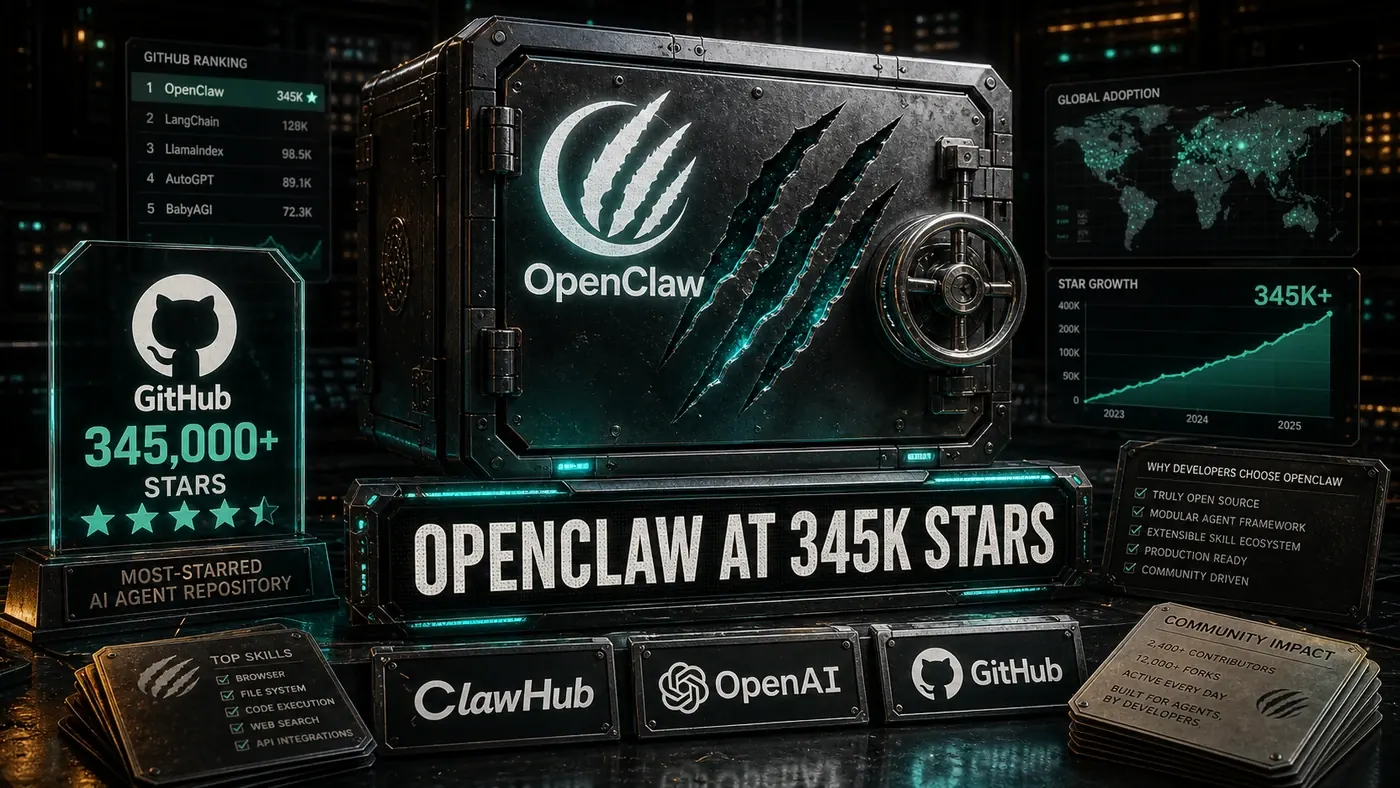
The three projects represent genuinely different bets. Hermes (about 22,000 GitHub stars in the figure originally circulated, though mid-2026 counts put it far higher, closer to 95,000 (opens in a new tab)), OpenClaw (345k GitHub stars, originally Moltbot) (opens in a new tab), and OpenHuman (7.8k GitHub stars, TinyHumans.ai) (opens in a new tab) each give a distinct answer to one question: how should an AI agent live in your workflow?
The Architectural Divergence
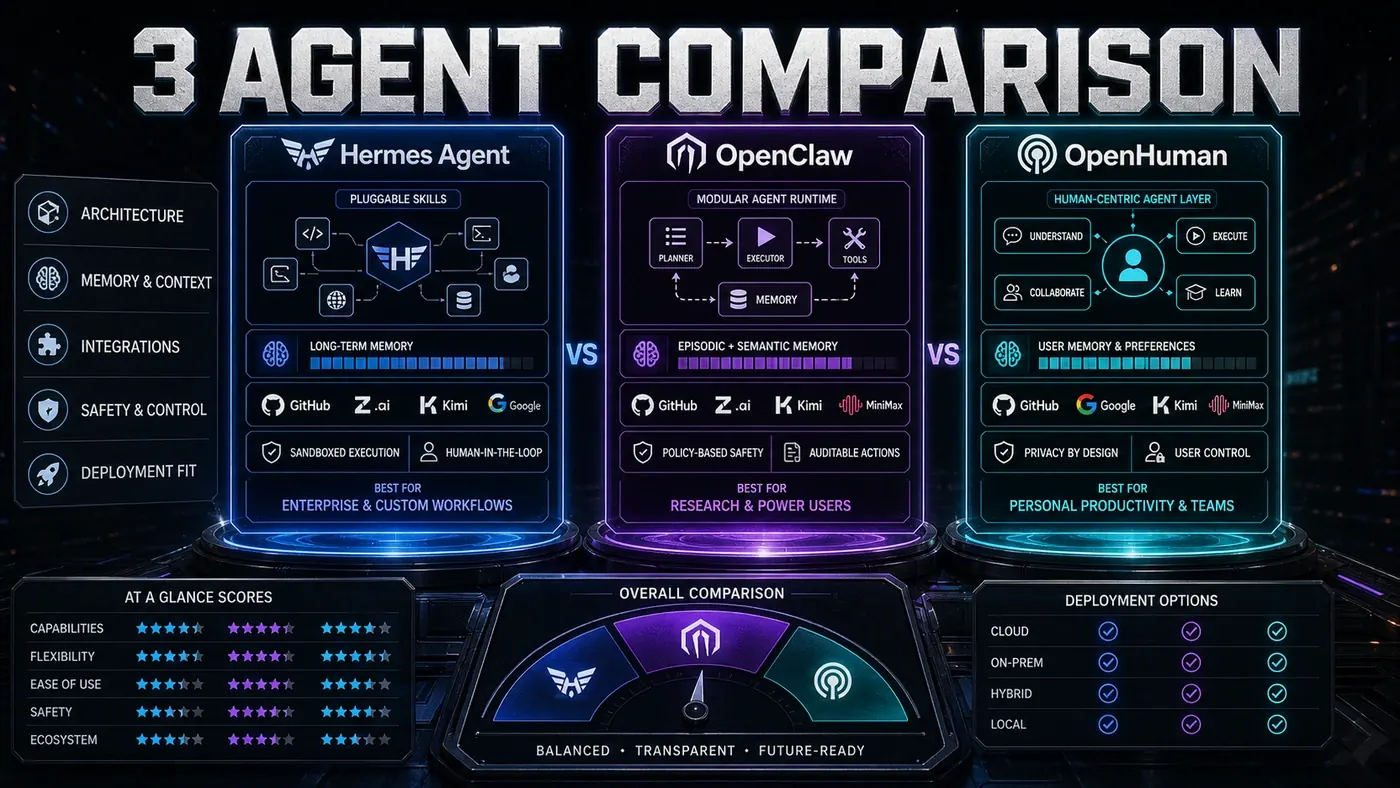
Brendan O'Leary put the split well. As he framed it, Hermes wraps a gateway around a learning brain, while OpenClaw wraps a brain around a messaging gateway (opens in a new tab). OpenHuman, for its part, wraps both around a layer of desktop context.
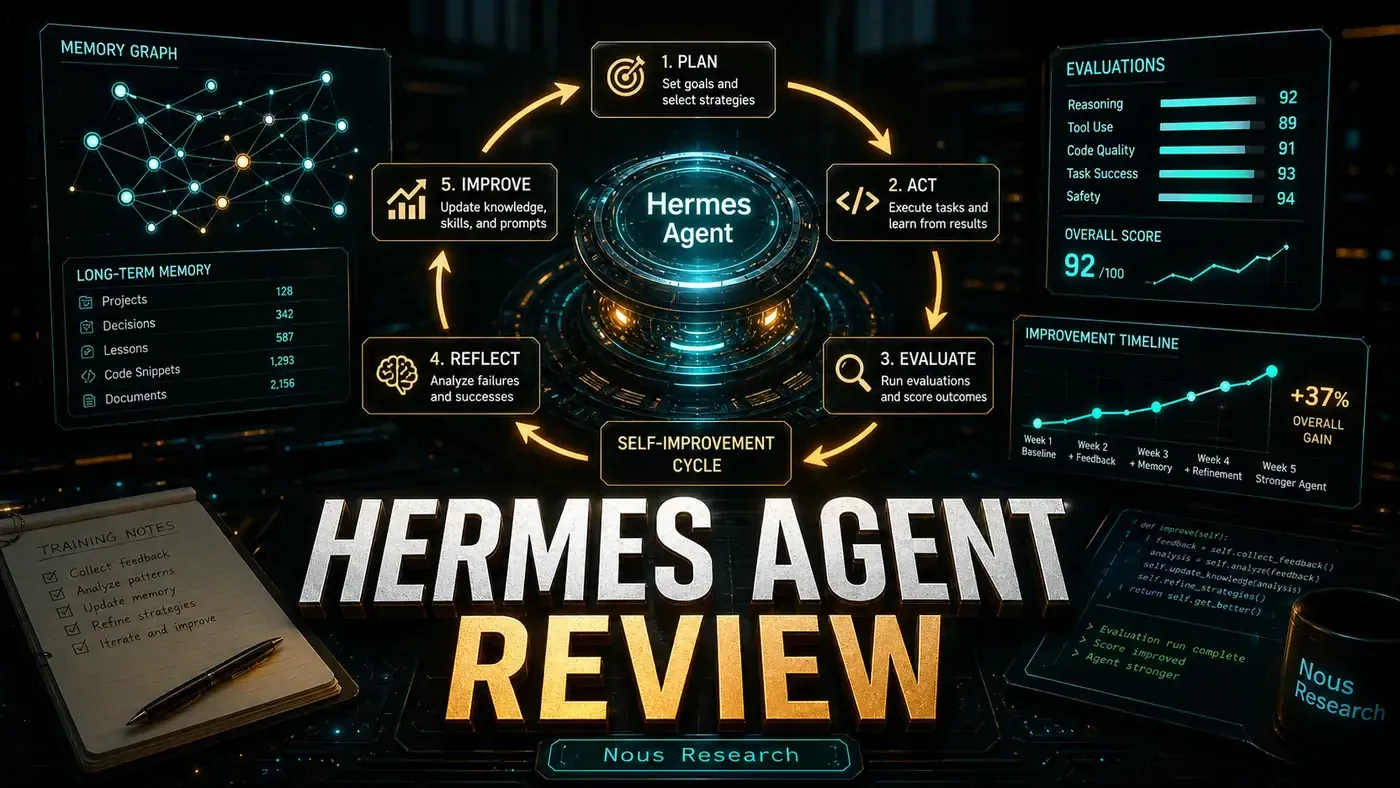
Hermes is agent-first. Its Python runtime is built around a self-improving learning loop, with a large set of built-in tools (the figure originally quoted was 40+, though later releases ship many more (opens in a new tab)). Everything else, the messaging, the model routing, the memory, orbits that core. Nous Research built it to learn, not just to execute. Its Honcho dialectic user-modelling memory system (opens in a new tab) keeps a running model of how you think and will push back on your assumptions. Self-hosting it on a VPS reportedly runs around $5 per month, which would make it the cheapest of the three, though that is a ballpark estimate rather than an official price.
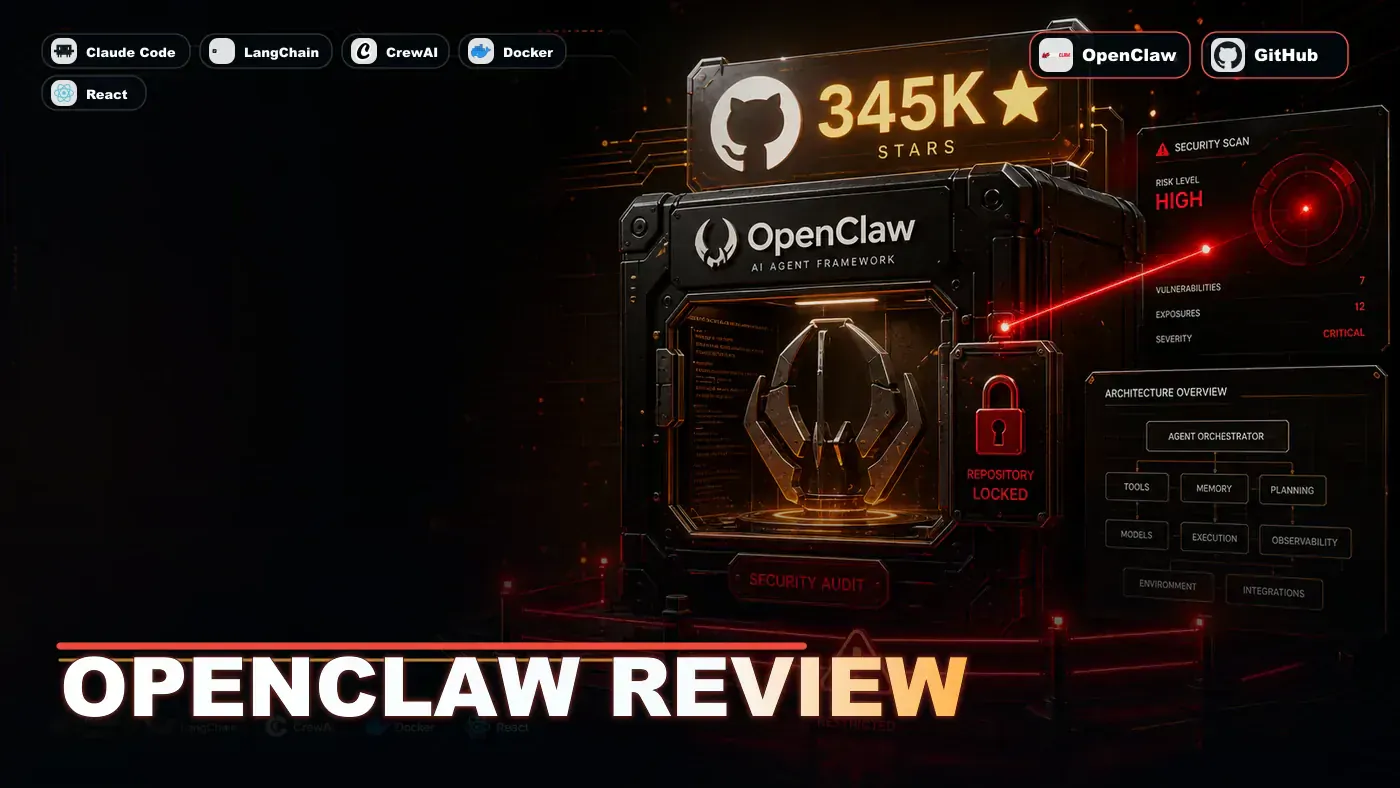
OpenClaw is gateway-first. It began as a side project (first Clawdbot, then Moltbot) in late 2025 (opens in a new tab) and broke through in January 2026 after a demo showed 50+ messaging channels running off a single Node.js runtime. (Some write-ups credit "Cole Steinberger" for that demo, but the creator is Peter Steinberger (opens in a new tab).) Discord, Telegram, Slack, WhatsApp, iMessage, Signal (opens in a new tab): all native. That openness has a cost, though. The ClawHub.ai marketplace lists well over 100 AgentSkills (opens in a new tab) (in practice, the catalogue is far larger, with one security audit examining 2,857 of them), and a Koi Security audit found 341 of those skills were malicious (opens in a new tab). On top of that, CVE-2026-25253 (CVSS 8.8) (opens in a new tab) exposed a command injection path through a malicious skill package. Steinberger joined OpenAI in February 2026 and moved the project to a non-profit foundation (opens in a new tab). Self-hosting is free; a managed tier on DigitalOcean is said to run about $24 per month, again as a rough estimate rather than a published figure.
OpenHuman is desktop-first. Its Tauri-based app (macOS DMG, Windows EXE) (opens in a new tab) runs a local mascot that watches your screen, suggests inline autocomplete, sits in on Google Meet calls, and compresses everything into Memory Trees, an Obsidian-style Markdown wiki. The Neocortex local knowledge base handles up to 1 billion tokens (opens in a new tab). Version 0.53.43 shipped on 13 May 2026 (opens in a new tab). A single subscription covers multi-model routing. It is the only one of the three built for pulling together your personal context rather than for team messaging or runtime purity.
Model Support and Token Volume
Hermes supports Nous Portal, OpenRouter (200+ models), z.ai/GLM, Kimi/Moonshot, MiniMax, and OpenAI (opens in a new tab). OpenHuman routes across several models under one subscription. On volume, the often-quoted figure of 20 trillion tokens processed by OpenClaw via OpenRouter looks roughly double the real number; all-time reporting from May 2026 puts it closer to 9.17 trillion (opens in a new tab). What is confirmed is that Hermes hit 224 billion daily tokens in May 2026, briefly passing OpenClaw's daily rate (opens in a new tab).
Community Sentiment
One figure that gets repeated is a May 2026 Reddit survey showing the community split roughly as: about 35% mainly on OpenClaw, 30% on Hermes, 20% running both, and 15% wary of Hermes over its Nous Research backing and data practices. We could not verify a formal survey with those exact numbers, so treat the breakdown as unconfirmed. The discussion is certainly real, though; one analysis worked through more than 1,300 Reddit comments comparing the two (opens in a new tab). The skeptics tend to lean toward OpenClaw's foundation governance or OpenHuman's local-first privacy.
Which One Should You Choose?
Go with Hermes if you want an agent that learns how you work and improves itself over time. Go with OpenClaw if your team practically lives in messaging apps and you need wide channel coverage (just budget for the security review the marketplace clearly warrants). Go with OpenHuman if you want a desktop companion that gathers your personal context across every app you touch. Plenty of senior engineers run all three: Hermes as the agent runtime, OpenClaw for team messaging, and OpenHuman for personal knowledge. That three-agent stack is the subject of article 12.
Hermes vs OpenClaw vs OpenHuman in 2026: answer-first summary
Hermes vs OpenClaw vs OpenHuman in 2026 matters because it can change how Founders and operators plan, build, or govern an tool evaluation workflow. Three open-source agent frameworks have split into distinct philosophies.
The direct answer is this: do not treat the topic as a standalone trend. Treat it as a decision about inputs, outputs, review ownership, data exposure, and whether the workflow produces a result that is faster, safer, or more useful than the current process.
Hermes vs OpenClaw vs OpenHuman in 2026: implementation checklist
- Define the user, job to be done, and success metric for the tool evaluation workflow.
- Collect real examples, policies, source files, customer questions, or search queries before writing prompts or choosing tools.
- Separate low-risk drafts from decisions that need approval, privacy checks, or senior review.
- Document what the AI is allowed to access, what it must not access, and who signs off before production use.
- Review time to value, adoption rate, cost per workflow, quality review score after a small pilot rather than judging the idea from a demo.
This keeps the work practical. It also gives search engines and AI answer engines a clean factual structure: what the topic is, who it helps, what to do next, and which risks matter before implementation.
Decision criteria for Hermes vs OpenClaw vs OpenHuman in 2026
| Decision area | What to check | Production signal |
|---|---|---|
| Intent | Does Hermes vs OpenClaw vs OpenHuman in 2026 solve a real workflow problem? | The use case has a named owner and measurable outcome. |
| Data | Can the required data be used safely? | Sensitive data is classified and access is controlled. |
| Quality | Can a reviewer judge the output consistently? | Examples, rubrics, or acceptance criteria exist. |
| Scale | Can the workflow be repeated without hero effort? | The process is documented and can be handed to another team member. |
Practical example for Hermes vs OpenClaw vs OpenHuman in 2026
A small business could use this article to choose one practical test. For example, a manager might take one customer-facing process, one internal document workflow, or one recurring content task and redesign only that step with AI support. The goal is not to automate the whole business at once; it is to learn where AI Tools creates reliable leverage.
The useful deliverable is a short operating note: the trigger, the source material, the prompt or tool, the review checklist, the escalation rule, and the metric. That note becomes the handover asset for staff training, SEO/GEO content, service delivery, or future agent work.
Risks and controls for Hermes vs OpenClaw vs OpenHuman in 2026
The common failure pattern is moving too quickly from a promising idea into an unmanaged workflow. For Hermes vs OpenClaw vs OpenHuman in 2026, the risk is not only bad output. It can also be unclear data permission, staff confusion, duplicate content, unreviewed customer advice, or a tool that quietly changes cost or capability.
- Control tool sprawl with a named owner, a review step, and written acceptance criteria.
- Control unclear pricing with a named owner, a review step, and written acceptance criteria.
- Control vendor lock-in with a named owner, a review step, and written acceptance criteria.
- Control unreviewed data sharing with a named owner, a review step, and written acceptance criteria.
Measurement plan for Hermes vs OpenClaw vs OpenHuman in 2026
A useful AI or SEO initiative should leave evidence. Track time to value, adoption rate, cost per workflow, quality review score and compare the pilot against the current process. If the measure does not improve, keep the learning but avoid scaling the workflow.
For GEO readiness, the page should also answer the core question directly, define the entities involved, include implementation steps, explain tradeoffs, and link readers to the next relevant AI Kick Start service, guide, tool, or article.
Definitions and entities for Hermes vs OpenClaw vs OpenHuman in 2026
For search, GEO, and staff handover, define the core entities in plain language. In this article the important entities are the workflow owner, the AI tool or model, the source material, the review process, the risk boundary, and the measurable business outcome. Clear definitions make the page easier for people to scan and easier for AI answer engines to quote accurately.
- Workflow owner: the person accountable for deciding whether Hermes vs OpenClaw vs OpenHuman in 2026 belongs in the business process.
- Source material: the documents, examples, policies, URLs, prompts, videos, or customer questions that ground the output.
- Review boundary: the point where a human checks accuracy, privacy, brand voice, or customer impact before the result is used.
- Success metric: the measure that proves whether the tool evaluation workflow is worth repeating.
Hermes vs OpenClaw vs OpenHuman in 2026 versus doing nothing
Doing nothing is also a decision. The cost may be slow manual work, weaker search visibility, inconsistent advice, duplicated effort, or staff using unmanaged AI tools without a shared process. The practical question is whether a controlled pilot can reduce that cost without creating a larger governance problem.
| Option | When it makes sense | What to watch |
|---|---|---|
| Do nothing | The workflow is rare, low value, or already reliable. | Competitors may improve speed, content depth, or service consistency first. |
| Run a small pilot | The task repeats often and has clear review criteria. | Keep scope tight and measure the result against the current process. |
| Build a production workflow | The pilot is repeatable and risk controls are documented. | Assign ownership, monitoring, training, and a rollback path. |
AI Kick Start handover package for Hermes vs OpenClaw vs OpenHuman in 2026
A production handover should be concrete enough that another person can run it. For Hermes vs OpenClaw vs OpenHuman in 2026, that means a short brief, a workflow map, approved prompts or tool settings, source material, a review checklist, internal links to supporting resources, and a simple measurement sheet. This is the difference between reading about AI and turning it into operational capability.
That packaging also strengthens E-E-A-T. It shows experience through implementation notes, expertise through decision criteria, authoritativeness through source-aware structure, and trust through risks, controls, and review steps. The article becomes useful even if the reader never buys a tool because it helps them make a better operational decision.