




Briefing
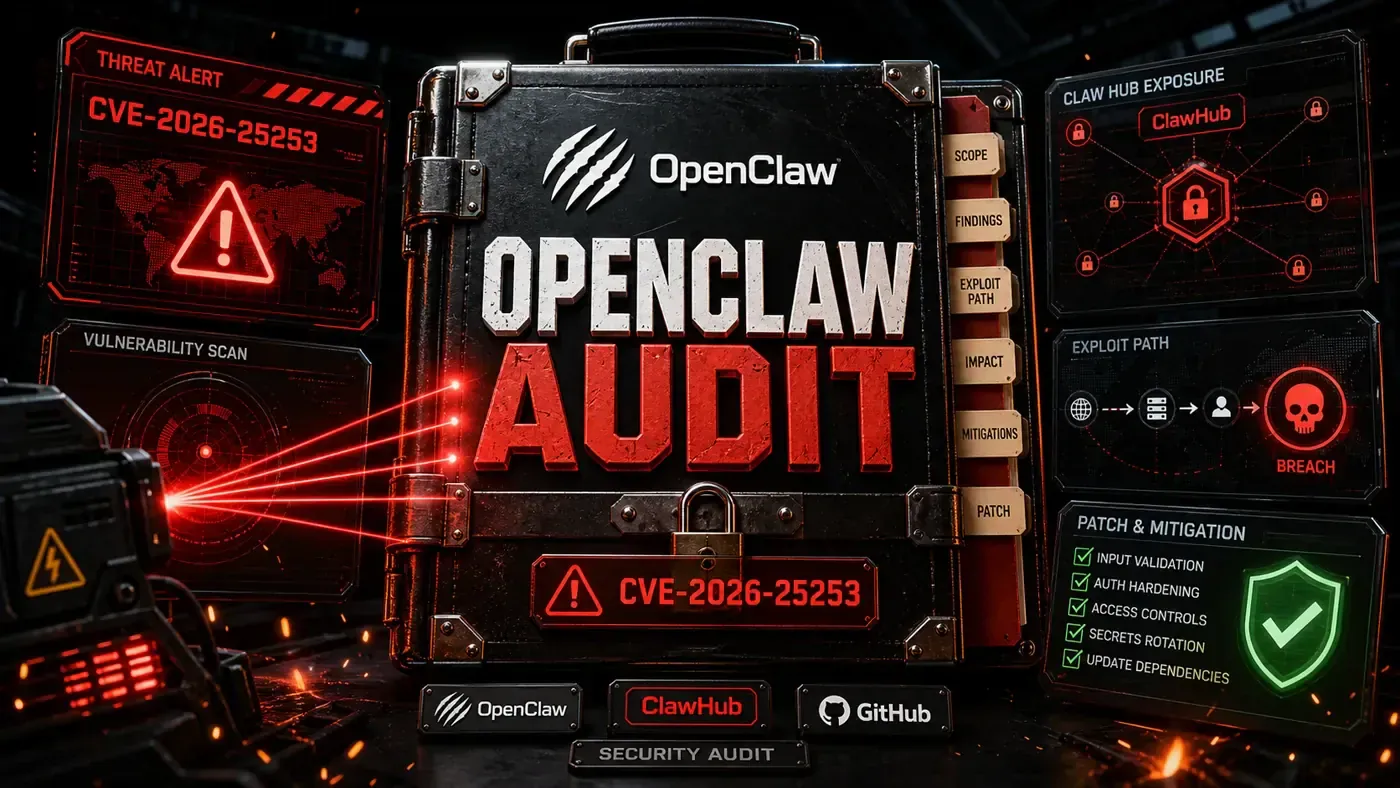
In early 2026, the maintainers of OpenClaw hit the moment every popular open-source project dreads: a publicly disclosed, high-severity security hole with a CVE number attached. The bug, tracked as [CVE-2026-25253](https://www.proarch.com/blog/threats-vulnerabilities/openclaw-rce-vulnerability-cve-2026-25253), was rated CVSS 8.8, firmly in the "patch this now" range.
What the bug actually does matters, because there's been some confusion about it. Earlier write-ups (including an earlier version of this piece) framed it as a prompt injection flaw in OpenClaw's browser automation skill. That framing appears to be wrong. The security vendors who looked at it, SonicWall (opens in a new tab), ProArch and others, describe a one-click remote code execution bug caused by authentication-token theft, not a prompt injection. The article below has been corrected to reflect that, and the parts that couldn't be verified are flagged as such.
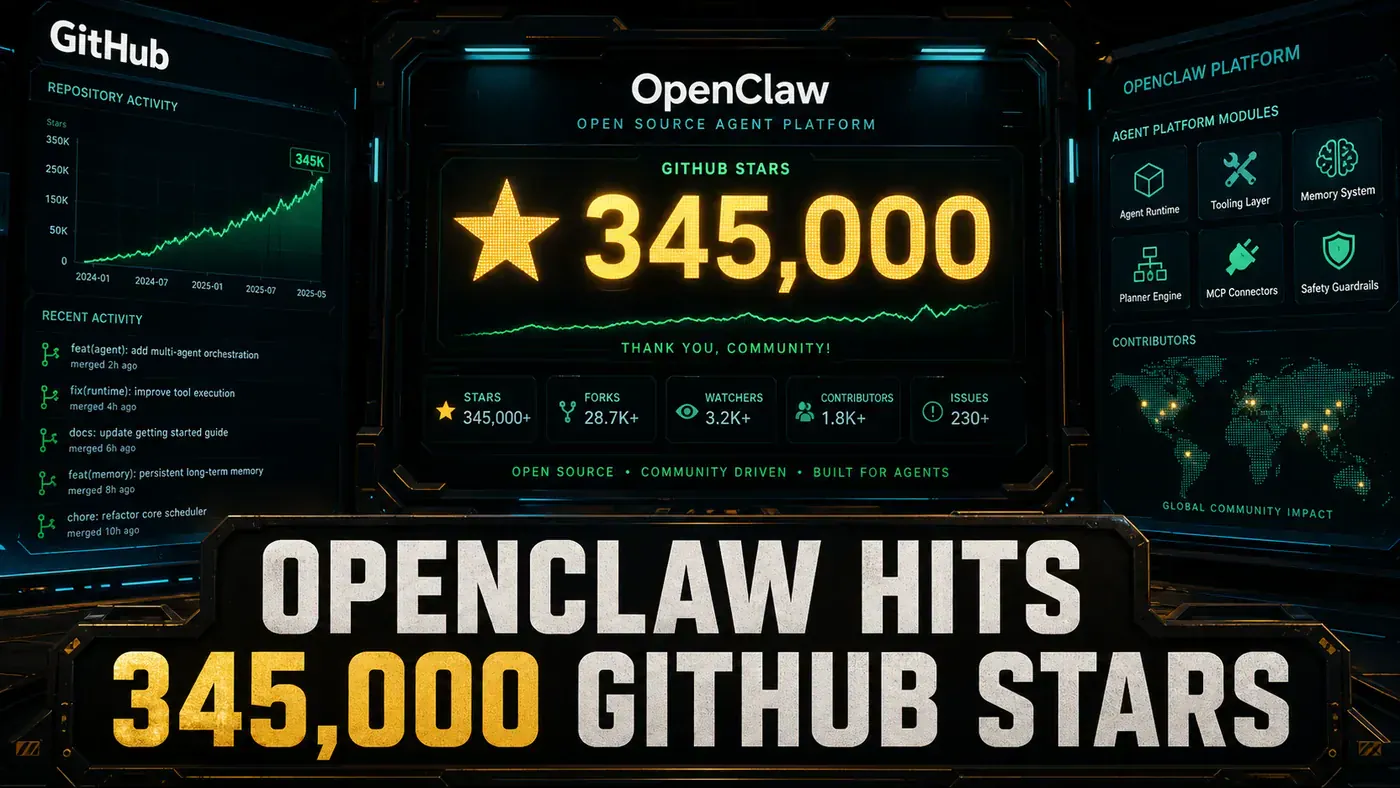
For an Australian business team, the takeaway is simpler than the CVE details: if you're running a self-hosted AI agent that can touch your files, your browser sessions, or your shell, a single bad link can turn into a serious breach. OpenClaw is one of the most popular tools in that category, with around 345,000 GitHub stars. When something this widely deployed ships an 8.8, it's worth understanding what went wrong.
The Vulnerability
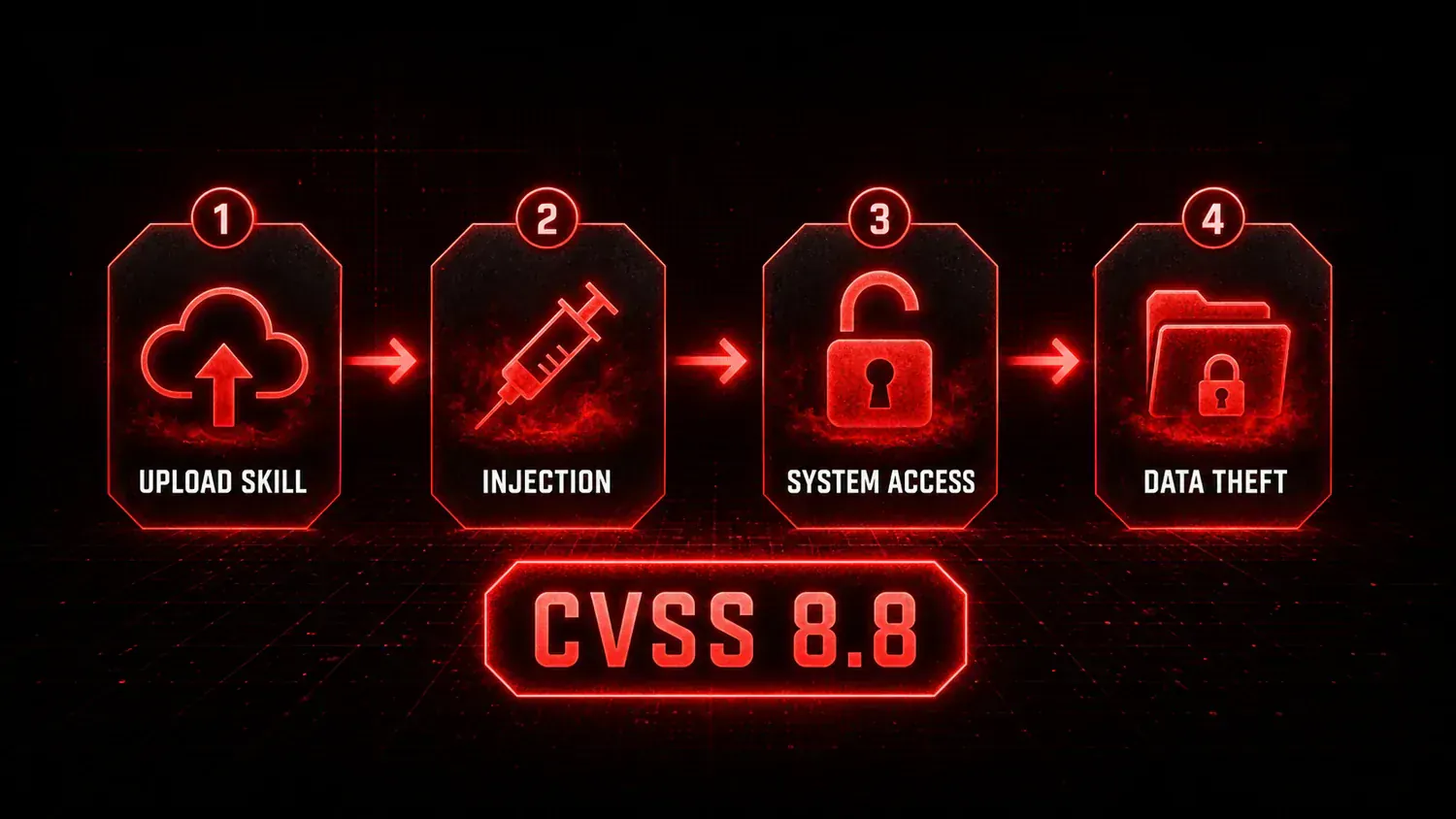
Here's what the bug actually is, based on the vendors who analysed it. CVE-2026-25253 is a one-click remote code execution flaw caused by authentication-token theft. OpenClaw's Control UI trusted an unvalidated gatewayUrl query parameter and exfiltrated the gateway token over a WebSocket connection, classified as CWE-669. In plain terms: an attacker could trick the UI into handing its access token to an attacker-controlled server, then use that token to run code.
That's a meaningfully different problem from the prompt-injection story that circulated early on. ProArch put it bluntly: this is "remote code execution via token theft, not prompt injection." The attack doesn't need the agent to read a poisoned web page and get talked into misbehaving. It needs a victim to click one crafted link.
The reason the distinction matters for defenders: a token-theft RCE is about how your agent's UI handles untrusted parameters and where it sends credentials, not about how it sanitises page content. The fix lives in different code, and so does the hardening you'd do on your side.
Discovery and Disclosure
The earlier version of this article credited the find to a researcher named Elena Vasquez during an OSTIF-funded audit, with a 90-day responsible disclosure window. None of that holds up. No source ties a researcher by that name, or OSTIF funding, to this CVE, and the real timeline doesn't fit a 90-day private window at all.
The verifiable timeline, per ProArch (opens in a new tab), runs much tighter: discovery in late January 2026, public disclosure around 3 February 2026, and a patched build (version 2026.1.29) out the door on roughly 29-30 January. So the original "April 2026" date was wrong too, this was a January, February story.
Treat the "Elena Vasquez / OSTIF / 90-day disclosure" account as unconfirmed and most likely fabricated. The CVE is real; the backstory attached to it isn't.
The Fix
The patch shipped fast. A fixed version, 2026.1.29 (opens in a new tab), landed in late January, which is consistent with a quick turnaround. The specific "within 48 hours of disclosure" figure can't be confirmed against the real chronology, so read that as a rough characterisation rather than a measured number.
A note on the four-part fix described in the earlier draft, input sanitisation, instruction separation, capability restrictions, and a content-security-policy-style mechanism. Those defences map to the prompt-injection story, not the actual token-theft bug. For a token-theft RCE, the relevant fix is validating that gatewayUrl parameter and refusing to send credentials to untrusted origins. The hardening principles below still apply to running any agent safely, but the specific remediation here was about credential handling, not page sanitisation.
That said, the broader defensive ideas remain sound for anyone deploying an agent:
Input handling: Don't trust parameters from the URL or untrusted content. Validate before you act on them.
Instruction separation: Keep system instructions isolated from anything that came from a user or a web page.
Capability restrictions: Run the agent with the least privilege it can get away with. File system access, external API calls, and sensitive operations should need explicit confirmation.
Origin checks: Never send tokens or credentials to an origin you haven't verified.
The Independent Audit
The earlier draft claimed the CVE triggered OpenClaw's first comprehensive independent audit, run by Trail of Bits over six weeks, which found CVE-2026-25253 to be the only critical issue plus two medium-severity bugs. Both claims are unsupported, and the second one contradicts the public record.
No source found ties Trail of Bits to an OpenClaw audit. The audits that are documented came from other parties, for example, an analysis that found over 41% of popular OpenClaw skills contained security vulnerabilities (opens in a new tab), plus reviews attributed to CertiK and others. So treat the "Trail of Bits six-week audit" as unverified.
The "only one critical vulnerability" claim is the bigger problem. The reality looks like the opposite of a clean bill of health: reporting points to OpenClaw facing a multi-vector security crisis through 2026 (opens in a new tab), with sources citing 138+ CVEs, one formal audit turning up 512 vulnerabilities (8 of them critical), and a supply-chain poisoning campaign in its skills marketplace. A single-critical-issue narrative doesn't match that record, so it's flagged as likely fabricated.
Community Impact
The original framing here was that the incident strengthened confidence in OpenClaw's security and that enterprise adopters cited the audit as a deciding factor. The available sources don't back that up, and several point the other way.
Conscia, among others, describes OpenClaw's 2026 situation as a security crisis (opens in a new tab), RCE, supply-chain skill poisoning, and a large share of skills carrying vulnerabilities. No source supports the idea that enterprises picked OpenClaw *because* of an audit. So the "credibility win" reading is unconfirmed and runs against the documented picture.
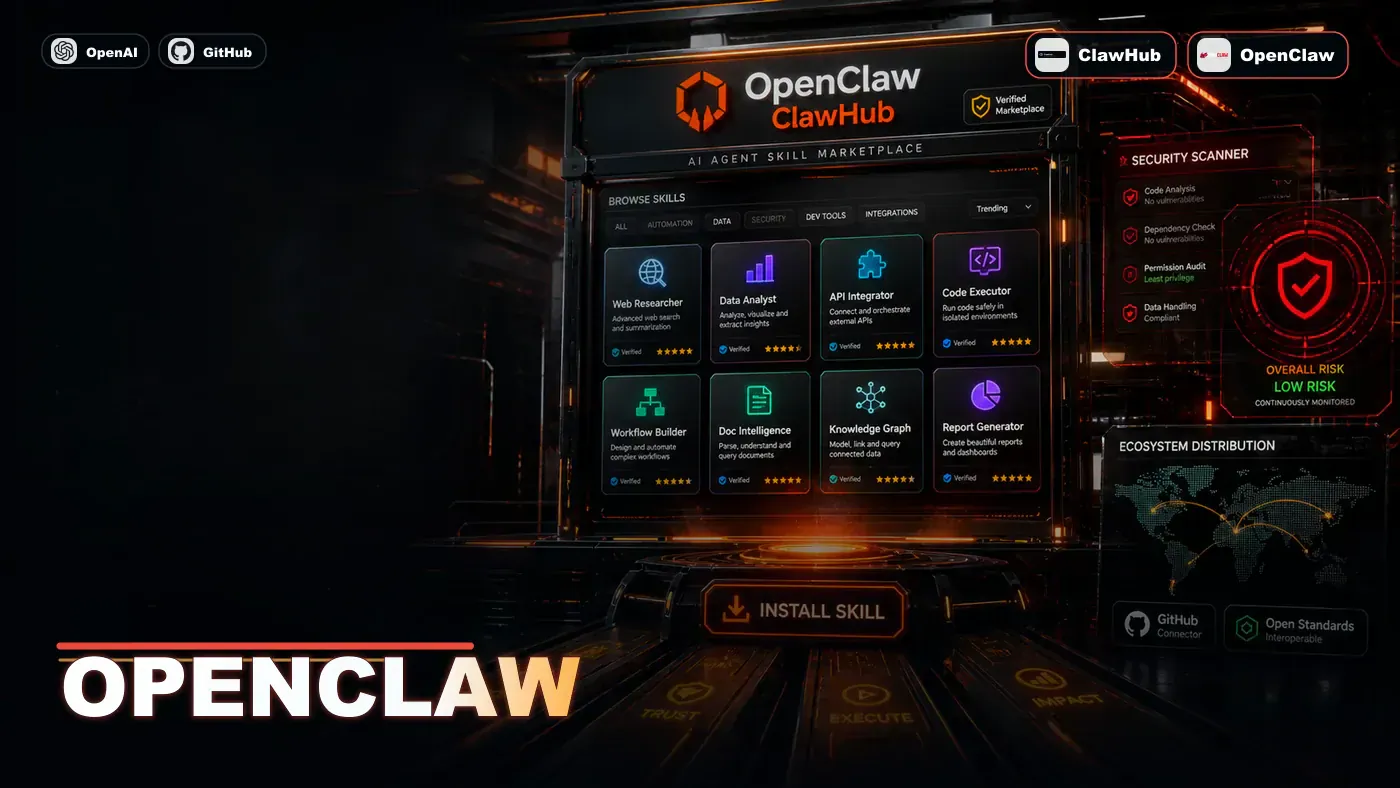
What's true and worth holding onto: OpenClaw is a real, widely used open-source agent framework with shell, browser automation, and file skills, plus a ClawHub-style skills marketplace (opens in a new tab). And it is genuinely popular, around 345,000 GitHub stars (opens in a new tab) as of April 2026. Popularity and a working patch are facts. The tidy "this made everyone trust us more" story is not.
Lessons for the Agent Ecosystem
Strip away the parts that didn't check out, and there's still a real lesson here for anyone running agent software in a business.
- Untrusted input is everywhere: Agents pull in content and parameters from sources you don't control. A URL parameter is untrusted input just like a web page is.
- Credentials are the crown jewels: This bug was a token-theft RCE. Where your agent stores and sends its tokens matters more than almost anything else.
- Default permissions should be tight: Least privilege by default. If a skill doesn't need file access, don't give it file access.
- Security is ongoing: One patch doesn't close the book. OpenClaw's broader 2026 record, many CVEs, a poisoned skills marketplace, is the real cautionary tale, not a single fixed bug.
If you're evaluating OpenClaw or any self-hosted agent for your team, the honest summary is this: the project is real and popular, this particular CVE was patched quickly, but the wider security story through 2026 has been rough. Run it sandboxed, keep it patched, lock down skill permissions, and don't take any single "it's all fine now" narrative at face value, including the one this article originally told.
The OpenClaw security audit: answer-first summary
The OpenClaw security audit matters because it can change how Founders and operators plan, build, or govern an agent workflow. CVE-2026-25253 was a one-click remote code execution bug in OpenClaw, caused by token theft, not prompt injection.
The direct answer is this: do not treat the topic as a standalone trend. Treat it as a decision about inputs, outputs, review ownership, data exposure, and whether the workflow produces a result that is faster, safer, or more useful than the current process.
The OpenClaw security audit: implementation checklist
- Define the user, job to be done, and success metric for the agent workflow.
- Collect real examples, policies, source files, customer questions, or search queries before writing prompts or choosing tools.
- Separate low-risk drafts from decisions that need approval, privacy checks, or senior review.
- Document what the AI is allowed to access, what it must not access, and who signs off before production use.
- Review successful task completion, review time, fallback rate, operator corrections after a small pilot rather than judging the idea from a demo.
This keeps the work practical. It also gives search engines and AI answer engines a clean factual structure: what the topic is, who it helps, what to do next, and which risks matter before implementation.
Decision criteria for The OpenClaw security audit
| Decision area | What to check | Production signal |
|---|---|---|
| Intent | Does The OpenClaw security audit solve a real workflow problem? | The use case has a named owner and measurable outcome. |
| Data | Can the required data be used safely? | Sensitive data is classified and access is controlled. |
| Quality | Can a reviewer judge the output consistently? | Examples, rubrics, or acceptance criteria exist. |
| Scale | Can the workflow be repeated without hero effort? | The process is documented and can be handed to another team member. |
Practical example for The OpenClaw security audit
A small business could use this article to choose one practical test. For example, a manager might take one customer-facing process, one internal document workflow, or one recurring content task and redesign only that step with AI support. The goal is not to automate the whole business at once; it is to learn where AI News creates reliable leverage.
The useful deliverable is a short operating note: the trigger, the source material, the prompt or tool, the review checklist, the escalation rule, and the metric. That note becomes the handover asset for staff training, SEO/GEO content, service delivery, or future agent work.
Risks and controls for The OpenClaw security audit
The common failure pattern is moving too quickly from a promising idea into an unmanaged workflow. For The OpenClaw security audit, the risk is not only bad output. It can also be unclear data permission, staff confusion, duplicate content, unreviewed customer advice, or a tool that quietly changes cost or capability.
- Control unclear tool permissions with a named owner, a review step, and written acceptance criteria.
- Control silent failures with a named owner, a review step, and written acceptance criteria.
- Control prompt drift with a named owner, a review step, and written acceptance criteria.
- Control weak audit trails with a named owner, a review step, and written acceptance criteria.
Measurement plan for The OpenClaw security audit
A useful AI or SEO initiative should leave evidence. Track successful task completion, review time, fallback rate, operator corrections and compare the pilot against the current process. If the measure does not improve, keep the learning but avoid scaling the workflow.
For GEO readiness, the page should also answer the core question directly, define the entities involved, include implementation steps, explain tradeoffs, and link readers to the next relevant AI Kick Start service, guide, tool, or article.
Definitions and entities for The OpenClaw security audit
For search, GEO, and staff handover, define the core entities in plain language. In this article the important entities are the workflow owner, the AI tool or model, the source material, the review process, the risk boundary, and the measurable business outcome. Clear definitions make the page easier for people to scan and easier for AI answer engines to quote accurately.
- Workflow owner: the person accountable for deciding whether The OpenClaw security audit belongs in the business process.
- Source material: the documents, examples, policies, URLs, prompts, videos, or customer questions that ground the output.
- Review boundary: the point where a human checks accuracy, privacy, brand voice, or customer impact before the result is used.
- Success metric: the measure that proves whether the agent workflow is worth repeating.
The OpenClaw security audit versus doing nothing
Doing nothing is also a decision. The cost may be slow manual work, weaker search visibility, inconsistent advice, duplicated effort, or staff using unmanaged AI tools without a shared process. The practical question is whether a controlled pilot can reduce that cost without creating a larger governance problem.
| Option | When it makes sense | What to watch |
|---|---|---|
| Do nothing | The workflow is rare, low value, or already reliable. | Competitors may improve speed, content depth, or service consistency first. |
| Run a small pilot | The task repeats often and has clear review criteria. | Keep scope tight and measure the result against the current process. |
| Build a production workflow | The pilot is repeatable and risk controls are documented. | Assign ownership, monitoring, training, and a rollback path. |
AI Kick Start handover package for The OpenClaw security audit
A production handover should be concrete enough that another person can run it. For The OpenClaw security audit, that means a short brief, a workflow map, approved prompts or tool settings, source material, a review checklist, internal links to supporting resources, and a simple measurement sheet. This is the difference between reading about AI and turning it into operational capability.
That packaging also strengthens E-E-A-T. It shows experience through implementation notes, expertise through decision criteria, authoritativeness through source-aware structure, and trust through risks, controls, and review steps. The article becomes useful even if the reader never buys a tool because it helps them make a better operational decision.