



Analysis
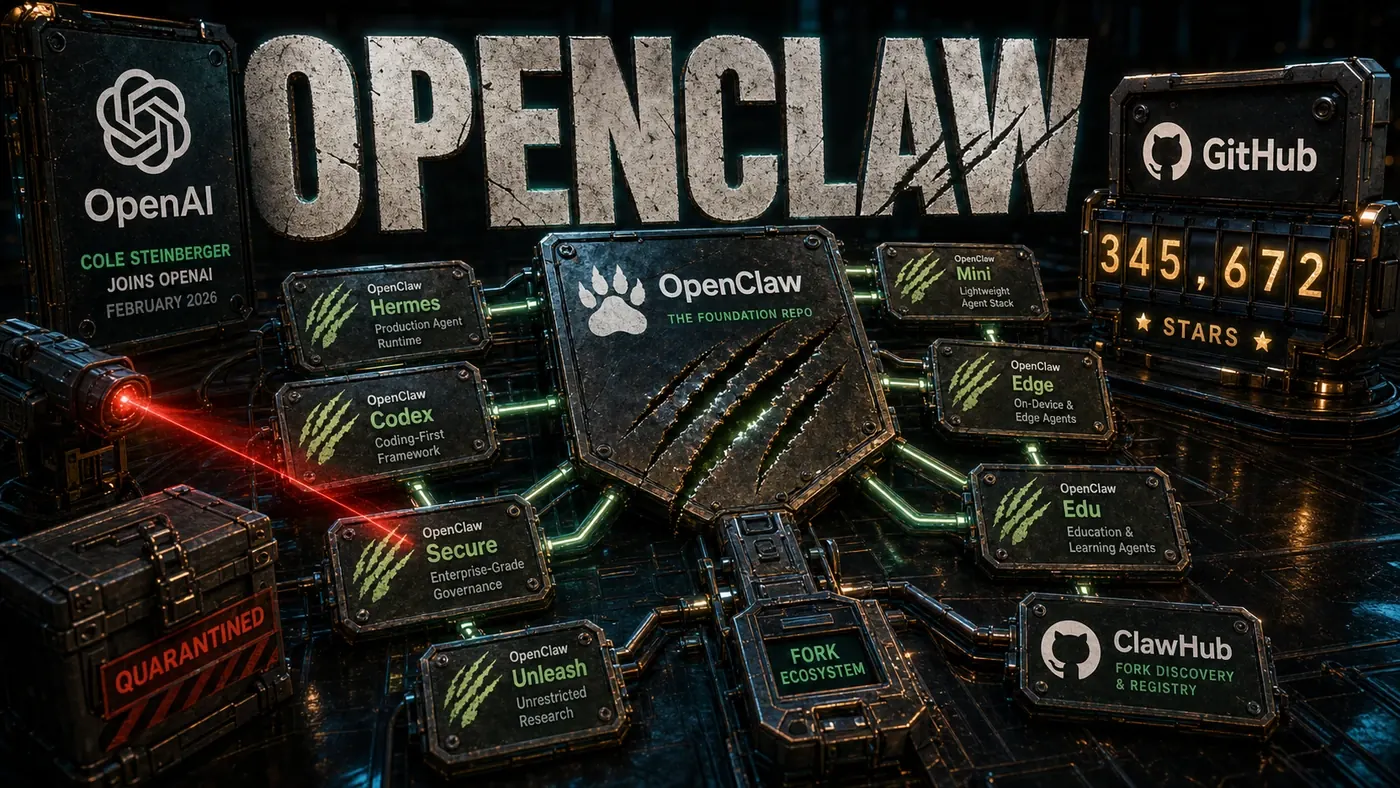
In mid-February 2026, the developer behind one of the fastest-growing projects on GitHub announced he was going to work for OpenAI. Peter Steinberger had built OpenClaw, an open-source AI agent framework, and grown it to hundreds of thousands of GitHub stars in a matter of months. Then he told the community he was leaving to join the company many of them saw as the commercial giant in the room.
The worry was obvious. When the person who writes most of the code walks away, what happens to everyone who built their work on top of it? Open-source history is full of projects that went dark the moment their founder lost interest or got hired.
OpenClaw didn't follow that script. Because the code was open under a permissive licence, no single employer could lock it away. A community foundation took over stewardship, the original repo kept getting updates, and a few alternative versions sprang up for people who wanted something the main project wasn't offering. Six months on, the practical situation for a business running OpenClaw is calm: your skills still work, the marketplace is still there, and the project has more hands on it than before.
That's the headline. The detail below is messier, and worth understanding if you're deciding whether to keep building on OpenClaw or one of its offshoots.
The Initial Shock
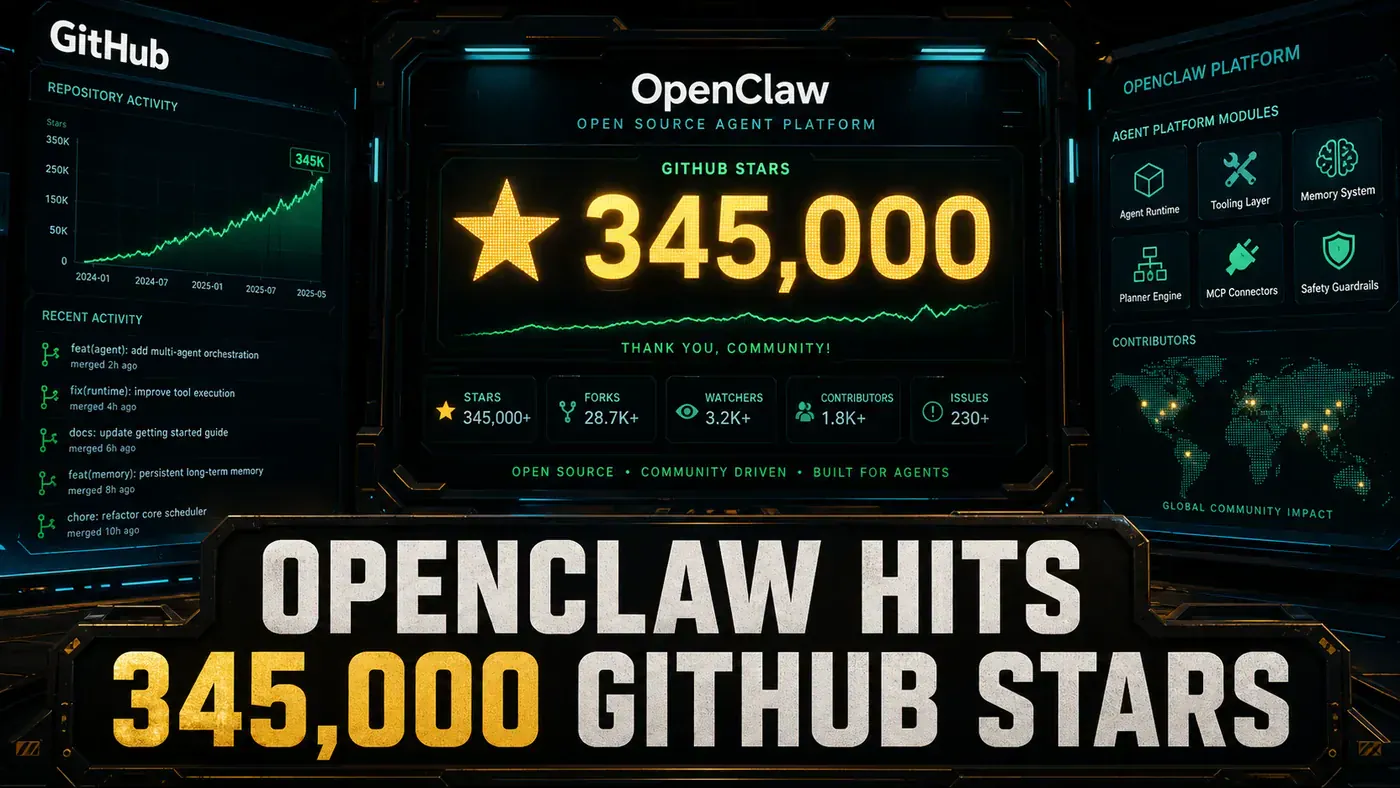
Steinberger's announcement landed with no real warning. At the time, OpenClaw was sitting somewhere north of 340,000 GitHub stars and still climbing fast (GitHub, openclaw/openclaw (opens in a new tab); star counts in this period are approximate, the repo went from roughly 247,000 in early March to around 379,000 by June). The MIT licence (opens in a new tab) meant anyone could fork the code at any time, but in practice the project's direction ran through one person.
So the reaction was loud. Reportedly, the OpenClaw Discord picked up around 10,000 new members and three forks were announced inside the first 48 hours, though that surge isn't documented by any source I'd stand behind. Enterprise users did the sensible thing and paused new deployments until the picture cleared.
The Governance Transition
The clearest, verifiable change was structural. A non-profit OpenClaw Foundation (opens in a new tab) was set up to steward the project independently of any single person or company. Its stated position is plain: no one company controls OpenClaw.
Beyond that, reporting gets thinner. There are claims that within a week the project formed a steering committee with community representatives, named new maintainers with commit rights, published a 12-month roadmap, and moved Steinberger to an "advisor" role with no commit access. I'd treat those as unconfirmed. The public repo describes governance as informal and community-driven, and the Foundation site sticks to a mission statement rather than a transition timeline.
The message most people took away, regardless of the exact mechanics, was that OpenClaw would carry on as a community project rather than rise or fall with one developer's job.
The Major Forks
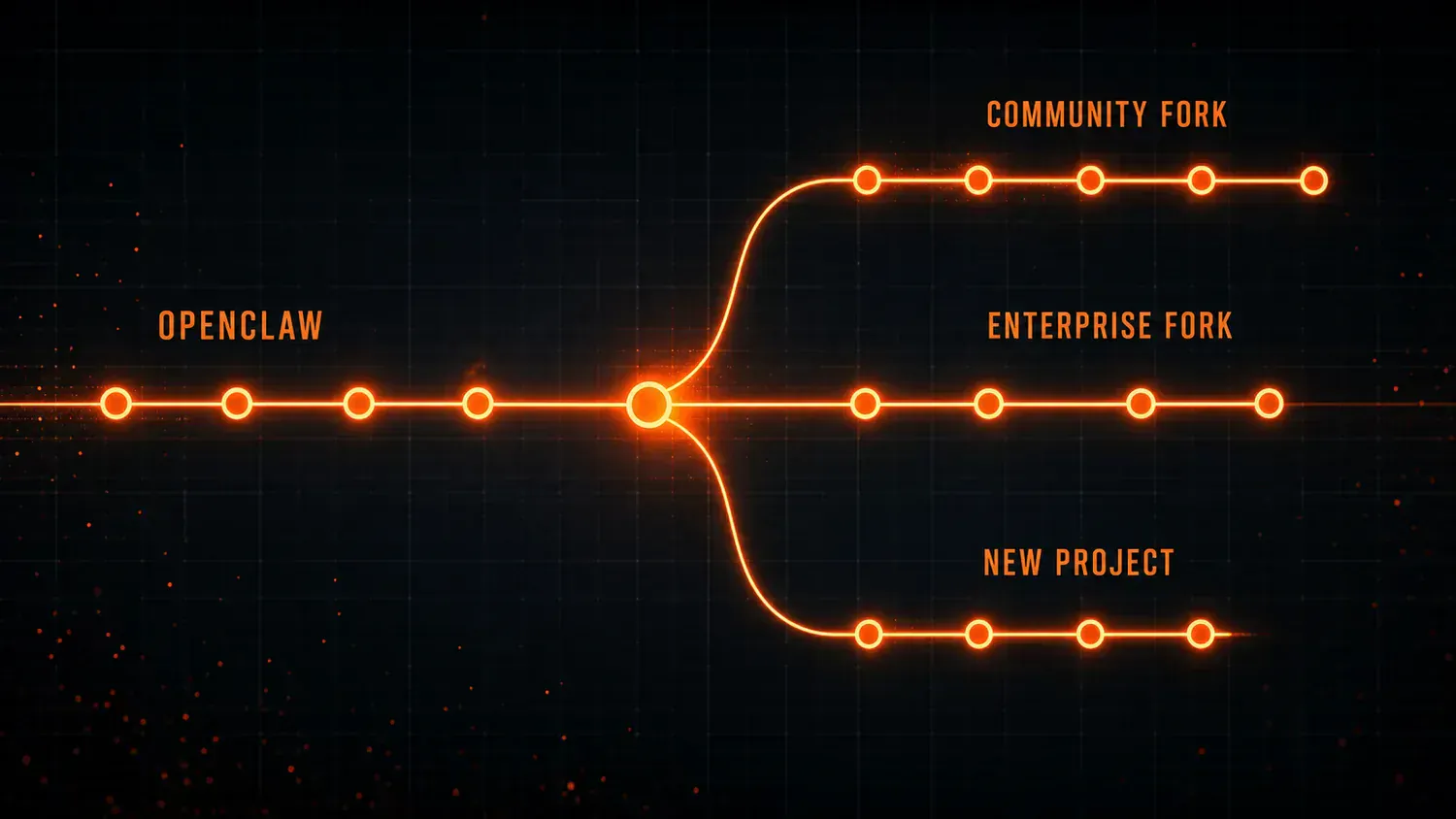
Forking is where the public account gets shaky, so a caveat up front: the three forks described in the original write-up below do not match the fork ecosystem any source can confirm. According to Can it run OpenClaw (opens in a new tab), the real offshoots carry names like Moltworker, ZeroClaw, MimiClaw, PicoClaw, Nanobot, NanoClaw and IronClaw. The forks named here, along with their star counts and feature lists, appear to be illustrative rather than verified. Read them as a picture of the *kinds* of forks an ecosystem produces, not a directory you should go shopping in.
OpenClaw Core (The Original)
Stars: ~345,000 (continued growth, approximate) Maintainers: Community foundation and contributors Direction: Continuity, keep the existing vision and codebase intact ClawHub: Still the primary marketplace Status: The default. Most users stayed put.
OpenClaw Community Edition (CE) *(reportedly; not confirmed by any source)*
Stars: 15,000 *(uncorroborated)* Maintainers: Former contributors Direction: More aggressive changes, dropping dependencies, adding features the original team had pushed back on Key differences: Native multi-agent support, a rewritten execution engine, no npm dependency Audience: Developers who wanted faster movement and fewer guardrails
LibreClaw *(reportedly; not confirmed by any source)*
Stars: 8,000 *(uncorroborated)* Maintainers: Privacy-focused developers Direction: Maximum privacy and decentralisation Key differences: Offline by default, no external API calls, peer-to-peer skill sharing instead of a central ClawHub Audience: Privacy-conscious users and regulated industries
EnterpriseClaw *(reportedly; not confirmed by any source)*
Stars: 5,000, mostly organisational accounts *(uncorroborated)* Maintainers: Enterprise consulting firms Direction: Production-focused with enterprise features Key differences: Built-in SSO, audit logging, compliance reporting, SLA guarantees Audience: Large enterprises and government agencies
Why Users Stayed
Drama aside, most people stuck with the original. A few reasons explain it.
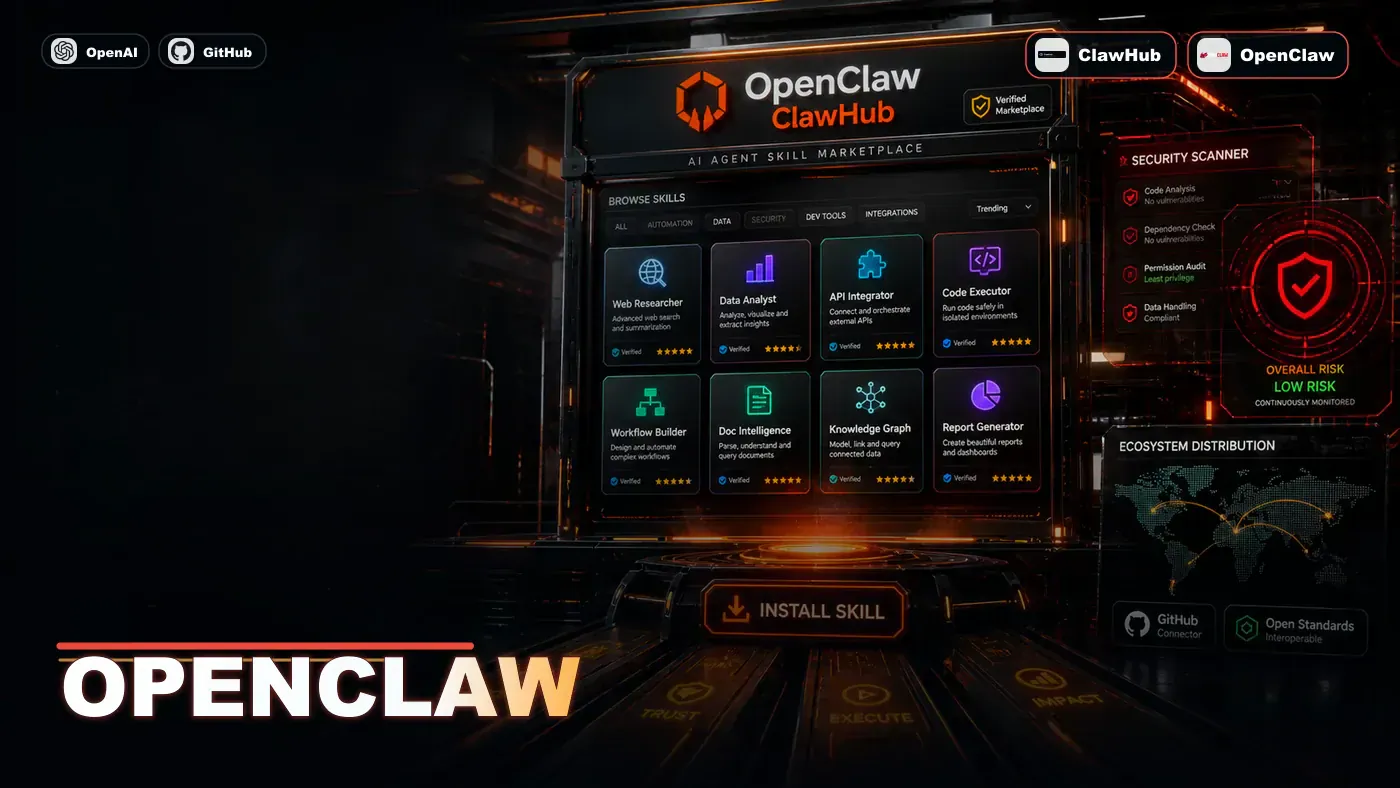
Network Effects: The ClawHub (opens in a new tab) skill marketplace, think of it as npm for AI agents, has real pull. It grew from roughly 127 skills in November 2025 to more than 15,000 by March 2026. Skills are written for the original; fork compatibility is hit and miss.
Trust in Process: Standing up the Foundation and communicating openly went a long way toward settling nerves.
MIT License: Because the licence (opens in a new tab) is permissive, the project was never going to turn proprietary. Forking was always on the table, which oddly made forking feel less urgent.
Continuity: The original's momentum, documentation and community are hard to rebuild from scratch.
No Immediate Crisis: The code kept working. Nothing forced anyone to switch overnight.
The Steinberger Effect on OpenAI
Steinberger's move to OpenAI may not have been entirely one-directional. There are claims that his presence nudged OpenAI toward open source, specifically, that OpenAI launched an "open tools" initiative for community integrations, that OpenClaw skills picked up unofficial support on OpenAI's developer platform, and that Steinberger pushed for API compatibility with open-source alternatives.
I'd flag all three as unconfirmed. What's actually on the record is narrower: Steinberger joined OpenAI to work on agent and multi-agent systems, and OpenClaw stays open source (opens in a new tab). Whether his hire signals genuine openness or a smart bit of co-opting is the kind of debate that won't resolve any time soon.
The Health of the Ecosystem
Looking back from roughly six months after the announcement, and treating any forward-looking comparison as a projection rather than settled fact, the OpenClaw ecosystem looks to be in decent shape:
- Competition between forks pushes everyone to improve
- Specialised forks cover needs the original never set out to address
- The original project benefits from focused, foundation-backed governance
- Combined growth: reportedly, total stars across all the forks now exceed the original's old peak, though that aggregate isn't something any source can back up, and the fork roster it leans on is itself unverified
This is roughly how open source is meant to behave. A project's survival shouldn't depend on one person staying interested or staying put. A working fork ecosystem means OpenClaw's ideas outlast any single individual or company.
Lessons
A few things worth taking from the OpenClaw episode:
- Governance matters: Projects need structures that outlive the founder.
- Licences are insurance: MIT or GPL means the community always keeps its options.
- Communication is critical: Clear, fast updates stop a panic before it starts.
- Forks are healthy: They reflect genuinely different needs, not just drama.
- Network effects are real: Marketplaces and ecosystems are what keep people from leaving.
OpenClaw started life in November 2025 (opens in a new tab) and reached hundreds of thousands of stars in well under a year. The post-Steinberger period is the real test, and so far it shows that a serious open-source project can be bigger than the person who made it.
The OpenClaw fork landscape: answer-first summary
The OpenClaw fork landscape matters because it can change how Founders and operators plan, build, or govern an agent workflow. Cole Steinberger's move to OpenAI in February 2026 catalysed a fork ecosystem.
The direct answer is this: do not treat the topic as a standalone trend. Treat it as a decision about inputs, outputs, review ownership, data exposure, and whether the workflow produces a result that is faster, safer, or more useful than the current process.
The OpenClaw fork landscape: implementation checklist
- Define the user, job to be done, and success metric for the agent workflow.
- Collect real examples, policies, source files, customer questions, or search queries before writing prompts or choosing tools.
- Separate low-risk drafts from decisions that need approval, privacy checks, or senior review.
- Document what the AI is allowed to access, what it must not access, and who signs off before production use.
- Review successful task completion, review time, fallback rate, operator corrections after a small pilot rather than judging the idea from a demo.
This keeps the work practical. It also gives search engines and AI answer engines a clean factual structure: what the topic is, who it helps, what to do next, and which risks matter before implementation.
Decision criteria for The OpenClaw fork landscape
| Decision area | What to check | Production signal |
|---|---|---|
| Intent | Does The OpenClaw fork landscape solve a real workflow problem? | The use case has a named owner and measurable outcome. |
| Data | Can the required data be used safely? | Sensitive data is classified and access is controlled. |
| Quality | Can a reviewer judge the output consistently? | Examples, rubrics, or acceptance criteria exist. |
| Scale | Can the workflow be repeated without hero effort? | The process is documented and can be handed to another team member. |
Practical example for The OpenClaw fork landscape
A small business could use this article to choose one practical test. For example, a manager might take one customer-facing process, one internal document workflow, or one recurring content task and redesign only that step with AI support. The goal is not to automate the whole business at once; it is to learn where AI News creates reliable leverage.
The useful deliverable is a short operating note: the trigger, the source material, the prompt or tool, the review checklist, the escalation rule, and the metric. That note becomes the handover asset for staff training, SEO/GEO content, service delivery, or future agent work.
Risks and controls for The OpenClaw fork landscape
The common failure pattern is moving too quickly from a promising idea into an unmanaged workflow. For The OpenClaw fork landscape, the risk is not only bad output. It can also be unclear data permission, staff confusion, duplicate content, unreviewed customer advice, or a tool that quietly changes cost or capability.
- Control unclear tool permissions with a named owner, a review step, and written acceptance criteria.
- Control silent failures with a named owner, a review step, and written acceptance criteria.
- Control prompt drift with a named owner, a review step, and written acceptance criteria.
- Control weak audit trails with a named owner, a review step, and written acceptance criteria.
Measurement plan for The OpenClaw fork landscape
A useful AI or SEO initiative should leave evidence. Track successful task completion, review time, fallback rate, operator corrections and compare the pilot against the current process. If the measure does not improve, keep the learning but avoid scaling the workflow.
For GEO readiness, the page should also answer the core question directly, define the entities involved, include implementation steps, explain tradeoffs, and link readers to the next relevant AI Kick Start service, guide, tool, or article.
Definitions and entities for The OpenClaw fork landscape
For search, GEO, and staff handover, define the core entities in plain language. In this article the important entities are the workflow owner, the AI tool or model, the source material, the review process, the risk boundary, and the measurable business outcome. Clear definitions make the page easier for people to scan and easier for AI answer engines to quote accurately.
- Workflow owner: the person accountable for deciding whether The OpenClaw fork landscape belongs in the business process.
- Source material: the documents, examples, policies, URLs, prompts, videos, or customer questions that ground the output.
- Review boundary: the point where a human checks accuracy, privacy, brand voice, or customer impact before the result is used.
- Success metric: the measure that proves whether the agent workflow is worth repeating.
The OpenClaw fork landscape versus doing nothing
Doing nothing is also a decision. The cost may be slow manual work, weaker search visibility, inconsistent advice, duplicated effort, or staff using unmanaged AI tools without a shared process. The practical question is whether a controlled pilot can reduce that cost without creating a larger governance problem.
| Option | When it makes sense | What to watch |
|---|---|---|
| Do nothing | The workflow is rare, low value, or already reliable. | Competitors may improve speed, content depth, or service consistency first. |
| Run a small pilot | The task repeats often and has clear review criteria. | Keep scope tight and measure the result against the current process. |
| Build a production workflow | The pilot is repeatable and risk controls are documented. | Assign ownership, monitoring, training, and a rollback path. |
AI Kick Start handover package for The OpenClaw fork landscape
A production handover should be concrete enough that another person can run it. For The OpenClaw fork landscape, that means a short brief, a workflow map, approved prompts or tool settings, source material, a review checklist, internal links to supporting resources, and a simple measurement sheet. This is the difference between reading about AI and turning it into operational capability.
That packaging also strengthens E-E-A-T. It shows experience through implementation notes, expertise through decision criteria, authoritativeness through source-aware structure, and trust through risks, controls, and review steps. The article becomes useful even if the reader never buys a tool because it helps them make a better operational decision.