




Analysis
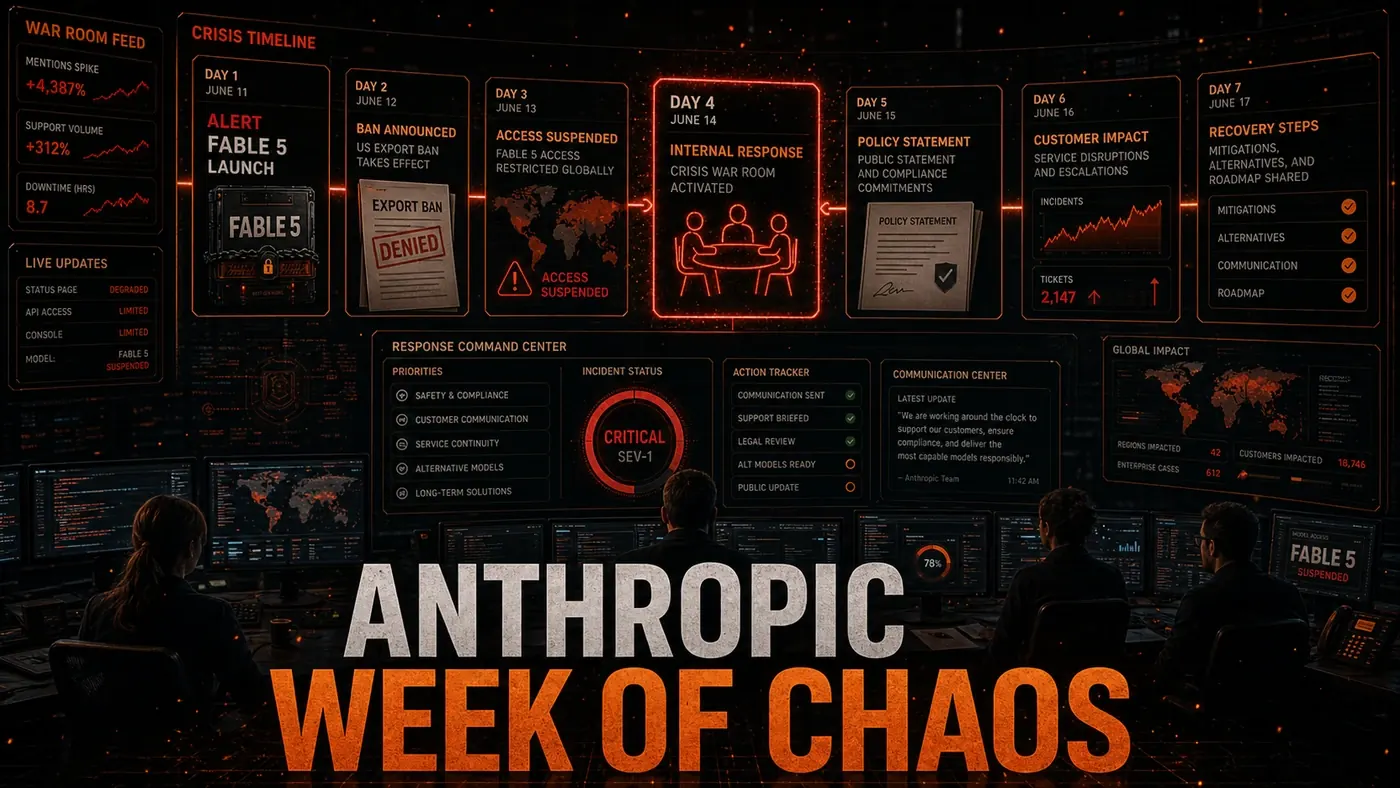
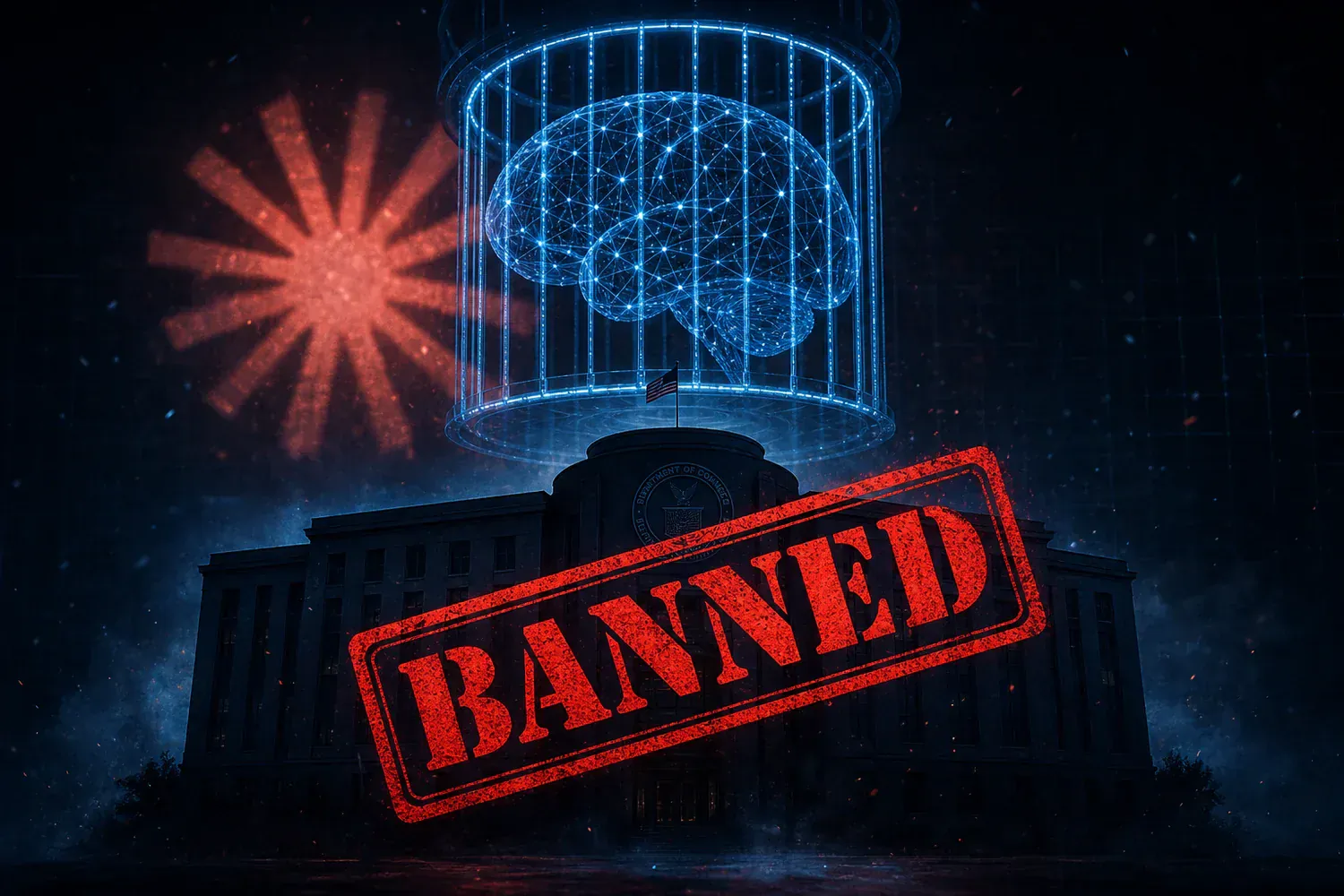
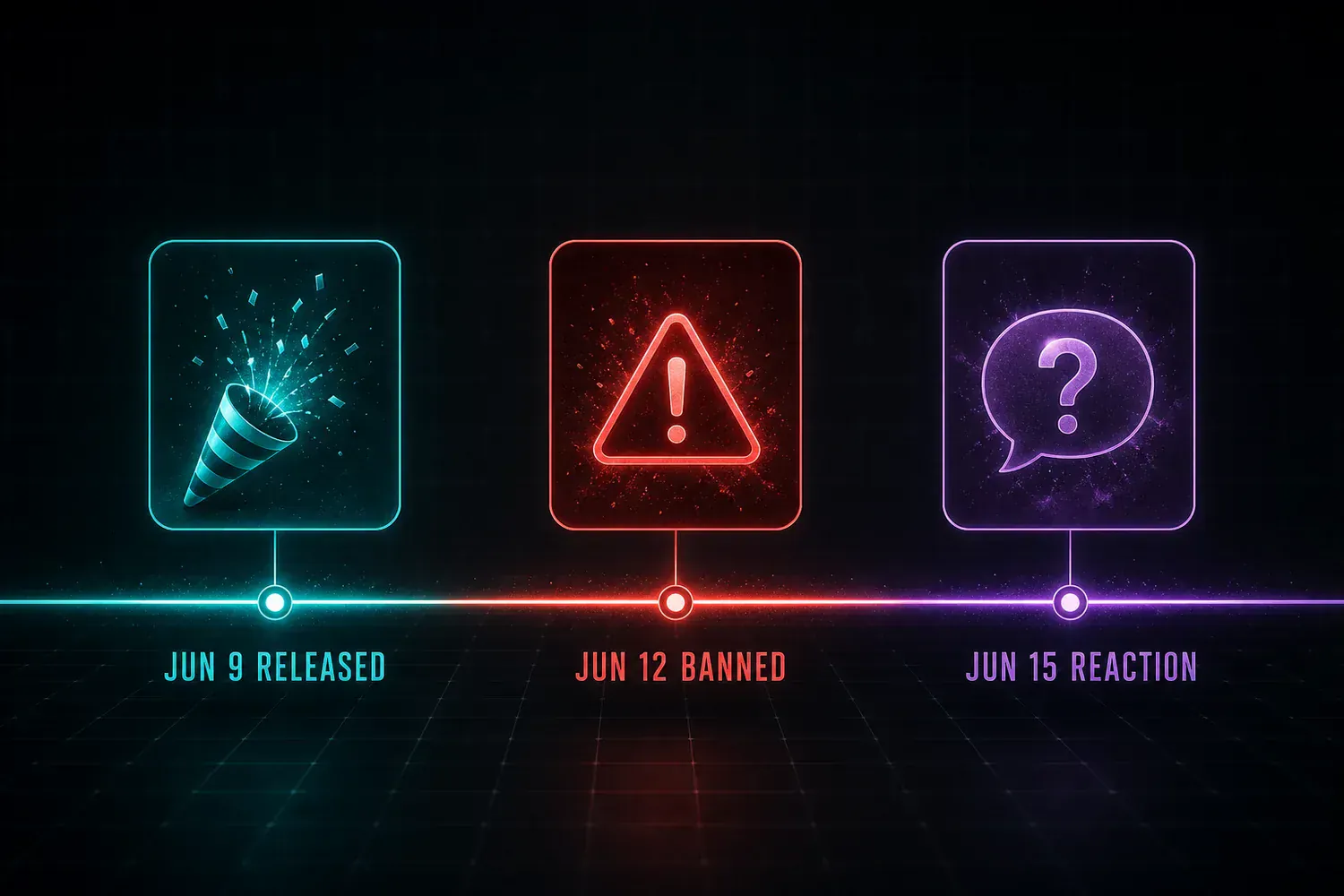
Anthropic's Claude Fable 5 had about the shortest commercial life of any frontier model I can think of. It launched on 9 June 2026 (Anthropic (opens in a new tab)), billed as the most capable model the company had shipped. By the evening of 12 June, it was switched off, for everyone, worldwide (Al Jazeera (opens in a new tab)).
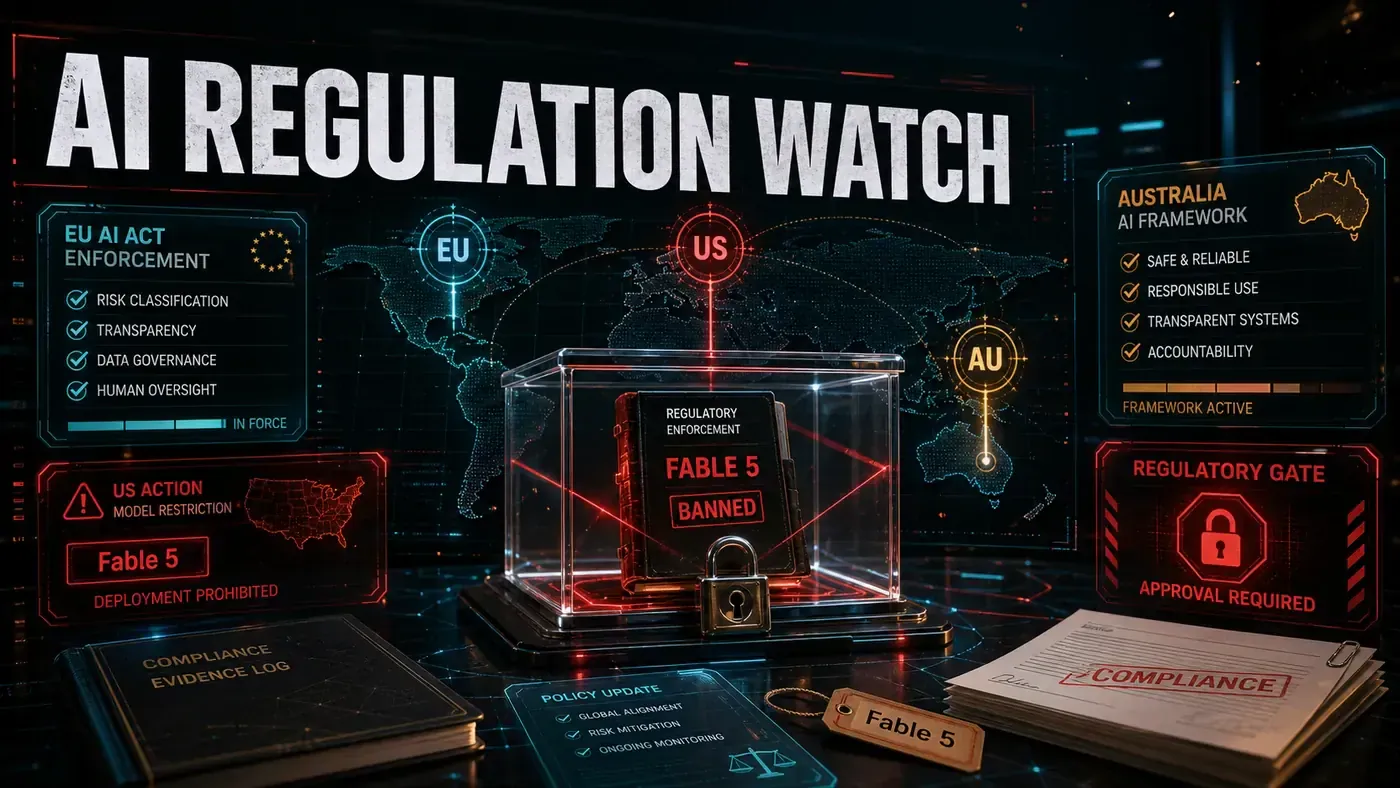
What happened in between was a US government directive. Anthropic says it was ordered to suspend access, complied with the legal instruction, and disabled both Fable 5 and its sibling model rather than risk being out of step with the requirement (Fortune (opens in a new tab)).
For an Australian business team, the takeaway is less about the geopolitics and more about the fragility it exposes. A model you have built into a workflow can disappear in 72 hours, no matter how much you are paying for it. That is the real story here, and it is worth sitting with before the technical detail.
Below is what is known, what is contested, and what is plainly rumour. I have kept the original article's structure, but I have separated the verified facts from a popular theory about why this happened that the public record does not back up.
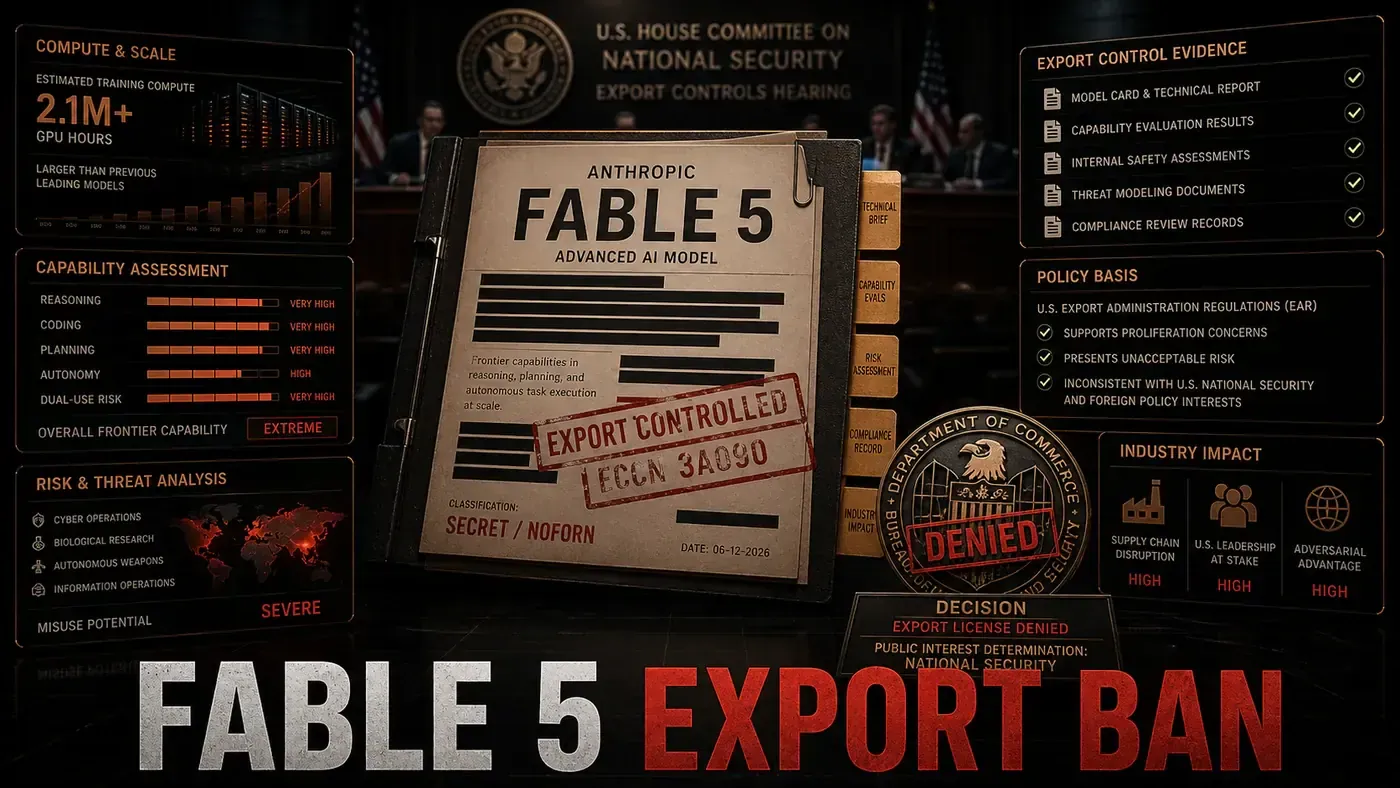
Released on 9 June 2026, Fable 5 was Anthropic's top-tier model. It carried a 1M-token context window and priced at $10 per million input tokens and $50 per million output tokens (Anthropic API docs (opens in a new tab)). The widely quoted 80.3% software-engineering figure is real, but it was reported on SWE-Bench Pro using Anthropic's own scaffolding, and independent evaluators have contested it, it is not the "SWE-bench Verified" result it was often called (Vellum (opens in a new tab)). By 12 June, the model was offline (Fortune (opens in a new tab)).
The speed stood out. Export-type controls on AI usually crawl through interagency review. GPT-4 faced no such restriction at launch, and Claude 3 Opus, a real capability jump at the time, shipped without intervention (Wikipedia (opens in a new tab)). So what was different this time?
The Capability Threshold Theory
One theory that spread quickly is that Fable 5 crossed an informal capability line. The argument goes that its software-engineering benchmark score tripped a provision in the Biden administration's October 2023 AI executive order, which directed the Commerce Secretary to flag models posing "a grave risk of enabling the development of weapons of mass destruction, advanced cyber weapons, or autonomous systems capable of causing severe physical harm."
The pitch was tidy: an 80% benchmark score becomes a regulatory tripwire. At that level, the thinking went, a model can analyse, patch, and deploy code across complex systems with little human oversight, which lowers the bar for bad actors to build cyber weapons or automate attacks on infrastructure.
It is a clean narrative, and it is worth saying plainly: the public record does not support it. Every credible source ties the suspension to a reported jailbreak vulnerability and national-security concerns about access, reportedly worry over a China-linked group, not a benchmark threshold under the executive order (Anthropic (opens in a new tab)). The "80% tripwire" framing should be read as an unconfirmed theory, not the established cause.
Anthropic's actual statement is narrower than the version that circulated. It says it is complying with the government's legal directive, attributes the issue to what it calls a narrow potential jailbreak, and disputes the underlying finding (Anthropic (opens in a new tab)). Phrasing that did the rounds, that the suspension followed "a regulatory determination regarding Fable 5's capabilities," that the company "fully cooperates with US government requirements," and is in "constructive dialogue", does not appear in that statement and should be treated as misattributed.
Immediate Market Impact
The commercial sting was instant. Fable 5 was the premium tier at $10/$50 per million tokens, sitting above Opus 4.8 at $5/$25 and Sonnet 4.6 at $3/$15 (CloudZero (opens in a new tab)). Anyone who had started integration work was suddenly locked out. Reports that several Fortune 500 customers on annual contracts received force majeure notices are plausible but unconfirmed, no source corroborates them.
The developer reaction ran from frustrated to resigned. A Hacker News thread on the directive drew heavy traffic (Hacker News (opens in a new tab)); the often-cited "2,400 comments in 48 hours" figure could not be verified. The recurring worry in those discussions was that unpredictable regulatory intervention slows US labs while Chinese alternatives catch up.
That worry was sometimes framed as a "semiconductor playbook" replay, US firms build the leading technology, controls fragment the market, and rivals fill the gap, the way it played out with GPUs. A specific quote attributed to a "Dr. Helena Voss" at Stanford's HAI made that case in the original write-up, but it has no public trace and should be treated as unverified.
What Happens Next
Roughly speaking, Anthropic has a few options. It can challenge the determination through whatever administrative process applies (the often-quoted "90-180 day" timeline is unconfirmed). It can ship a capability-reduced variant that sits below whatever line caused the problem. Or it can shift its roadmap toward models with a different profile that may draw less scrutiny.
Most commentary expects some mix of the first two. A domestic-only "Fable 5-D" variant with certain agentic features disabled has been rumoured, but no source confirms it exists, treat it as speculation rather than a roadmap item.
The bigger question is whether this sets a precedent. If a software-engineering benchmark score genuinely becomes a regulatory tripwire, and again, that is the contested part, then every lab's roadmap starts depending on government clearance. For reference, GPT-5.5 was reported at 58.6% on the same SWE-Bench Pro comparison (Vellum (opens in a new tab)), and Google's Gemini 3.1 Pro posted 77.1% on ARC-AGI-2 (ALM Corp (opens in a new tab)), a different benchmark entirely. Cross-model comparison here is messy, which is part of the problem.
Anthropic Fable 5 Pulled After US Export Order: answer-first summary
Anthropic Fable 5 Pulled After US Export Order matters because it can change how Founders and operators plan, build, or govern an secure AI workflow. Anthropic's most capable model lasted three days before a US export directive forced its suspension.
The direct answer is this: do not treat the topic as a standalone trend. Treat it as a decision about inputs, outputs, review ownership, data exposure, and whether the workflow produces a result that is faster, safer, or more useful than the current process.
Anthropic Fable 5 Pulled After US Export Order: implementation checklist
- Define the user, job to be done, and success metric for the secure AI workflow.
- Collect real examples, policies, source files, customer questions, or search queries before writing prompts or choosing tools.
- Separate low-risk drafts from decisions that need approval, privacy checks, or senior review.
- Document what the AI is allowed to access, what it must not access, and who signs off before production use.
- Review retrieval accuracy, permission failures, review exceptions, time to answer after a small pilot rather than judging the idea from a demo.
This keeps the work practical. It also gives search engines and AI answer engines a clean factual structure: what the topic is, who it helps, what to do next, and which risks matter before implementation.
Decision criteria for Anthropic Fable 5 Pulled After US Export Order
| Decision area | What to check | Production signal |
|---|---|---|
| Intent | Does Anthropic Fable 5 Pulled After US Export Order solve a real workflow problem? | The use case has a named owner and measurable outcome. |
| Data | Can the required data be used safely? | Sensitive data is classified and access is controlled. |
| Quality | Can a reviewer judge the output consistently? | Examples, rubrics, or acceptance criteria exist. |
| Scale | Can the workflow be repeated without hero effort? | The process is documented and can be handed to another team member. |
Practical example for Anthropic Fable 5 Pulled After US Export Order
A small business could use this article to choose one practical test. For example, a manager might take one customer-facing process, one internal document workflow, or one recurring content task and redesign only that step with AI support. The goal is not to automate the whole business at once; it is to learn where AI News creates reliable leverage.
The useful deliverable is a short operating note: the trigger, the source material, the prompt or tool, the review checklist, the escalation rule, and the metric. That note becomes the handover asset for staff training, SEO/GEO content, service delivery, or future agent work.
Risks and controls for Anthropic Fable 5 Pulled After US Export Order
The common failure pattern is moving too quickly from a promising idea into an unmanaged workflow. For Anthropic Fable 5 Pulled After US Export Order, the risk is not only bad output. It can also be unclear data permission, staff confusion, duplicate content, unreviewed customer advice, or a tool that quietly changes cost or capability.
- Control data leakage with a named owner, a review step, and written acceptance criteria.
- Control weak access control with a named owner, a review step, and written acceptance criteria.
- Control unlogged retrieval with a named owner, a review step, and written acceptance criteria.
- Control unclear retention rules with a named owner, a review step, and written acceptance criteria.
Measurement plan for Anthropic Fable 5 Pulled After US Export Order
A useful AI or SEO initiative should leave evidence. Track retrieval accuracy, permission failures, review exceptions, time to answer and compare the pilot against the current process. If the measure does not improve, keep the learning but avoid scaling the workflow.
For GEO readiness, the page should also answer the core question directly, define the entities involved, include implementation steps, explain tradeoffs, and link readers to the next relevant AI Kick Start service, guide, tool, or article.
Definitions and entities for Anthropic Fable 5 Pulled After US Export Order
For search, GEO, and staff handover, define the core entities in plain language. In this article the important entities are the workflow owner, the AI tool or model, the source material, the review process, the risk boundary, and the measurable business outcome. Clear definitions make the page easier for people to scan and easier for AI answer engines to quote accurately.
- Workflow owner: the person accountable for deciding whether Anthropic Fable 5 Pulled After US Export Order belongs in the business process.
- Source material: the documents, examples, policies, URLs, prompts, videos, or customer questions that ground the output.
- Review boundary: the point where a human checks accuracy, privacy, brand voice, or customer impact before the result is used.
- Success metric: the measure that proves whether the secure AI workflow is worth repeating.
Anthropic Fable 5 Pulled After US Export Order versus doing nothing
Doing nothing is also a decision. The cost may be slow manual work, weaker search visibility, inconsistent advice, duplicated effort, or staff using unmanaged AI tools without a shared process. The practical question is whether a controlled pilot can reduce that cost without creating a larger governance problem.
| Option | When it makes sense | What to watch |
|---|---|---|
| Do nothing | The workflow is rare, low value, or already reliable. | Competitors may improve speed, content depth, or service consistency first. |
| Run a small pilot | The task repeats often and has clear review criteria. | Keep scope tight and measure the result against the current process. |
| Build a production workflow | The pilot is repeatable and risk controls are documented. | Assign ownership, monitoring, training, and a rollback path. |
AI Kick Start handover package for Anthropic Fable 5 Pulled After US Export Order
A production handover should be concrete enough that another person can run it. For Anthropic Fable 5 Pulled After US Export Order, that means a short brief, a workflow map, approved prompts or tool settings, source material, a review checklist, internal links to supporting resources, and a simple measurement sheet. This is the difference between reading about AI and turning it into operational capability.
That packaging also strengthens E-E-A-T. It shows experience through implementation notes, expertise through decision criteria, authoritativeness through source-aware structure, and trust through risks, controls, and review steps. The article becomes useful even if the reader never buys a tool because it helps them make a better operational decision.