




Introduction: Why This One Belongs on the Watchlist
Wollongong and the broader Illawarra now have a genuine local AI services market - solo consultants working from home offices, Sydney-franchised agencies with a satellite presence, regional MSPs adding an AI practice to their existing IT retainer, and a handful of vendor partners reselling global platforms. The reason it matters for AI Kick Start readers is practical: this is not a launch to admire from a distance. It shapes how founders, operators, and technical teams should evaluate AI services Illawarra work over the next few quarters, and the cost of getting it wrong is quiet rather than spectacular. The conversation in local business networks keeps circling the same three signals. A Wollongong tradie wants to know whether an AI receptionist is worth the monthly fee compared with a part-time admin hire. A Shellharbour accounting firm is asking whether a document-classification tool will pass a Tax Practitioners Board review and an ATO record-keeping audit. A Kiama retailer wants to know if the same vendor will still exist in eighteen months when the renewal lands. A Corrimal allied health practice wants to know whether the patient intake tool will satisfy the Australian Privacy Principles and the relevant state health records legislation when a notifiable data breach happens. The useful lens here is the buying filter, not the product catalogue. For Australian small businesses and technical teams, the right question is not "is this impressive?" The right question is "where does this reduce friction without creating a larger governance, security, or maintenance problem?" That filter matters even more in a regional market, where the local talent pool is smaller, the failure modes are quieter, and a bad vendor decision can sit unchallenged for a quarter before anyone notices - usually when the invoice lands and the workflow has stopped working. If you are looking for a structured way to plan the rollout before you sign anything, our [practical AI implementation guide](/services) is the starting point. For an Illawarra-specific buying walkthrough grounded in operator hours, this article is the longer read.
What the Article Actually Shows
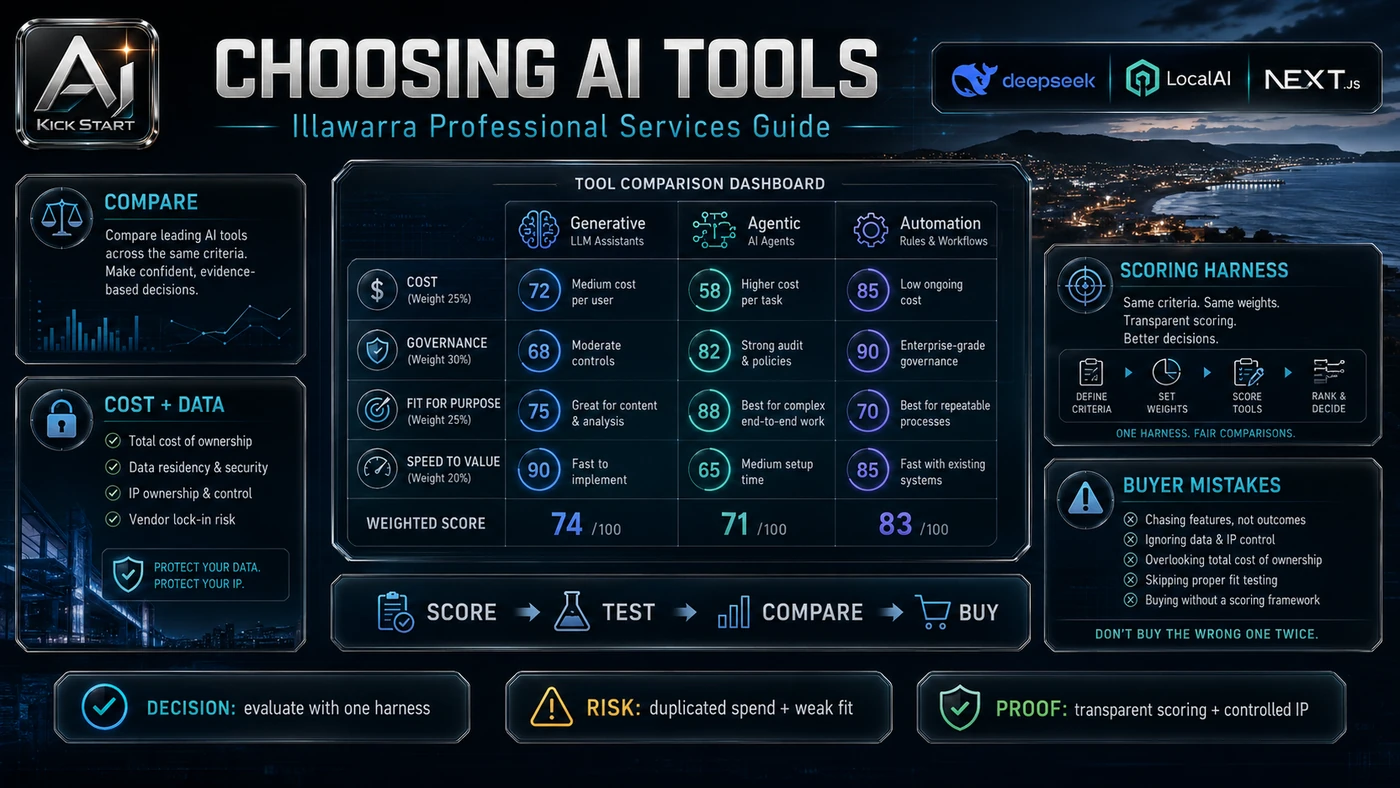
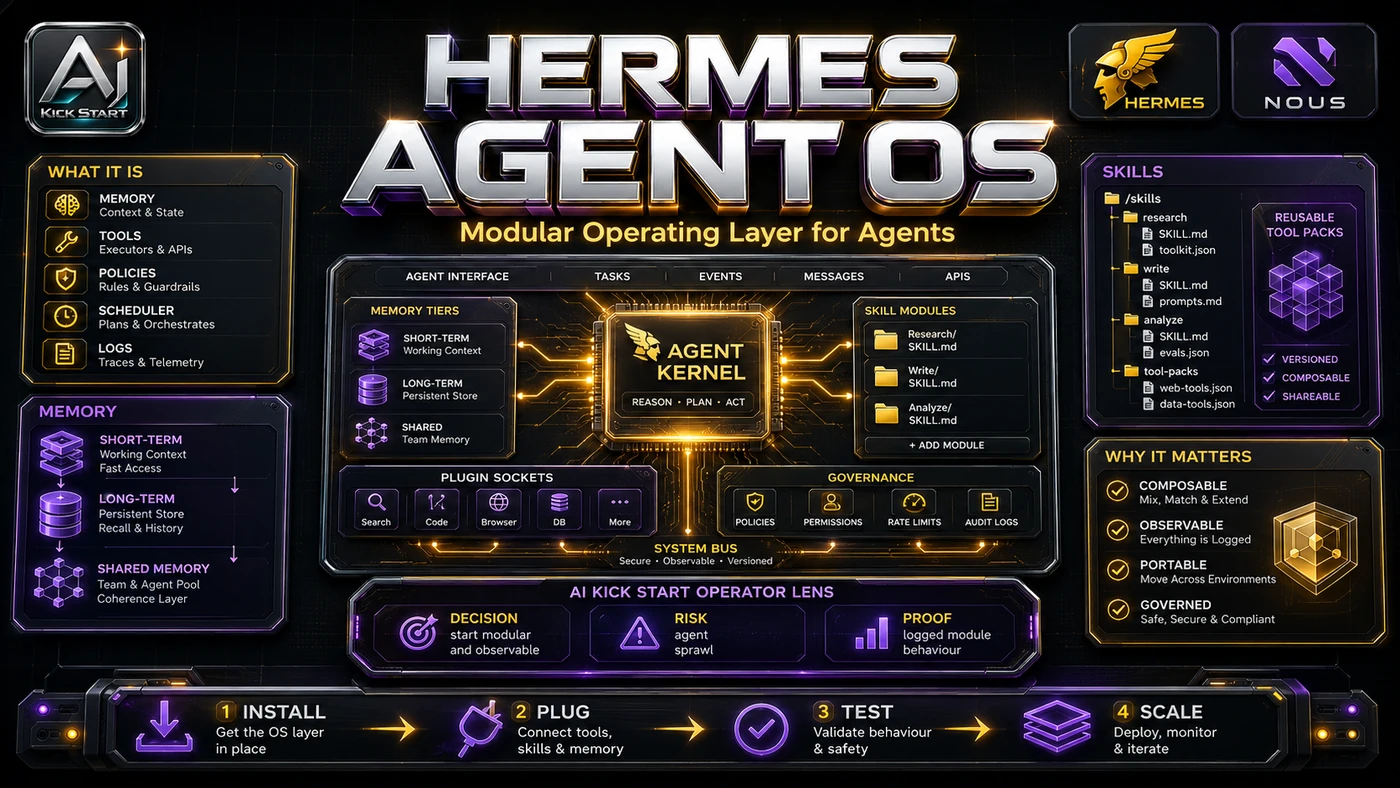
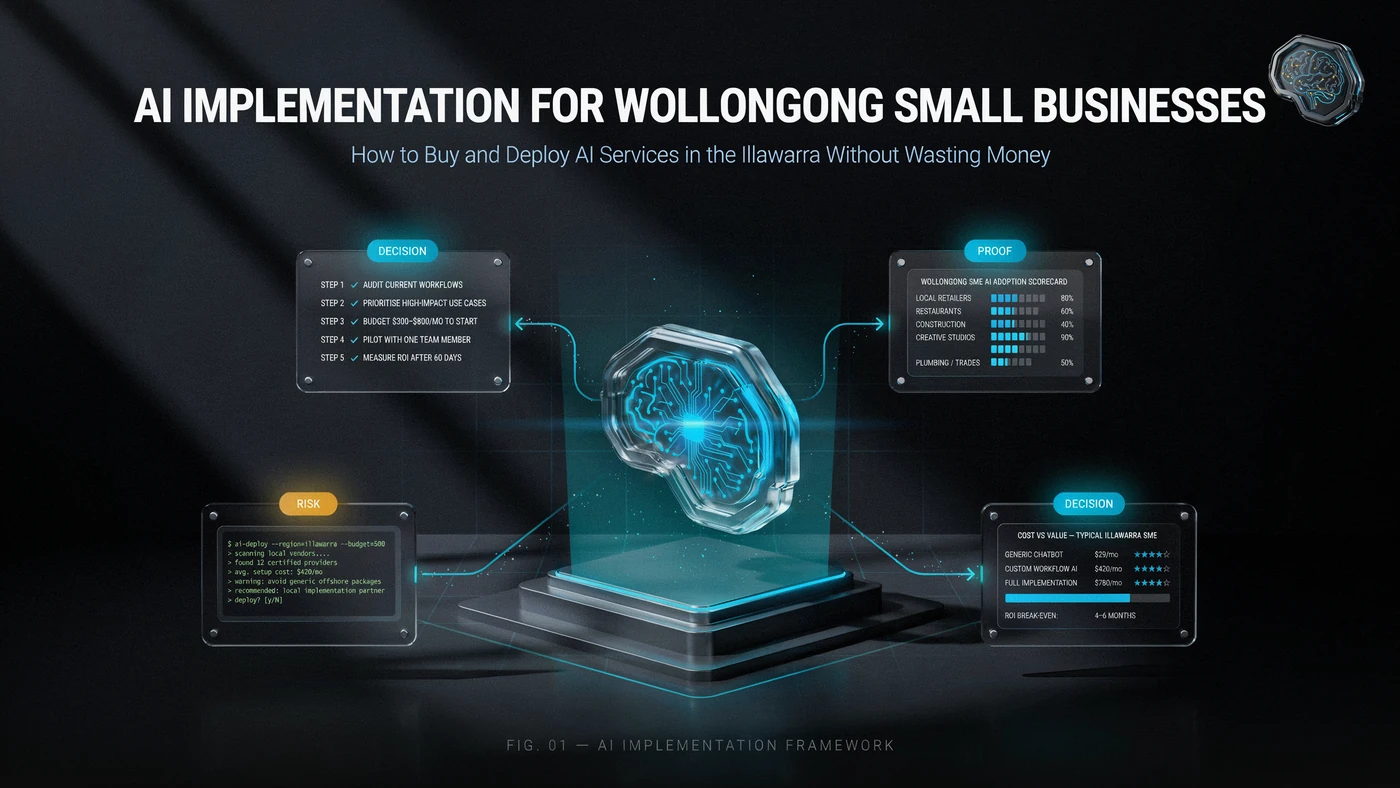
The core pattern is simple: define one measurable job, pilot with one provider on one dataset, compare against a clear baseline, and only then expand. In practice, that means the Illawarra AI services market is not really about which model is newest - it is about which provider can answer five operational questions before the first invoice is paid. The pieces that show up again and again in conversations with Wollongong, Figtree, Corrimal, Dapto, Unanderra, Albion Park, and Kiama operators are: a discovery call that names the workflow rather than selling a generic AI strategy a short pilot with a fixed price, a fixed scope, and a written exit clause an export clause for your data, your prompt library, and any fine-tuning weights a named human owner inside the vendor team, not just a sales contact a written security and privacy summary that names the data residency, the access controls, the breach notification process, and the subcontractor list. That is the level at which teams should evaluate it. A demo can be entertaining, but a contract must survive staff handoff, data boundaries, and real deadlines - and a regional contract must also survive the moment when the local contact leaves the vendor and the Sydney head office does not know your name. To see the kind of internal platform structure that makes a multi-step rollout workable, the [Hermes AgentOS build guide](/news/article-7qzgAkDN0q0) is a useful reference for the "control before convenience" position AI Kick Start takes on agentic stacks. For the infrastructure economics that drive a lot of the cost conversation, the [DeepSeek DualPath article](/news/article-mG4SmhWyeFA) explains why long-context and agentic workloads now have a different cost curve to the chatbots of two years ago - and why an Illawarra operator's monthly bill looks very different in 2026 than it would have looked in 2024.
The Implementation Pattern
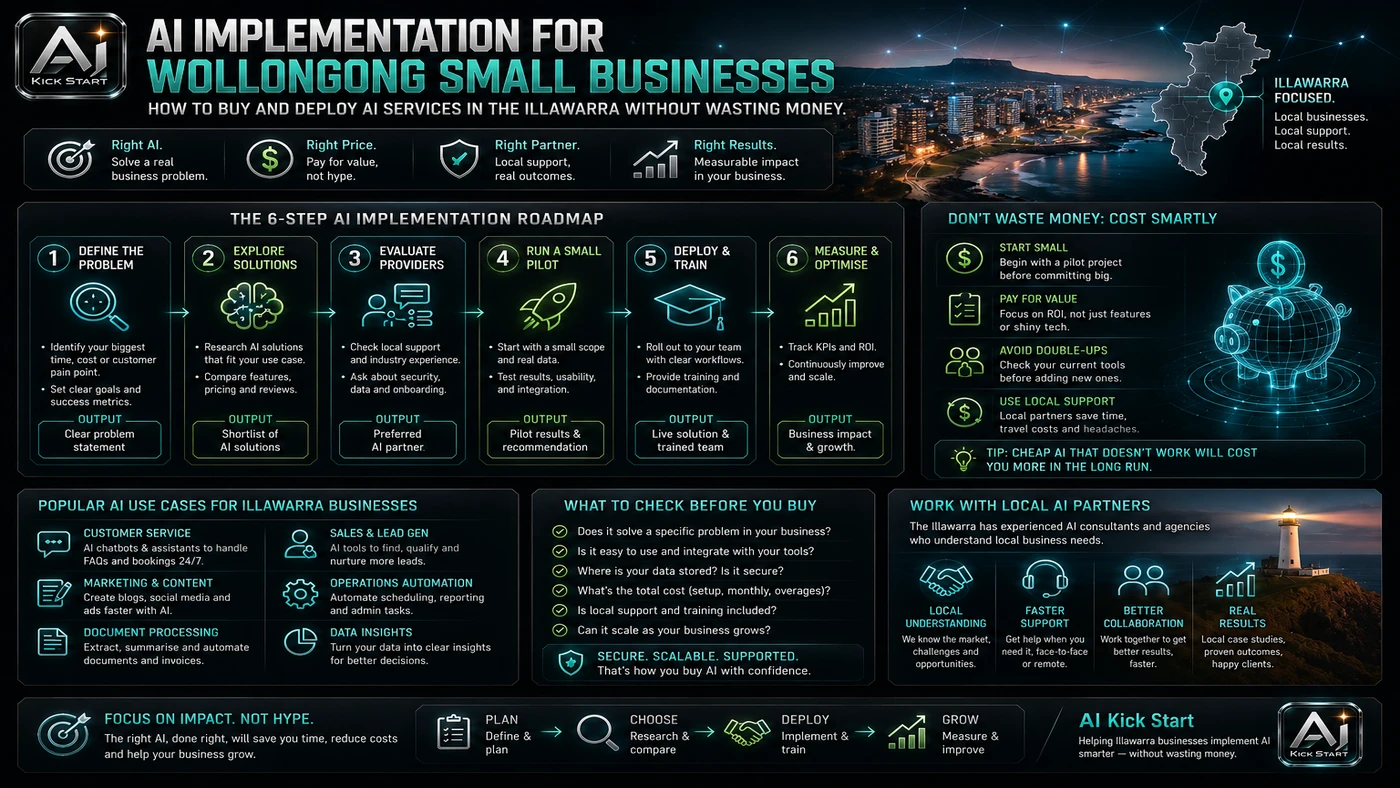
The first implementation lesson is to narrow the scope. Pick the workflow that already costs you the most staff hours each week - usually quoting, inbox triage, document drafting, after-hours call handling, or onboarding paperwork - and pilot there first. Broad adoption is usually where AI systems fail first because nobody knows which decision the tool is allowed to make and which decision still belongs to a human, and a regional team cannot afford the morale cost of a bot that quietly misroutes a customer email twice a week. The second lesson is to create a test harness. A useful harness does not have to be complicated. It can be a short brief, ten real examples drawn from last month's actual work, a target accuracy or turnaround time, and one person responsible for judging whether the result is good enough. For an Illawarra retail or hospitality operator, that harness might be ten real customer emails, an expected reply in the business's own voice, and a clock on the wall. For a Wollongong accounting or legal practice, it might be ten redacted client documents, a target extraction accuracy against a known ground truth, a documented human review step, and a check that the output format matches the existing practice management system. For a Shellharbour or Dapto trades operator, it might be ten quote requests, a target quote turnaround under two hours, and a rule that no quote leaves the business without a human sign-off. The third lesson is to capture the process. Document the prompt pack, the review rules, the kill switch, and the fallback plan. When the process is documented, it can become a reusable checklist, prompt pack, vendor scorecard, or operating procedure that survives staff turnover. When it is not documented, the team is back to improvising in chat - and a regional team cannot afford that, because the next hire may not arrive for three months.
Research Update: What To Correct
This update adds a current-source pass rather than treating the local AI services Illawarra market as obvious or already well-mapped. The important corrections are the buyer surface, the pricing and contract shape, and what should be verified before a team depends on a vendor. Treat "AI services Illawarra" as a category of suppliers, not a single product. The useful distinction is solo consultant, regional agency, Sydney-franchised partner, global vendor with a local reseller, and global vendor with no local presence. They overlap on capability, but they do not overlap on accountability, response time, or what happens when something breaks at 6pm on a Friday - and a regional buyer who has only seen the polished proposal will be unprepared for that 6pm moment. Pricing benchmarks published across Australian industry coverage in late 2025 and early 2026 put small-business AI implementation pilots between roughly A$2,500 and A$12,000 for a two-to-six-week scoped engagement, and ongoing retainers for managed automation between roughly A$800 and A$4,500 per month depending on workflow count and review burden - but always validate against your own scope, because AI vendor pricing in Australia is not yet standardised and a "pilot" from one firm can mean a strategy deck while the same word from another firm means a working integration. Sovereignty obligations matter: Australian organisations handling personal information, health data, or government-adjacent workloads are subject to the Privacy Act 1988 and the Notifiable Data Breaches scheme, and the Australian Government has explicitly listed regional NSW - including the Illawarra and broader South Coast - as a focus area for the Data and Digital Government Strategy through 2026, which means more public-sector tenders will require local data handling language and that filter will eventually leak into private-sector expectations. Confirm whether the proposed model is hosted in Australia, in an Australian-region AWS, Azure, or Google Cloud tenant, or offshore, and make sure the answer is in writing rather than relying on a verbal reassurance in a Wollongong coffee shop. The Illawarra-specific procurement check should also include the NSW Government Procurement Policy Framework, which increasingly references cyber security and AI assurance expectations for any supplier touching government data.
Practical Setup and How-To
The useful next step is a controlled pilot with a named owner, fixed inputs, a measurable output, and a review point. Use the sequence below as the first implementation path before expanding the workflow. For a Wollongong or Illawarra small business that wants to evaluate a local AI services provider without committing budget for the year, start by writing a one-page scope that names the workflow, the data inputs, the review path, and the exit criteria. Send that scope to two or three providers and ask for a fixed-price pilot proposal against it, not a generic "AI strategy" deck. Confirm in writing where the data will be stored, who has access, how it will be deleted at the end of the pilot, and whether your prompts and fine-tuning data will be used to train the provider's base models - the answer to that last question is the single biggest red flag or green flag in any AI vendor relationship. Run the pilot against your real workload for ten working days, not against cherry-picked examples, and make sure the test days include a Monday, a Friday, and at least one day when your usual reviewer is on leave so the fallback path gets exercised. Capture turnaround time, accuracy on your harness, staff time saved, and any errors that would have caused a customer-visible problem. Compare across providers on the same harness, and only then move to a longer contract. If the vendor cannot produce the data-handling answers in writing inside the first call, treat that as the answer and move to the next provider on your list. If the vendor can produce the answers but cannot explain them in plain language, that is also the answer - your staff will be the ones living with the tool, and they need to understand it.
Pricing, Access, and Comparison Notes
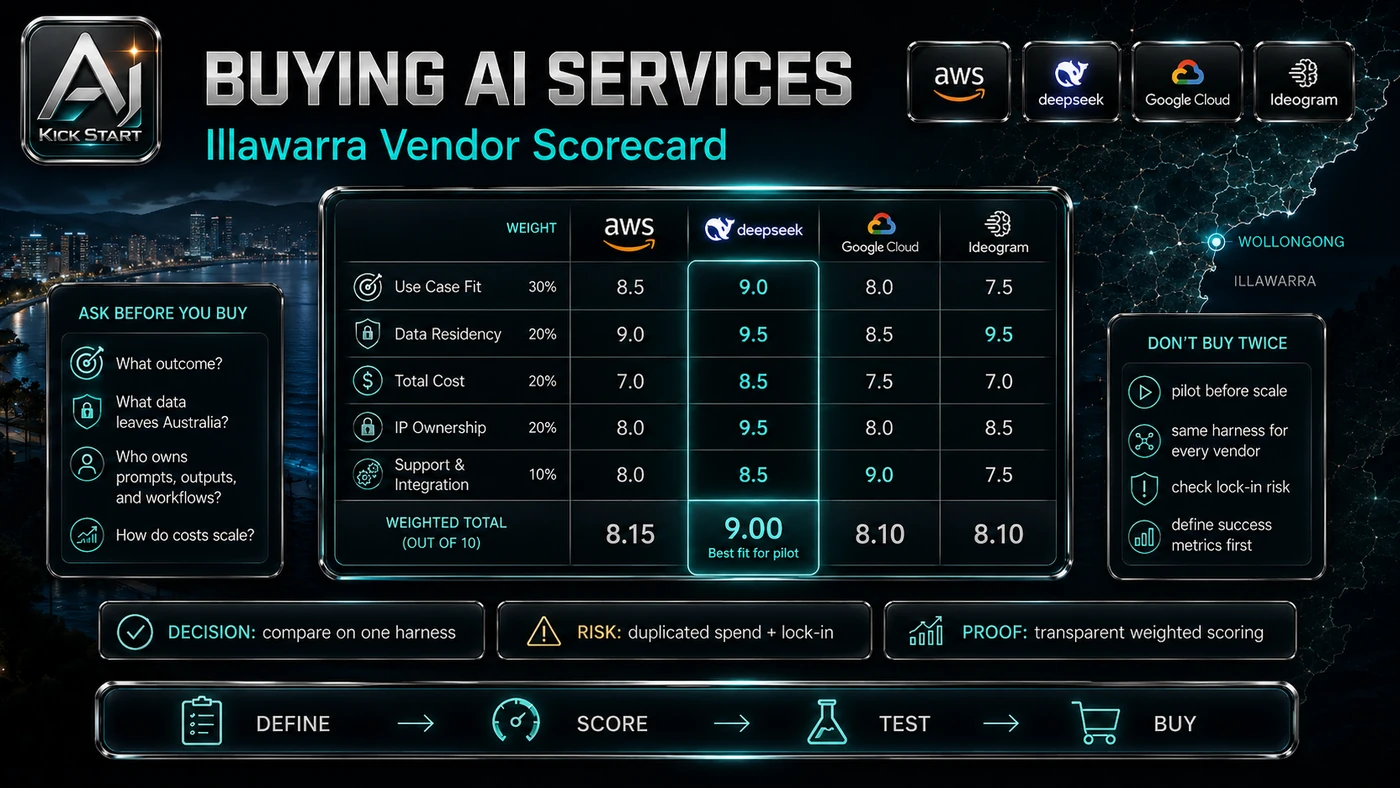
Pricing and access should be checked at implementation time because AI vendor pricing in Australia changes quickly. The safer decision is to compare the tool against the job-to-be-done, not against the marketing deck. A local consultant in the Illawarra will often charge between roughly A$120 and A$220 per hour, with a project minimum that effectively sets a floor on pilot cost and a willingness to negotiate on multi-engagement retainers. A regional agency or Sydney-franchised partner typically prices a two-to-six-week pilot between A$5,000 and A$25,000 depending on integration depth, and ongoing managed automation between A$1,200 and A$6,000 per month. A global vendor with no local presence can undercut those numbers on raw model access, but you will be paying in staff time for the integration, the security review, the change-management work, and the timezone translation overhead that a local partner would have absorbed - and those hidden costs are the ones that turn a "cheap" engagement into the most expensive one your business has signed that year. Model API costs are a separate line item: hosted frontier models in 2026 typically bill between roughly US$0.50 and US$15 per million tokens depending on model tier, and that figure can dominate the monthly invoice once you add retrieval, embeddings, and image generation. Always separate the implementation labour, the platform or subscription fee, and the variable model cost in any quote you receive - a low implementation price paired with an unpriced model tier is a warning sign, not a saving. For an Illawarra small business, the comparison should also weigh travel: a Sydney-based partner will typically bill travel time to Wollongong, Shellharbour, or Nowra at standard rates, while a local consultant will treat the first on-site meeting as part of the engagement. Access Pilot length, region, account type, admin controls, rate limits, and exit clauses. Cost Implementation labour, subscription, model API tokens, retries, hardware, review time, support burden, and travel. Fit Workflow reliability, data handling, output quality, observability, and human approval needs.
Implementation Notes for Teams
For AI Kick Start readers, this is the production filter: keep the first rollout narrow, make the evidence visible, and do not let the tool cross a business boundary until the review model is clear. Define the workload profile first because the same AI service will perform very differently on a ten-email inbox versus a thousand-document archive, and a regional team that runs the test on the wrong dataset will arrive at the wrong conclusion about the vendor. Check data residency because Australian organisations handling personal information, health data, or government-adjacent workloads have legal obligations that change the answer to "is the cheapest provider good enough?" - and a Wollongong or Shellharbour operator who handles client files in the financial, legal, or health space should treat data residency as a non-negotiable rather than a preference. Confirm the exit clause because a regional team that gets locked into a twelve-month contract with a vendor that cannot answer a basic security question in writing is paying twice - once in fees, once in the cost of replacing the workflow later - and the cost of that replacement is usually twice what the original engagement would have cost if it had been scoped properly. Keep a fallback provider with a kill switch, and make sure the prompts, embeddings, and fine-tuning data sit in a folder you control rather than only inside the vendor's console. For a Wollongong or Illawarra team, that usually means a shared drive or a simple Git repository that the owner can hand to a new vendor in a single afternoon, and that single-afternoon handover test is worth performing before signing the contract rather than after. Plan for observability: a regional team that cannot see what the AI tool did last Tuesday will not be able to explain a customer complaint, and "the bot did it" is not an answer a regulator, a board, or a spouse-partner will accept.
Screenshot and Visual Guidance
The second inline image for this article should make the implementation concrete: a side-by-side vendor scorecard comparing two or three Illawarra AI services providers on the same workflow, with the harness, turnaround time, accuracy, data-handling answer, contract length, exit clause, and named human owner visible in plain language rather than in marketing shorthand. If the team is documenting a real rollout, capture setup screens, before/after outputs, permission settings, cost meters, and review evidence rather than decorative screenshots - the screenshots that matter are the ones your successor can use to rebuild the workflow without phoning the vendor.
Where It Fits for Real Teams
For founders, the opportunity is speed with evidence. A short fixed-price pilot with two competing Illawarra AI services providers will tell you more in two weeks than a six-month "AI strategy" retainer, and the evidence will survive the next staff change in a way that a slide deck will not. For operators, the value is consistency. The right provider should be able to name the same workflow, the same review path, and the same fallback plan that you can, and they should be willing to put that consistency in writing rather than in a verbal assurance. For technical teams, the value is leverage. A strong setup lets agents, models, or creative systems take on repeatable work while engineers keep control over architecture, security, deployment, and final judgement. The practical fit is strongest when the task has clear source material, a known output format, and a low-cost way to verify quality. It is weaker when the task is vague, politically sensitive, legally risky, or dependent on facts that cannot be checked. For Australian professional services firms - accountants, lawyers, allied health practices, mortgage brokers - the regional fit is also stronger than a global vendor because the review language, the document conventions, and the regulator expectations are local, and a Sydney vendor selling into the Illawarra often does not understand the local nuance that makes a routine interaction succeed or fail. For trades, retail, and hospitality, the fit is strongest where the workflow is high-volume and low-stakes - quoting, scheduling, follow-up, after-hours triage - and weakest where the workflow is low-volume but customer-facing and reputational. For the Illawarra's tourism and hospitality sector around Kiama, the Shellharbour Marina, and the Wollongong waterfront, the same logic applies: AI services work well for the back-office and the after-hours layer, and they need a clear human handoff for the front-of-house moments that define the customer experience.
Trade-offs and Risks
The main risk is vendor lock-in. That risk can be managed, but only if it is named before the contract is signed. A second risk is accountability drift, where the same vendor sells the discovery call, the pilot, and the ongoing support as three different people and three different scopes, and the regional operator ends up holding the gaps - particularly when the local contact leaves the vendor and is replaced by a Sydney account manager who has never visited Wollongong. AI systems often look better in a screen recording than they feel inside a production workflow. The test is whether the result is repeatable when the source material changes, the operator changes, and the deadline is real. A third risk is data residency and IP ownership, particularly with offshore providers where the default answer to "who owns the fine-tuning data?" may not match the answer you would give to your own lawyer, and where the default answer to "where is the data physically stored?" may change without notice when the provider renews its own infrastructure contract. A fourth risk, specific to the Illawarra small-business market, is continuity of the vendor itself: a solo consultant who is brilliant today may be on parental leave, ill, or simply unavailable next quarter, and the customer does not have a Sydney head office to fall back on. This is why AI Kick Start generally recommends a staged rollout: sandbox first, internal use second, customer-facing deployment last. In the Illawarra context, that staging also needs a regional failure-mode check - what happens when the local NBN link drops, the vendor's offshore support team is asleep, and the only person who can answer the question is the founder on a Saturday morning. If the answer to that question is "we wait until Monday", the workflow is not ready for production.
The Next Sensible Test
The next sensible test is a small controlled implementation. Pick one workflow, one owner, one expected output, and one acceptance check. Run it twice. If the second run is easier than the first, the pattern is worth keeping. Do not judge the workflow by the best possible demo. Judge it by the worst acceptable production case. Ask: what happens when the source file is incomplete, the tool is unavailable, the output is wrong, or a staff member needs to explain the result to a customer? If those answers are clear, this belongs in the roadmap. If they are not, it belongs in the lab until the operating model catches up. For an Illawarra small business evaluating AI services Illawarra providers, the most useful version of this test is also the cheapest: send the same one-page scope to two or three providers, run both pilots on the same real workload, and decide on the evidence. The cost of that parallel pilot is almost always less than the cost of locking into the wrong vendor for twelve months, and the evidence will be useful even if the decision is to wait six months before doing anything else.
Illawarra Industry Patterns Worth Naming
The Illawarra economy is not a generic small-business economy, and the AI services that fit it best are not the AI services that fit a Sydney SaaS startup. Three patterns show up often enough in conversations with local operators to be worth naming explicitly. The first is the trades-and-construction pattern across Wollongong, Dapto, Unanderra, Albion Park, and the broader construction pipeline tied to the NSW Government's ongoing housing and infrastructure commitments: high-volume quoting, scheduling pressure, after-hours enquiry volume, and a workforce that is rarely sitting at a desk. The AI services that work here are the ones that survive a tradie reading the output on a phone in a work vehicle between jobs, with a one-tap approval path back to the office. The second is the professional services pattern across Wollongong, Shellharbour, Kiama, and Nowra: low-volume but high-stakes client work, regulator exposure, and a partner whose name is on every piece of paper. The AI services that work here are the ones that improve document turnaround without crossing the line into unsupervised client communication, and the ones that can demonstrate a clear audit trail to a Tax Practitioners Board, a Legal Services Commissioner, or a National Disability Insurance Scheme audit. The third is the tourism, hospitality, and retail pattern across the Wollongong waterfront, the Shellharbour Marina, Kiama, and the broader South Coast visitor economy: seasonal demand swings, weekend and after-hours pressure, multilingual visitors, and a customer experience that is the product. The AI services that work here are the ones that handle the back-office and the after-hours enquiry layer reliably and hand off to a human cleanly for the front-of-house moments, rather than the ones that promise to replace the front-of-house moments themselves. A Wollongong or Illawarra small business that picks a vendor who understands which of those three patterns it sits inside will get further in a month than one that picks a vendor who sells a generic AI capability deck.
What "Local" Actually Buys You in the Illawarra Market
A reasonable question from a Sydney vendor is "why does local matter when the model is the same?" The honest answer is that local buys four things that a remote vendor will struggle to substitute. First, it buys response time when something breaks at 6pm on a Friday in winter, and the regional operator cannot afford to wait for a Sydney partner to start the working week on Monday. Second, it buys context: a local consultant who has worked with a Shellharbour accountant, a Wollongong lawyer, and a Kiama retailer will arrive at the discovery call already knowing which document conventions, which review paths, and which regulator expectations matter most. Third, it buys accountability: a local consultant's reputation in the Illawarra business community is a real economic asset, and that asset is on the line every time they take on a new client in a way that a Sydney account manager's reputation is not. Fourth, it buys continuity: when a local solo consultant becomes unavailable, the regional ecosystem usually knows who else can step in, and that knowledge is harder to find in a Sydney-franchised network. None of those four advantages is absolute, and a Sydney vendor with a strong local reseller can match them. But the default assumption - that a regional buyer should ask why the vendor is local and what they get from that locality - is still the right default assumption, and the answer should be specific rather than vague.
Helpful Resources
Australian Government - Privacy Act 1988 and Notifiable Data Breaches scheme (opens in a new tab) Australian Government - Data and Digital Government Strategy (opens in a new tab) Australian Signals Directorate - Essential Eight maturity model for small businesses (opens in a new tab) AusIndustry - Small Business Digital Solutions (opens in a new tab) NSW Government Procurement Policy Framework (opens in a new tab) NSW Government - Small Business Commission (opens in a new tab) Wollongong City Council - Business support and programs (opens in a new tab) Shellharbour City Council - Business and economic development (opens in a new tab) Kiama Municipal Council - Business support (opens in a new tab) Illawarra-Shoalhaven Joint Organisation - regional economic development (opens in a new tab) Related AI Kick Start reading: [DeepSeek's DualPath: what it means for your AI stack](/news/article-mG4SmhWyeFA) · [Hermes AgentOS: a build-your-own multi-agent crew](/news/article-7qzgAkDN0q0)