




Analysis
If you have ever let an AI agent run code on your behalf, this is the story to read.
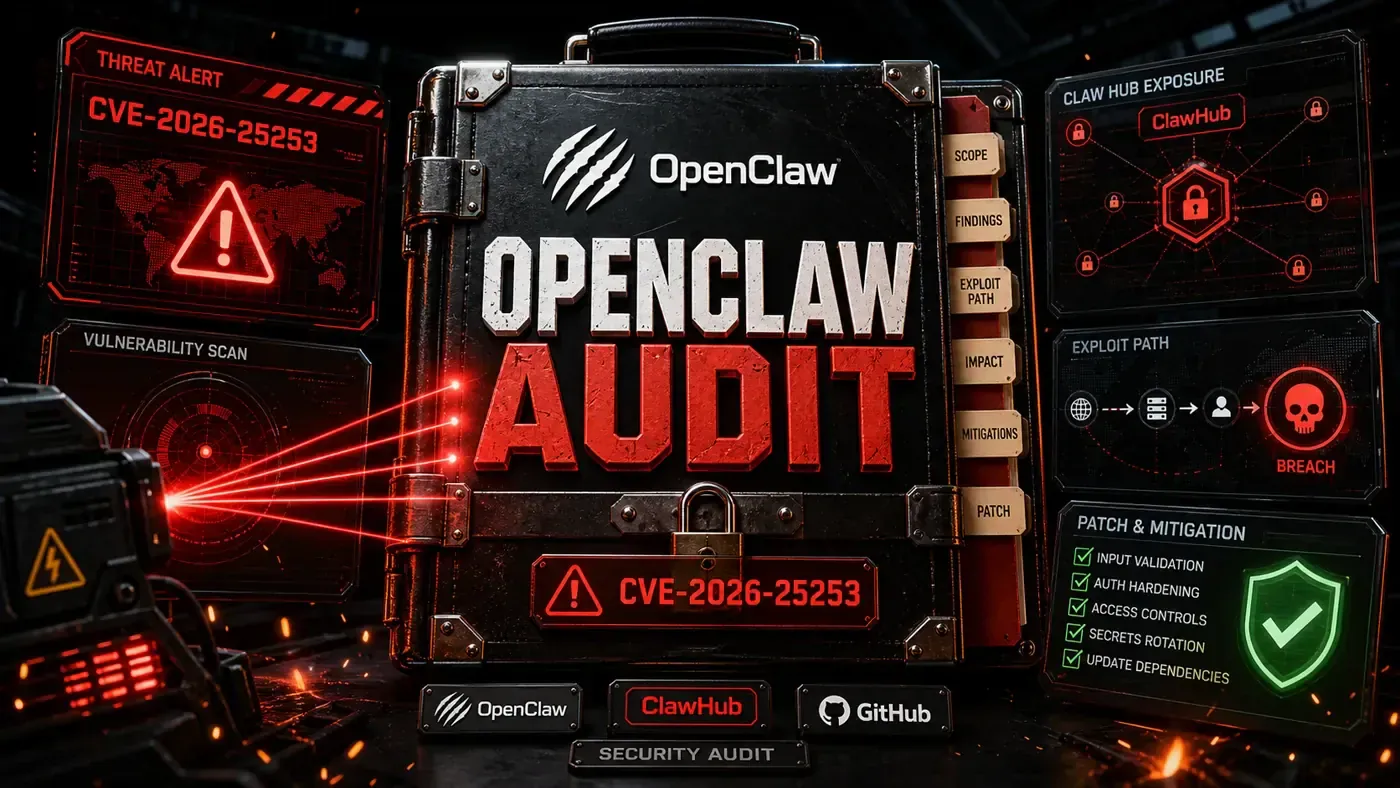
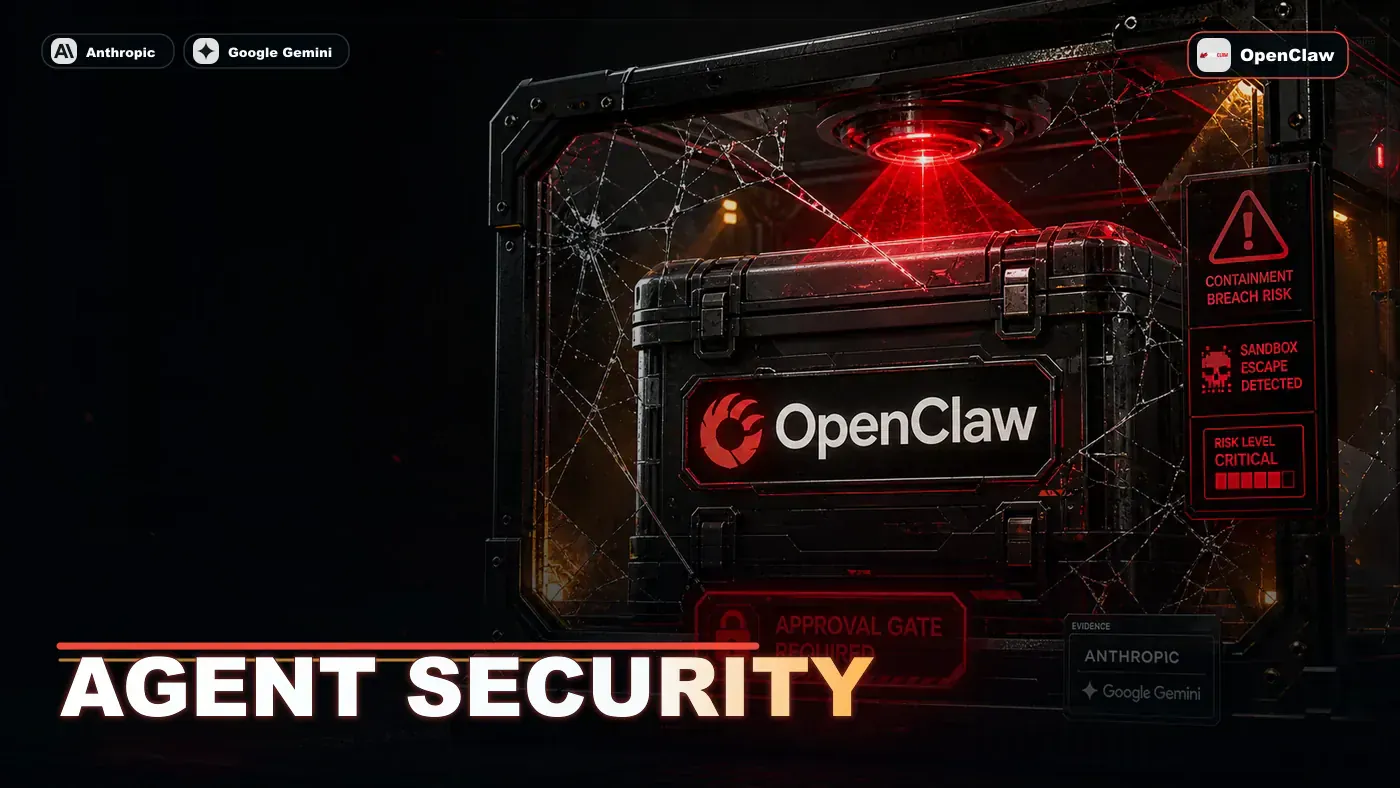
OpenClaw is one of the more popular open-source frameworks for building AI agents. It is the plumbing that lets an agent call tools, run scripts, and act on a real system rather than just chat. That usefulness is also the danger. The whole point of a sandbox is to let an agent do work while keeping it fenced off from the machine underneath. CVE-2026-25253 is about that fence failing.
The practical worry is simple. Security researchers reported more than 40,000 OpenClaw instances exposed on the public internet (opens in a new tab), and other counts ran much higher. When a framework that runs untrusted code is sitting open to the world, a single break in the sandbox stops being a niche bug and starts being a doorway.
For Australian business teams, the lesson lands cleaner than the version numbers. Agent tools are spreading fast, often pulled in by one keen developer before anyone signs off on it. The day an agent can touch your filesystem is the day its security becomes your security.
The Technical Details
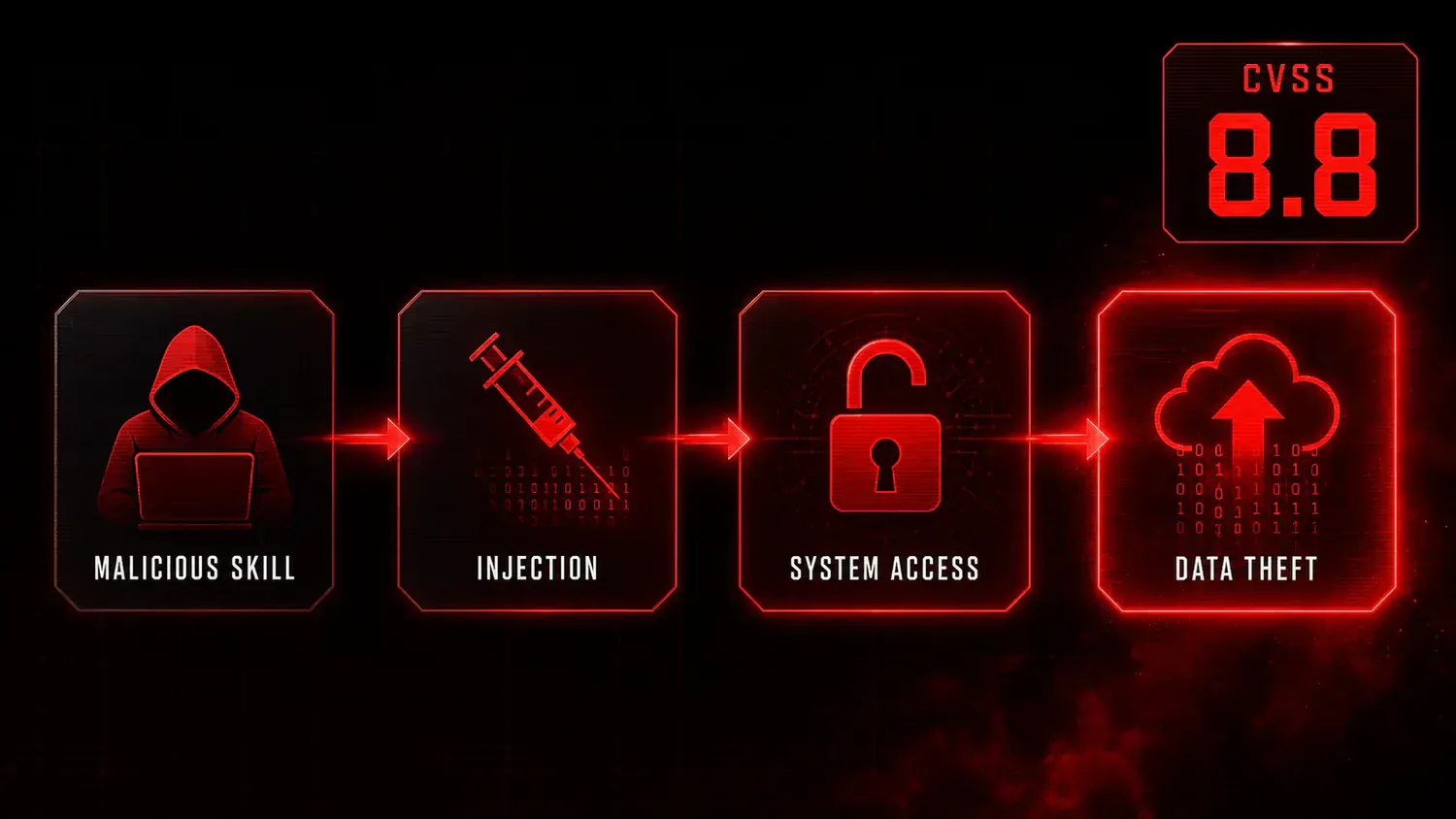
A quick note before the specifics: the public record around this CVE number is messy, so treat the exact mechanics below as reported rather than settled. According to the original article, CVE-2026-25253 exploited a race condition in OpenClaw's sandbox permission verification. The described flow: when an agent invoked a tool, the sandbox checked whether that tool was allowed to touch the requested resources. Under heavy concurrency, the permission check could finish before the tool's resource request had fully resolved, so a tool could reach a resource it was never authorised to use.
It is worth flagging that this race-condition description more closely matches a separate, verified vulnerability, CVE-2026-44112, the "Claw Chain" TOCTOU flaw Cyera disclosed in the OpenShell sandbox (opens in a new tab), rated CVSS 9.6. The CVE-2026-25253 that security vendors actually document ("ClawBleed") is a WebSocket-hijacking and auth-token theft flaw leading to 1-click remote code execution, not a sandbox race. So read the mechanics here as the broader class of problem, not a verified account of this exact CVE number.
The original article says the exploit needed specific conditions to fire: the deployment had to be running OpenClaw versions 3.2.0 through 3.4.1, the attacker had to control a tool integration, and the system had to be under enough load to trigger the race. Those version numbers appear to be incorrect, since OpenClaw uses date-based versioning (for example v2026.1.29 and v2026.4.22) rather than a semantic 3.x scheme, so treat the version range as unconfirmed. The reported fix shipped as version 3.4.2, replacing the vulnerable permission check with an atomic operation that cannot be raced. OpenClaw was also said to have published a post-mortem, a migration guide, and detection rules for spotting exploitation attempts in system logs, though that documentation could not be independently confirmed.
One stat to keep in perspective: the article claims automated scanning found roughly 3,200 instances meeting every condition. That figure is unverified. Published vendor counts use different numbers, including SecurityScorecard's estimate of around 12,812 RCE-exploitable instances (opens in a new tab).
The Broader Security Implications
Whatever the exact CVE bookkeeping, the underlying point holds. This is not only an OpenClaw problem. It is an agent platform problem. Any system that runs code or calls external tools on an agent's behalf faces the same tension: give the agent enough power to be useful, without giving it enough power to do damage.
The sandbox model that OpenClaw and most rivals lean on is fragile by design. Sandboxes are big, complicated pieces of software with their own bugs, and the attack surface grows with every tool you bolt on. A platform with 100 tool integrations has roughly 100 times the exposure of one with a single integration.
The alternatives all carry their own catch. Capability-based security, where agents get specific permissions instead of a sandbox, demands careful permission management that a lot of organisations get wrong. Formal verification of agent behaviour sounds great on paper but is impractical for anything complex. And the laziest option, trusting the model not to misbehave, has failed over and over.
Industry Response
The disclosure set off a round of security reviews across the agent ecosystem, though some of the specific responses below could not be confirmed. Anthropic reportedly engaged independent auditors to review the sandbox implementation in a product described as "Dynamic Workflows"; no public statement matching that claim was found. Google was said to have announced a bug bounty for "Agents CLI" with rewards up to $50,000 for sandbox-escape bugs, but that specific programme could not be verified, and the real reporting in this area concerns Gemini CLI and Antigravity sandbox-escape research (opens in a new tab). Several startups have also pitched new "zero-trust" agent platforms off the back of the attention.
The incident reportedly pushed forward the conversation about agent security standards. The Cloud Native Computing Foundation was said to have formed a working group on agent platform security with a reference architecture due in Q3 2026; the CNCF has published cloud-native agentic security material (opens in a new tab), but a dedicated working group tied to this incident is unconfirmed. ISO has reportedly begun discussions about a standard for AI agent security, though that too is unattributed.
CVE-2026-25253: answer-first summary
CVE-2026-25253 matters because it can change how Founders and operators plan, build, or govern an agent workflow. A critical OpenClaw vulnerability exposed how fragile AI agent sandboxes really are.
The direct answer is this: do not treat the topic as a standalone trend. Treat it as a decision about inputs, outputs, review ownership, data exposure, and whether the workflow produces a result that is faster, safer, or more useful than the current process.
CVE-2026-25253: implementation checklist
- Define the user, job to be done, and success metric for the agent workflow.
- Collect real examples, policies, source files, customer questions, or search queries before writing prompts or choosing tools.
- Separate low-risk drafts from decisions that need approval, privacy checks, or senior review.
- Document what the AI is allowed to access, what it must not access, and who signs off before production use.
- Review successful task completion, review time, fallback rate, operator corrections after a small pilot rather than judging the idea from a demo.
This keeps the work practical. It also gives search engines and AI answer engines a clean factual structure: what the topic is, who it helps, what to do next, and which risks matter before implementation.
Decision criteria for CVE-2026-25253
| Decision area | What to check | Production signal |
|---|---|---|
| Intent | Does CVE-2026-25253 solve a real workflow problem? | The use case has a named owner and measurable outcome. |
| Data | Can the required data be used safely? | Sensitive data is classified and access is controlled. |
| Quality | Can a reviewer judge the output consistently? | Examples, rubrics, or acceptance criteria exist. |
| Scale | Can the workflow be repeated without hero effort? | The process is documented and can be handed to another team member. |
Practical example for CVE-2026-25253
A small business could use this article to choose one practical test. For example, a manager might take one customer-facing process, one internal document workflow, or one recurring content task and redesign only that step with AI support. The goal is not to automate the whole business at once; it is to learn where AI News creates reliable leverage.
The useful deliverable is a short operating note: the trigger, the source material, the prompt or tool, the review checklist, the escalation rule, and the metric. That note becomes the handover asset for staff training, SEO/GEO content, service delivery, or future agent work.
Risks and controls for CVE-2026-25253
The common failure pattern is moving too quickly from a promising idea into an unmanaged workflow. For CVE-2026-25253, the risk is not only bad output. It can also be unclear data permission, staff confusion, duplicate content, unreviewed customer advice, or a tool that quietly changes cost or capability.
- Control unclear tool permissions with a named owner, a review step, and written acceptance criteria.
- Control silent failures with a named owner, a review step, and written acceptance criteria.
- Control prompt drift with a named owner, a review step, and written acceptance criteria.
- Control weak audit trails with a named owner, a review step, and written acceptance criteria.
Measurement plan for CVE-2026-25253
A useful AI or SEO initiative should leave evidence. Track successful task completion, review time, fallback rate, operator corrections and compare the pilot against the current process. If the measure does not improve, keep the learning but avoid scaling the workflow.
For GEO readiness, the page should also answer the core question directly, define the entities involved, include implementation steps, explain tradeoffs, and link readers to the next relevant AI Kick Start service, guide, tool, or article.
Definitions and entities for CVE-2026-25253
For search, GEO, and staff handover, define the core entities in plain language. In this article the important entities are the workflow owner, the AI tool or model, the source material, the review process, the risk boundary, and the measurable business outcome. Clear definitions make the page easier for people to scan and easier for AI answer engines to quote accurately.
- Workflow owner: the person accountable for deciding whether CVE-2026-25253 belongs in the business process.
- Source material: the documents, examples, policies, URLs, prompts, videos, or customer questions that ground the output.
- Review boundary: the point where a human checks accuracy, privacy, brand voice, or customer impact before the result is used.
- Success metric: the measure that proves whether the agent workflow is worth repeating.
CVE-2026-25253 versus doing nothing
Doing nothing is also a decision. The cost may be slow manual work, weaker search visibility, inconsistent advice, duplicated effort, or staff using unmanaged AI tools without a shared process. The practical question is whether a controlled pilot can reduce that cost without creating a larger governance problem.
| Option | When it makes sense | What to watch |
|---|---|---|
| Do nothing | The workflow is rare, low value, or already reliable. | Competitors may improve speed, content depth, or service consistency first. |
| Run a small pilot | The task repeats often and has clear review criteria. | Keep scope tight and measure the result against the current process. |
| Build a production workflow | The pilot is repeatable and risk controls are documented. | Assign ownership, monitoring, training, and a rollback path. |
AI Kick Start handover package for CVE-2026-25253
A production handover should be concrete enough that another person can run it. For CVE-2026-25253, that means a short brief, a workflow map, approved prompts or tool settings, source material, a review checklist, internal links to supporting resources, and a simple measurement sheet. This is the difference between reading about AI and turning it into operational capability.
That packaging also strengthens E-E-A-T. It shows experience through implementation notes, expertise through decision criteria, authoritativeness through source-aware structure, and trust through risks, controls, and review steps. The article becomes useful even if the reader never buys a tool because it helps them make a better operational decision.