





Briefing
As open-source AI tools get more capable and more widely used, the safety questions get bigger too. The community isn't pretending otherwise. It's quietly building safety infrastructure that holds up against anything the proprietary vendors offer: independent audits, responsible disclosure, shared standards. Here's how open-source AI is handling the problem.
The Safety Landscape
Open-source AI safety breaks down into a few areas:
Model Safety: Making sure trained models don't spit out harmful content, leak their training data, or carry obvious bias.
Agent Safety: Stopping agents from taking damaging actions, keeping them inside set boundaries, and making them fail gracefully when something goes wrong.
Infrastructure Safety: Locking down the tools and pipelines that build and ship AI systems.
Supply Chain Safety: Checking that dependencies and components haven't been tampered with.
Independent Security Audits
The CVE-2026-25253 incident in OpenClaw showed what independent scrutiny is worth. A researcher found a serious flaw, disclosed it responsibly, and the project shipped a fix. Worth being precise about what the bug actually was, since the early write-ups got it muddled: it wasn't a prompt injection issue. It was a one-click remote code execution chain via cross-site WebSocket hijacking. The Control UI trusted a gatewayUrl parameter it shouldn't have, leaked the auth token to an attacker, who could then switch off the sandbox and run code (runZero, OpenClaw RCE vulnerability CVE-2026-25253 (opens in a new tab)). Different class of problem, same lesson about outside eyes catching what insiders miss.
This kind of response is becoming routine:
- Bug bounty programmes: Major projects pay out for vulnerability reports
- Third-party audits: Reviews by firms like Trail of Bits, Cure53, and NCC Group
- Community reviews: Open security reviews where contributors read the code together
- Automated scanning: Continuous security checks baked into CI/CD pipelines
OpenClaw, Dify (opens in a new tab), and Langflow have all had real vulnerabilities surface and disclosed in public during 2026. In practice most of that has come through researcher and CVE disclosures rather than a tidy, firm-signed audit report for each project, but either way the findings end up in the open, which is the part that builds trust. (For the record, the post-incident audit attributed to OpenClaw in some accounts was reportedly run by the Argus Security Platform, not Trail of Bits as occasionally claimed, see the timeline at ProArch (opens in a new tab).)
Responsible Disclosure
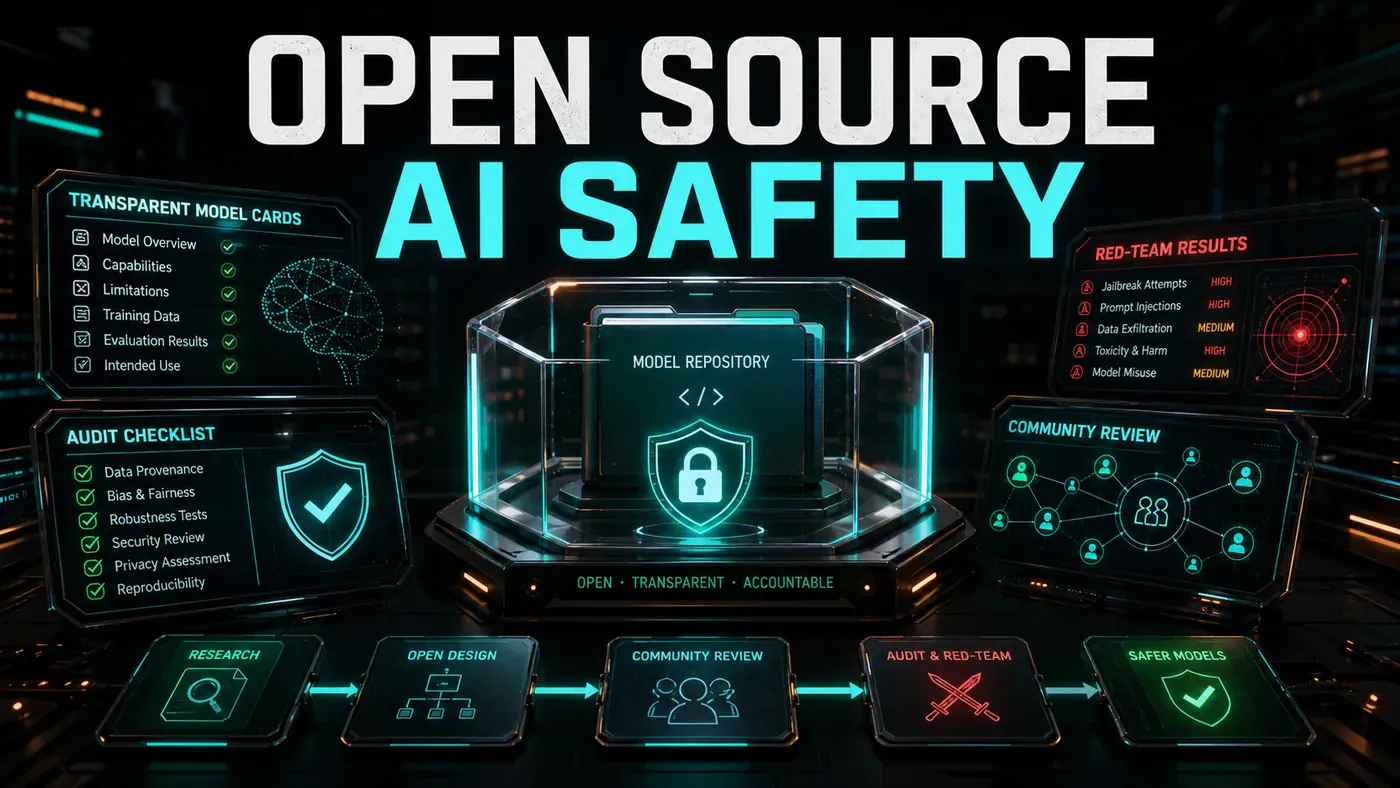
The open-source world has settled on a fairly standard disclosure process:
- Researcher finds a vulnerability
- Private disclosure to maintainers, typically with a 90-day deadline
- Maintainers acknowledge it and set up coordination
- Fix gets built and tested
- Public disclosure with a CVE assigned
- Community gets notified, with guidance on remediation
That sequence balances public awareness against the simple fact that fixes take time to do right. The 90-day window is the industry norm, popularised by Google Project Zero, and you'll see it written into the security policies of major projects (GitHub, langgenius/dify security policy (opens in a new tab)). On OpenClaw's CVE-2026-25253, the patch reportedly landed within 48 hours of disclosure, though that figure may be conflated with a separate Ethiack-disclosed OpenClaw RCE that was confirmed patched in that timeframe (Blink Blog, OpenClaw CVEs 2026 timeline (opens in a new tab)). Either way, fast turnaround plus open communication is now the bar people expect.
Bumblebee and Supply Chain Security
Perplexity's Bumblebee scanner goes after a gap that's easy to ignore. AI projects pull in dependencies from npm, PyPI, MCP servers, browser extensions, and more, and every one of those is a way in.
Bumblebee scans all of them in a single read-only pass and never runs install scripts, so the act of scanning can't itself trigger anything malicious (GitHub, perplexityai/bumblebee (opens in a new tab), Perplexity announcement (opens in a new tab)). Wire it into CI and every commit gets checked against known vulnerabilities. That model is becoming the default people reach for.
Safety Standards and Governance
A handful of efforts are setting the standards:
Model Cards: Standard documentation of what a model can do, where it falls down, and what to watch for. Most major releases ship one now.
Safety Evaluations: Shared benchmarks for measuring harmful outputs, bias, and data leakage. Nous Research's Atropos is a reinforcement-learning environments and benchmarking framework that gets used for evaluating model behaviour (GitHub, NousResearch/atropos (opens in a new tab), Nous Research (opens in a new tab)). It's worth saying it's more of a general evaluation toolkit than a dedicated adversarial-safety suite, despite how it sometimes gets described.
Agent Capability Boundaries: Spelling out what an agent should and shouldn't be allowed to do. The permission systems in OpenClaw and Hermes are a practical version of this, even if they're not framed as a formal safety standard.
Data Handling Standards: Rules for how agents deal with sensitive data, built around privacy by design. OpenHuman (opens in a new tab) is a good example, a local-first desktop agent where personal data never leaves your machine, with local encryption.
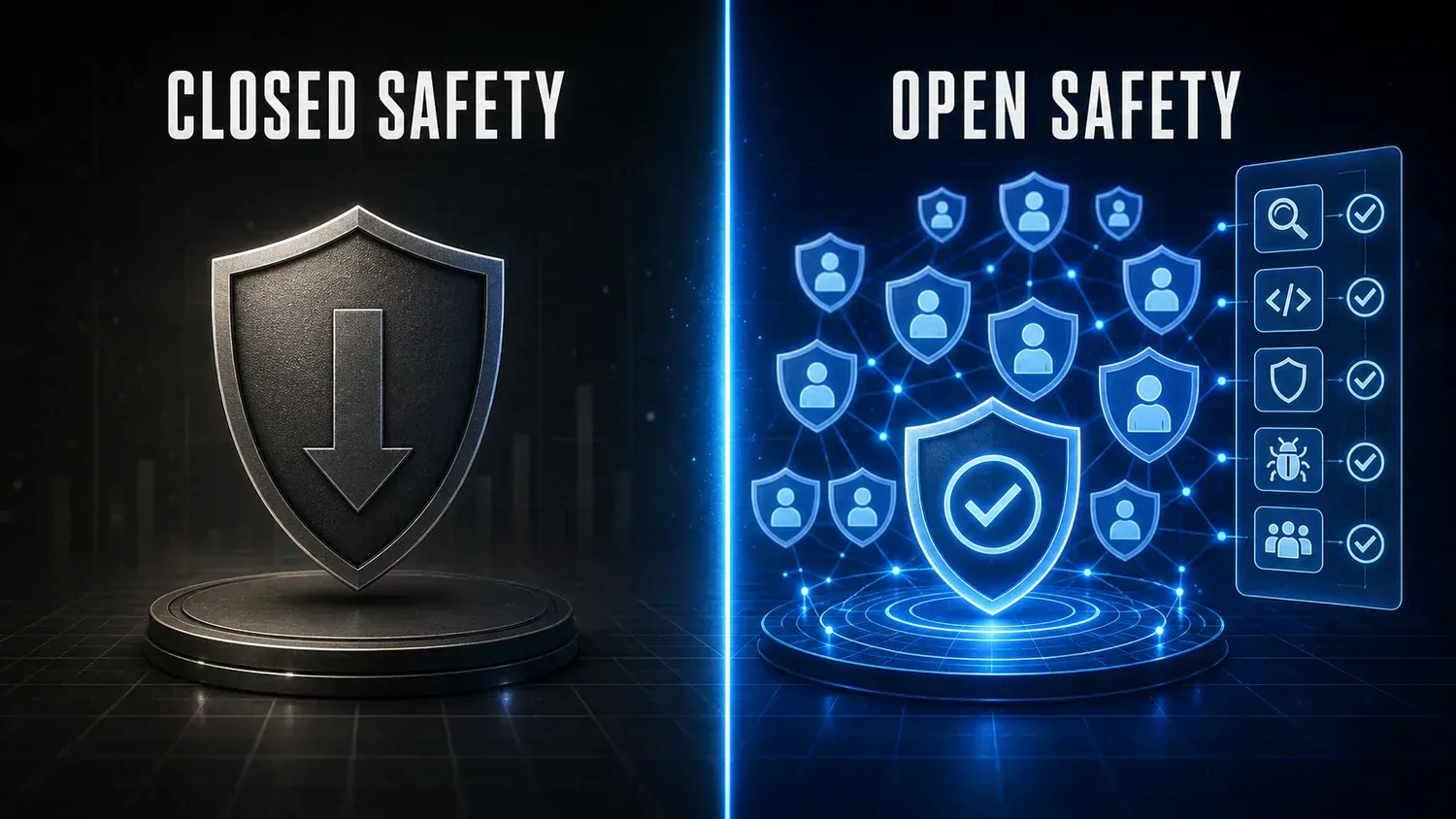
The Open vs Closed Debate
People argue hard about whether open-source AI is safer or riskier. Critics say open models make misuse easy by removing the gatekeepers. Supporters push back:
- Transparency lets the community inspect things that proprietary systems keep hidden
- Open models let researchers actually study and improve safety
- Central control is no guarantee of anything; closed systems have failed plenty too
- The capability is already out in the wild, so the question is moot
The practical read: open-source AI isn't going anywhere, so the community has to invest in safety. And that's what's happening.
Community Safety Culture
A safety-minded culture is forming across open-source AI:
- Security-first design: New projects think about safety from day one
- Diverse perspectives: Safety teams pull in ethicists, security researchers, and domain experts, not just engineers
- Red teaming: Community red team events find holes before attackers do
- Education: Resources to help developers build safer systems
- Incident response: Coordinated handling of safety incidents across projects
The Road Ahead
Safety here is ongoing work, not a box you tick once. The priorities for 2026:
- Automated safety testing in CI/CD pipelines
- Standardised agent capability boundaries
- Better prompt injection defences
- Stronger supply chain tooling
- Vulnerability sharing across the whole community
- Safety benchmarks aimed at agent behaviour
The community's bet is that a transparent, collaborative, pragmatic approach beats the closed alternative. Nobody can prove that yet. But the money and effort going into it are real, and growing.
Open source AI safety: answer-first summary
Open source AI safety matters because it can change how Founders and operators plan, build, or govern an AI implementation workflow. How the open-source AI community is tackling safety concerns through audits, responsible disclosure, and collaborative standards.
The direct answer is this: do not treat the topic as a standalone trend. Treat it as a decision about inputs, outputs, review ownership, data exposure, and whether the workflow produces a result that is faster, safer, or more useful than the current process.
Open source AI safety: implementation checklist
- Define the user, job to be done, and success metric for the AI implementation workflow.
- Collect real examples, policies, source files, customer questions, or search queries before writing prompts or choosing tools.
- Separate low-risk drafts from decisions that need approval, privacy checks, or senior review.
- Document what the AI is allowed to access, what it must not access, and who signs off before production use.
- Review time saved, quality score, review effort, business outcome after a small pilot rather than judging the idea from a demo.
This keeps the work practical. It also gives search engines and AI answer engines a clean factual structure: what the topic is, who it helps, what to do next, and which risks matter before implementation.
Decision criteria for Open source AI safety
| Decision area | What to check | Production signal |
|---|---|---|
| Intent | Does Open source AI safety solve a real workflow problem? | The use case has a named owner and measurable outcome. |
| Data | Can the required data be used safely? | Sensitive data is classified and access is controlled. |
| Quality | Can a reviewer judge the output consistently? | Examples, rubrics, or acceptance criteria exist. |
| Scale | Can the workflow be repeated without hero effort? | The process is documented and can be handed to another team member. |
Practical example for Open source AI safety
A small business could use this article to choose one practical test. For example, a manager might take one customer-facing process, one internal document workflow, or one recurring content task and redesign only that step with AI support. The goal is not to automate the whole business at once; it is to learn where AI News creates reliable leverage.
The useful deliverable is a short operating note: the trigger, the source material, the prompt or tool, the review checklist, the escalation rule, and the metric. That note becomes the handover asset for staff training, SEO/GEO content, service delivery, or future agent work.
Risks and controls for Open source AI safety
The common failure pattern is moving too quickly from a promising idea into an unmanaged workflow. For Open source AI safety, the risk is not only bad output. It can also be unclear data permission, staff confusion, duplicate content, unreviewed customer advice, or a tool that quietly changes cost or capability.
- Control unclear use case with a named owner, a review step, and written acceptance criteria.
- Control weak data quality with a named owner, a review step, and written acceptance criteria.
- Control missing governance with a named owner, a review step, and written acceptance criteria.
- Control no measurement with a named owner, a review step, and written acceptance criteria.
Measurement plan for Open source AI safety
A useful AI or SEO initiative should leave evidence. Track time saved, quality score, review effort, business outcome and compare the pilot against the current process. If the measure does not improve, keep the learning but avoid scaling the workflow.
For GEO readiness, the page should also answer the core question directly, define the entities involved, include implementation steps, explain tradeoffs, and link readers to the next relevant AI Kick Start service, guide, tool, or article.
Definitions and entities for Open source AI safety
For search, GEO, and staff handover, define the core entities in plain language. In this article the important entities are the workflow owner, the AI tool or model, the source material, the review process, the risk boundary, and the measurable business outcome. Clear definitions make the page easier for people to scan and easier for AI answer engines to quote accurately.
- Workflow owner: the person accountable for deciding whether Open source AI safety belongs in the business process.
- Source material: the documents, examples, policies, URLs, prompts, videos, or customer questions that ground the output.
- Review boundary: the point where a human checks accuracy, privacy, brand voice, or customer impact before the result is used.
- Success metric: the measure that proves whether the AI implementation workflow is worth repeating.
Open source AI safety versus doing nothing
Doing nothing is also a decision. The cost may be slow manual work, weaker search visibility, inconsistent advice, duplicated effort, or staff using unmanaged AI tools without a shared process. The practical question is whether a controlled pilot can reduce that cost without creating a larger governance problem.
| Option | When it makes sense | What to watch |
|---|---|---|
| Do nothing | The workflow is rare, low value, or already reliable. | Competitors may improve speed, content depth, or service consistency first. |
| Run a small pilot | The task repeats often and has clear review criteria. | Keep scope tight and measure the result against the current process. |
| Build a production workflow | The pilot is repeatable and risk controls are documented. | Assign ownership, monitoring, training, and a rollback path. |
AI Kick Start handover package for Open source AI safety
A production handover should be concrete enough that another person can run it. For Open source AI safety, that means a short brief, a workflow map, approved prompts or tool settings, source material, a review checklist, internal links to supporting resources, and a simple measurement sheet. This is the difference between reading about AI and turning it into operational capability.
That packaging also strengthens E-E-A-T. It shows experience through implementation notes, expertise through decision criteria, authoritativeness through source-aware structure, and trust through risks, controls, and review steps. The article becomes useful even if the reader never buys a tool because it helps them make a better operational decision.