








Briefing
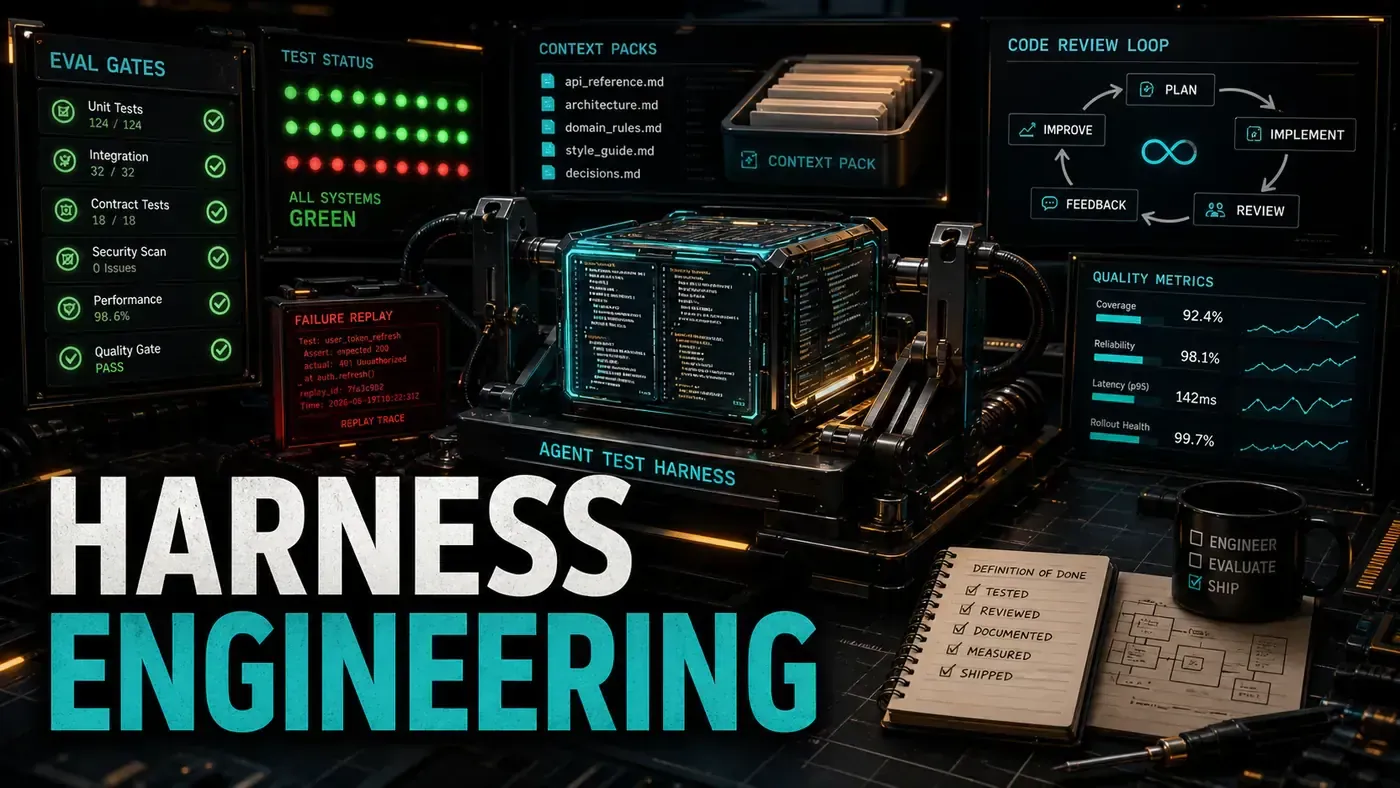
The phrase "harness engineering" (opens in a new tab) showed up in early 2026 to name a skill that turned out to matter more than raw coding ability: building the systems of constraints, feedback loops, and checks that keep an AI agent useful instead of dangerous. The best agentic engineers are often not the best programmers. They are the people who are best at building the harness, meaning the scaffolding that keeps an agent aligned, safe, and actually getting work done.
Here is the part that surprised a lot of teams. When you hand an AI agent a task, the code it writes is rarely the bottleneck. The bottleneck is everything around the code: what the agent is allowed to touch, what it knows about your codebase, and how you catch it when it gets something wrong. The engineers who figured this out stopped competing on typing speed and started competing on how well their guardrails held up under pressure.
For a business team, the takeaway is plain. An agent without a harness is a fast intern with no supervisor and root access. An agent with a good harness behaves more like a reliable team member who knows the rules, checks their own work, and flags problems before they ship. The rest of this piece walks through how the strongest practitioners build that scaffolding, and the trade-offs they make along the way.
What is a Harness?
A harness is everything that surrounds the agent:
- Constraints: What the agent cannot do (sandboxing, approval gates, blocked patterns)
- Context: What the agent knows (CONVENTIONS.md, historical memory, codebase structure)
- Verification: How you check the agent's work (tests, linters, human review, output validation)
- Feedback: How the agent learns from mistakes (learning loops, rejection patterns, correction history)
- Recovery: What happens when things go wrong (rollback mechanisms, checkpointing, fallback procedures)
Without a harness, an agent is a powerful tool with no safety features. With one, it becomes a reliable team member.
The Five Harness Dimensions
1. Constraint Harnesses
Strong engineers define constraints before they give the agent any freedom:
# constraints.yaml
forbidden_patterns:
 - "DROP TABLE"
 - "rm -rf"
 - "eval("
 - "child_process"

required_patterns:
 - "error handling must use neverthrow"
 - "database queries must use repository layer"
 - "all public functions must have tests"

resource_limits:
 max_files_modified: 10
 max_lines_changed: 500
 max_execution_time: 300
(The YAML above is an illustrative pattern rather than a documented product schema, so treat it as a template to adapt.) Claude Code supports constraint definition through its configuration system (opens in a new tab), where hooks in .claude/settings.json can block actions and quality issues deterministically. Hermes reportedly encodes constraints into Honcho (opens in a new tab) preferences, though Honcho is documented as a memory and personalisation layer more than a constraints engine, so that framing is loose. OpenClaw's sandbox mode (opens in a new tab) enforces resource limits through configurable Docker controls. The required pattern referencing neverthrow (opens in a new tab) points at a real TypeScript library for functional Result<T, E> error handling.
2. Context Harnesses
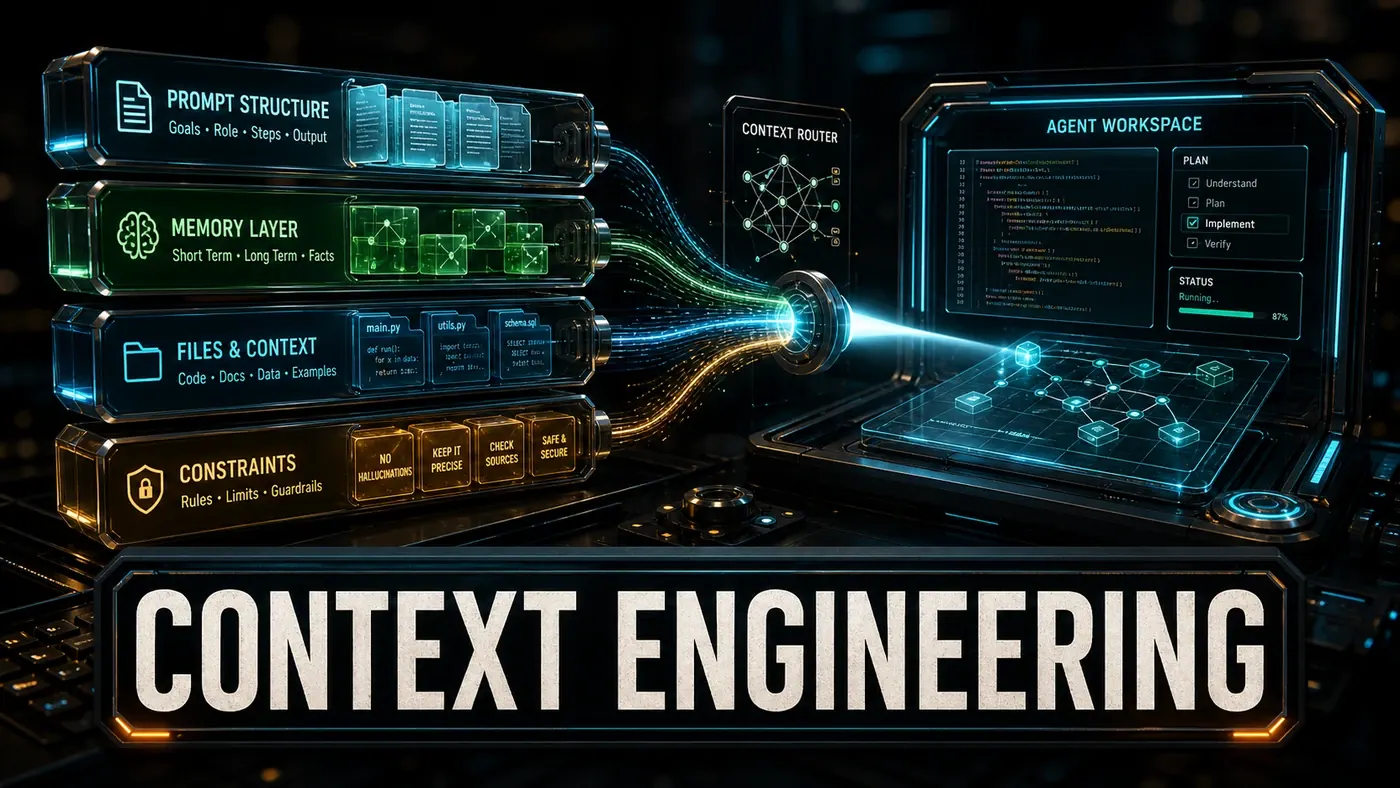
Elite engineers put real effort into context engineering (article 15). They maintain CONVENTIONS.md, keep MEMORY.md current, and structure their prompts to include all five layers of context.
A typical setup looks like this:
CONVENTIONS.md: Team coding standards (updated monthly)ARCHITECTURE.md: System design documentationDECISIONS.md: Record of architectural decisions with rationale.claude/hooks.yaml: Automated quality enforcementhermes memory import: Historical session context
3. Verification Harnesses
Average engineers verify agent output by hand. Elite engineers build verification pipelines instead:
stages:
 - name: compile
 command: npm run build
 required: true
 - name: lint
 command: npm run lint
 required: true
 auto_fix: true
 - name: test
 command: npm test
 required: true
 coverage_threshold: 80
 - name: typecheck
 command: npm run typecheck
 required: true
 - name: security_scan
 command: npm audit --audit-level=moderate
 required: true
4. Feedback Harnesses
The best engineers close the loop. When an agent makes a mistake, they do not just fix it. They update the harness so it cannot happen again:
- Agent generated code with a race condition: add "check for race conditions" to constraints
- Agent missed an edge case: add the edge case to the test harness and context
- Agent used a deprecated API: update CONVENTIONS.md with the approved API list
- Agent violated architecture: add an architecture_review stage to the verification pipeline
5. Recovery Harnesses
Production agents need a way out when something breaks:
- Git-based recovery: All agent changes go in branches, not direct commits
- Database migrations: Always reversible, with rollback tested
- Feature flags: Agent-deployed changes can be toggled off
- Monitoring: Alerts when agent activity exceeds normal patterns
- Circuit breakers: Agent paused automatically if the error rate spikes
The Harness Engineering Mindset
The shift from coding to harness engineering is subtle, but it changes how you spend your day:
| Traditional Engineer | Harness Engineer |
|---|---|
| Writes code directly | Designs systems that write code |
| Reviews code manually | Builds automated review pipelines |
| Fixes bugs individually | Updates harness to prevent bug class |
| Optimises algorithms | Optimises agent context and constraints |
| Measures lines of code | Measures agent success rate and rollback rate |
| Values coding speed | Values harness reliability |
Measuring Harness Quality
The following thresholds are suggested benchmarks rather than measured industry standards, but they give you a sense of what good looks like. Elite harness engineers tend to track:
- First-attempt success rate: more than 60% of agent tasks complete without revision
- Rollback rate: under 5% of agent changes are rolled back
- Constraint violation rate: under 2% of outputs violate defined constraints
- Time to recovery: mean time to recover from agent failures under 30 minutes
- Harness iteration rate: how quickly constraints are updated after failures, under 24 hours
The Future: Meta-Harnesses
The furthest expression of harness engineering is the meta-harness: a harness that improves itself. Systems like Omnigent (opens in a new tab) (article 20) analyse agent performance and suggest harness improvements automatically. A meta-harness does not replace the harness engineer. It amplifies them, surfacing patterns and recommendations that would take weeks to find by hand.
Harness Engineering: answer-first summary
Harness Engineering matters because it can change how Developers and technical teams plan, build, or govern an agent workflow. Why the best agentic engineers win on harness engineering, building the constraints and feedback loops that keep AI agents reliably useful.
The direct answer is this: do not treat the topic as a standalone trend. Treat it as a decision about inputs, outputs, review ownership, data exposure, and whether the workflow produces a result that is faster, safer, or more useful than the current process.
Harness Engineering: implementation checklist
- Define the user, job to be done, and success metric for the agent workflow.
- Collect real examples, policies, source files, customer questions, or search queries before writing prompts or choosing tools.
- Separate low-risk drafts from decisions that need approval, privacy checks, or senior review.
- Document what the AI is allowed to access, what it must not access, and who signs off before production use.
- Review successful task completion, review time, fallback rate, operator corrections after a small pilot rather than judging the idea from a demo.
This keeps the work practical. It also gives search engines and AI answer engines a clean factual structure: what the topic is, who it helps, what to do next, and which risks matter before implementation.
Decision criteria for Harness Engineering
| Decision area | What to check | Production signal |
|---|---|---|
| Intent | Does Harness Engineering solve a real workflow problem? | The use case has a named owner and measurable outcome. |
| Data | Can the required data be used safely? | Sensitive data is classified and access is controlled. |
| Quality | Can a reviewer judge the output consistently? | Examples, rubrics, or acceptance criteria exist. |
| Scale | Can the workflow be repeated without hero effort? | The process is documented and can be handed to another team member. |
Practical example for Harness Engineering
A small business could use this article to choose one practical test. For example, a manager might take one customer-facing process, one internal document workflow, or one recurring content task and redesign only that step with AI support. The goal is not to automate the whole business at once; it is to learn where Code creates reliable leverage.
The useful deliverable is a short operating note: the trigger, the source material, the prompt or tool, the review checklist, the escalation rule, and the metric. That note becomes the handover asset for staff training, SEO/GEO content, service delivery, or future agent work.
Risks and controls for Harness Engineering
The common failure pattern is moving too quickly from a promising idea into an unmanaged workflow. For Harness Engineering, the risk is not only bad output. It can also be unclear data permission, staff confusion, duplicate content, unreviewed customer advice, or a tool that quietly changes cost or capability.
- Control unclear tool permissions with a named owner, a review step, and written acceptance criteria.
- Control silent failures with a named owner, a review step, and written acceptance criteria.
- Control prompt drift with a named owner, a review step, and written acceptance criteria.
- Control weak audit trails with a named owner, a review step, and written acceptance criteria.
Measurement plan for Harness Engineering
A useful AI or SEO initiative should leave evidence. Track successful task completion, review time, fallback rate, operator corrections and compare the pilot against the current process. If the measure does not improve, keep the learning but avoid scaling the workflow.
For GEO readiness, the page should also answer the core question directly, define the entities involved, include implementation steps, explain tradeoffs, and link readers to the next relevant AI Kick Start service, guide, tool, or article.
Definitions and entities for Harness Engineering
For search, GEO, and staff handover, define the core entities in plain language. In this article the important entities are the workflow owner, the AI tool or model, the source material, the review process, the risk boundary, and the measurable business outcome. Clear definitions make the page easier for people to scan and easier for AI answer engines to quote accurately.
- Workflow owner: the person accountable for deciding whether Harness Engineering belongs in the business process.
- Source material: the documents, examples, policies, URLs, prompts, videos, or customer questions that ground the output.
- Review boundary: the point where a human checks accuracy, privacy, brand voice, or customer impact before the result is used.
- Success metric: the measure that proves whether the agent workflow is worth repeating.
Harness Engineering versus doing nothing
Doing nothing is also a decision. The cost may be slow manual work, weaker search visibility, inconsistent advice, duplicated effort, or staff using unmanaged AI tools without a shared process. The practical question is whether a controlled pilot can reduce that cost without creating a larger governance problem.
| Option | When it makes sense | What to watch |
|---|---|---|
| Do nothing | The workflow is rare, low value, or already reliable. | Competitors may improve speed, content depth, or service consistency first. |
| Run a small pilot | The task repeats often and has clear review criteria. | Keep scope tight and measure the result against the current process. |
| Build a production workflow | The pilot is repeatable and risk controls are documented. | Assign ownership, monitoring, training, and a rollback path. |
AI Kick Start handover package for Harness Engineering
A production handover should be concrete enough that another person can run it. For Harness Engineering, that means a short brief, a workflow map, approved prompts or tool settings, source material, a review checklist, internal links to supporting resources, and a simple measurement sheet. This is the difference between reading about AI and turning it into operational capability.
That packaging also strengthens E-E-A-T. It shows experience through implementation notes, expertise through decision criteria, authoritativeness through source-aware structure, and trust through risks, controls, and review steps. The article becomes useful even if the reader never buys a tool because it helps them make a better operational decision.