





Briefing
For most of the last two years, an "AI coding assistant" meant one thing: a single bot that wrote code while you watched. Useful, sometimes impressive, but still one set of hands on the keyboard. That picture is starting to change.
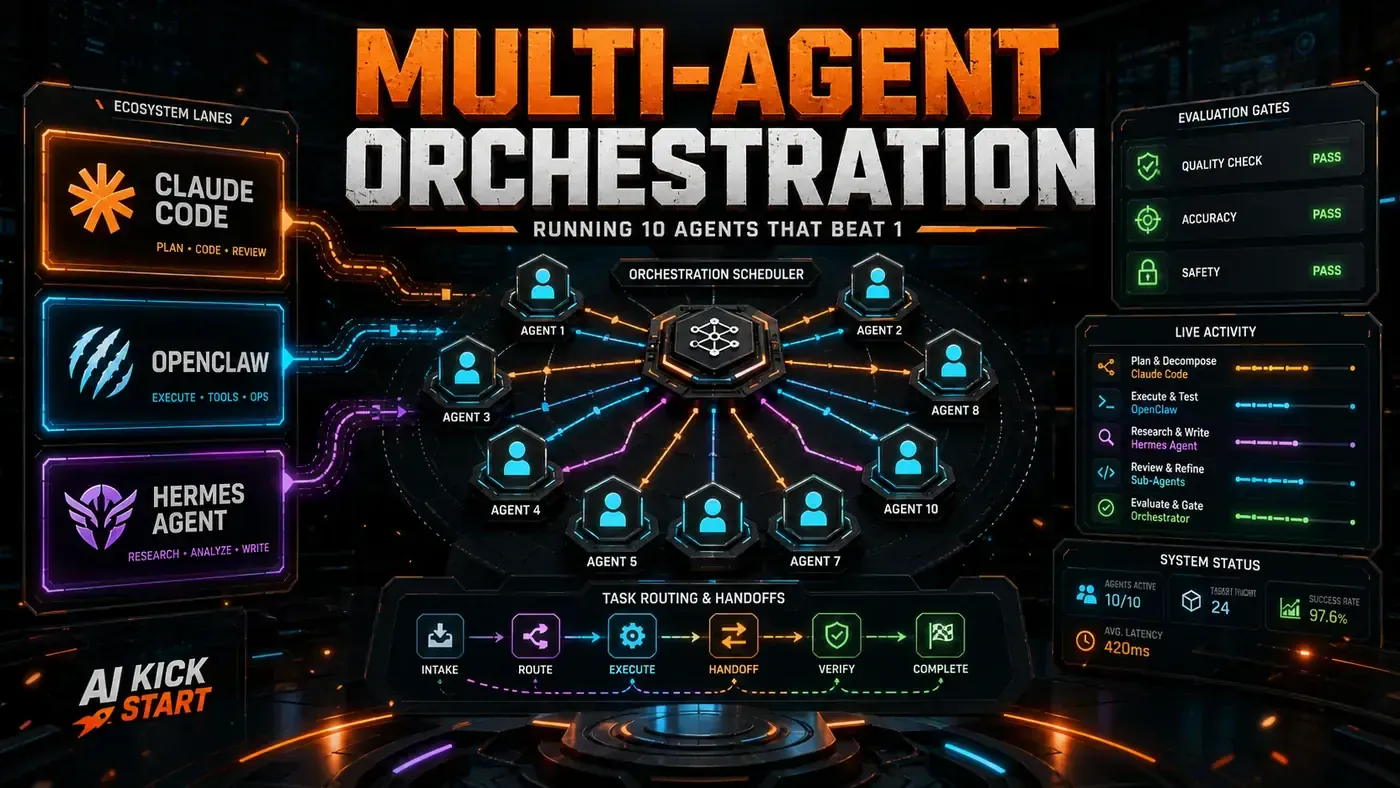
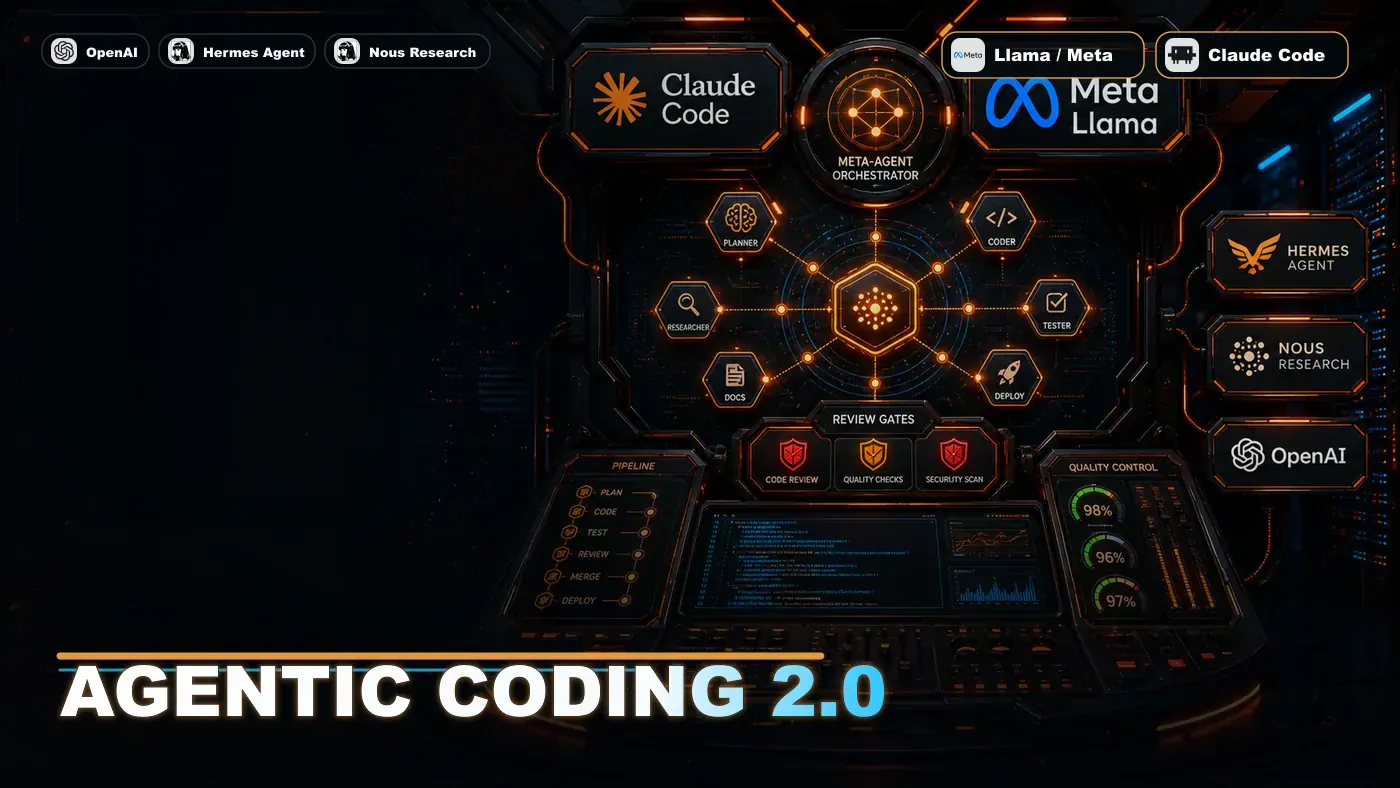
The newer idea is to stop asking one agent to do everything and instead put one agent in charge of several. A lead agent holds the plan, hands jobs to specialists, checks what comes back, and keeps the whole thing on standard. Some people are calling this agentic coding 2.0. The label is marketing, but the shift underneath it is real, and it borrows its shape from something every business already understands: a team with a manager.
For an Australian business team weighing up where AI fits, the "so what" is straightforward. The promise is that more of the routine build work (the CRUD APIs, the component libraries, the deployment plumbing) can run with less hand-holding, while a person stays in the loop for the calls that actually need judgment. The catch is that a lot of the detail floating around, including specific model names, is ahead of what has actually shipped. So it pays to separate what is built from what is pitched.
Here is the architecture, the quality controls, and the honest limits.
The Conductor Pattern
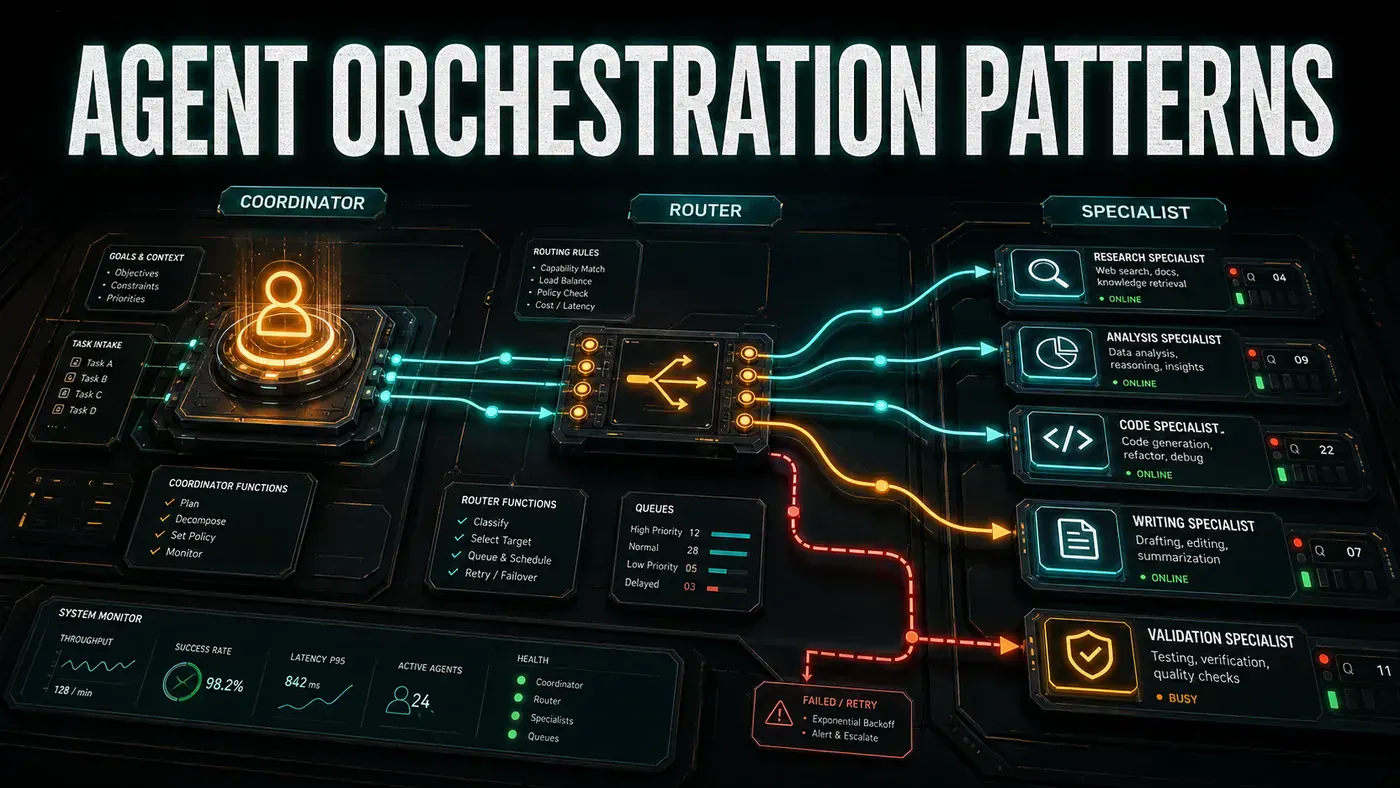
The conductor pattern is the core idea. Four roles do the work.
The Conductor (the meta-agent): holds the high-level goal, tracks the project state, decides what happens next, and judges quality. The argument is to run this on the strongest model you have access to. Claude Opus 4.8 (opens in a new tab), which Anthropic released on 28 May 2026 (opens in a new tab) as its most capable model, is a fair fit for that seat. Other names get thrown around for this role too, including GPT-4.1 and Nous Research's Hermes 3 (opens in a new tab), though both are weaker choices than the framing suggests: GPT-4.1 was retired from ChatGPT in February 2026 and superseded by newer GPT-5 models, and Hermes 3 is a 2024 open-weight Llama fine-tune rather than a current closed flagship.
Section Leads (the domain specialists): each one owns a patch, such as backend, frontend, infrastructure, testing, or documentation. They take the conductor's direction and turn it into specific tasks for their area.
Players (the execution agents): they write the code, run the tests, and generate the docs. The pitch is to run these on smaller, faster models, since their jobs are tightly defined.
The Critic (the quality agent): reviews everything before it is accepted. It looks for bugs, style breaches, security holes, and work that drifts from the agreed architecture. It can reject any output and send it back.
A worked example often looks like the tree below. Note that the specific model versions shown for the leads and players (Sonnet 4.8, Haiku 4.8) are illustrative and do not match Anthropic's current lineup, which tops out at Sonnet 4.6 and Haiku 4.5 as of mid-2026:
Conductor (Opus 4.8)
 |-- Backend Lead (Sonnet 4.8)
 | |-- API Agent (Haiku 4.8)
 | |-- Database Agent (Haiku 4.8)
 | |-- Auth Agent (Haiku 4.8)
 |-- Frontend Lead (Sonnet 4.8)
 | |-- Component Agent (Haiku 4.8)
 | |-- State Management Agent (Haiku 4.8)
 |-- Infra Lead (Sonnet 4.8)
 | |-- Deployment Agent (Haiku 4.8)
 |-- Critic (Sonnet 4.8)
Quality Gates
The critic is what keeps this honest. Every piece of code has to clear a set of gates before it lands in the codebase:
- Syntax gate: compiles without errors (automatic)
- Test gate: all existing tests pass, and new code ships with new tests (automatic)
- Style gate: matches the team's conventions (automatic plus model-based)
- Security gate: no obvious vulnerabilities (model-based scan)
- Architecture gate: fits the project architecture (critic evaluation)
- Integration gate: works alongside the other components (integration test)
Only the first two gates are fully automatic. Gates 3 to 6 lean on model-based judgment, which is imperfect, but it still beats shipping with no review at all. The conductor decides when to trust the critic and when to push a call up to a person.
Dynamic Rebalancing
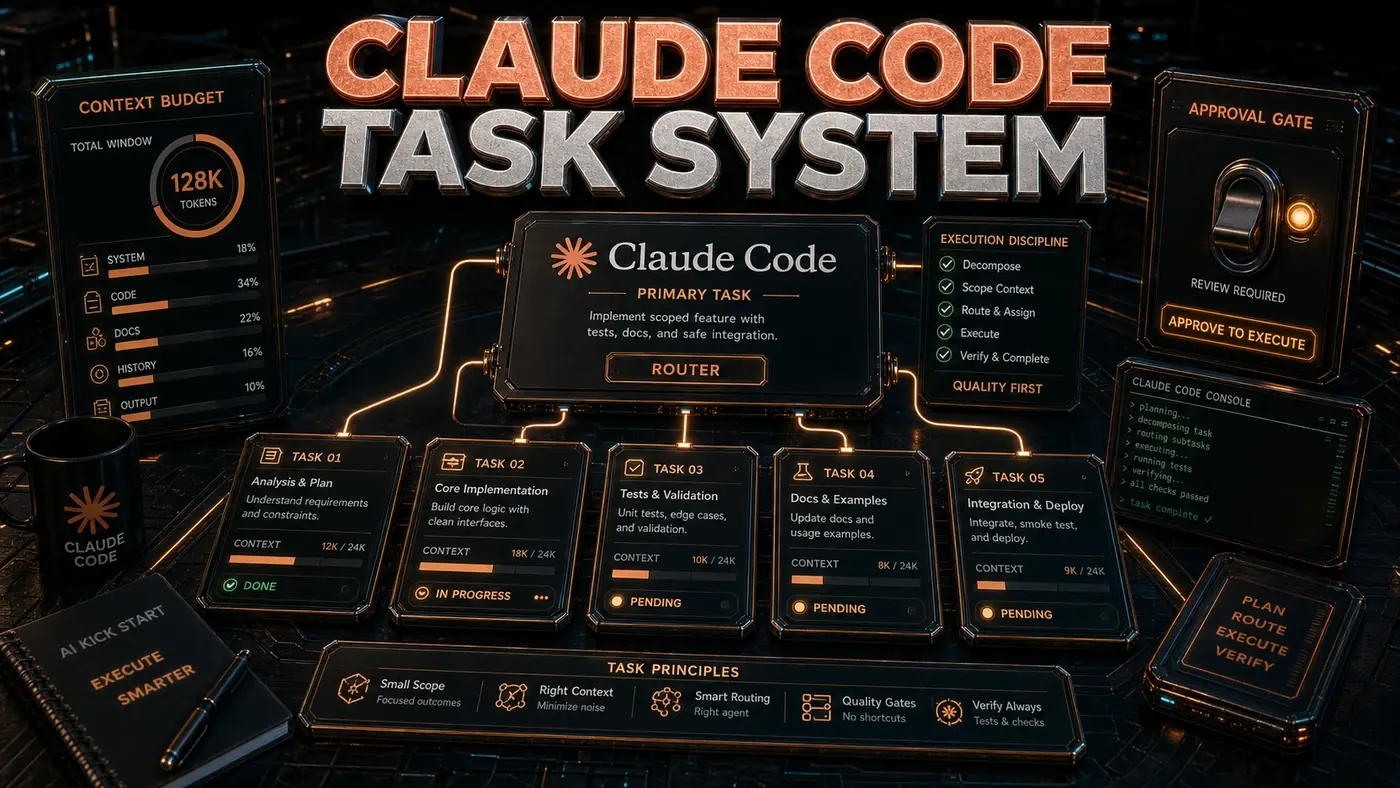
This is where Claude Code's dynamic workflows (opens in a new tab) earn their keep. The feature lets Claude run several subagents in parallel, split work into subtasks, and check the results, which is what makes rebalancing possible. Say the backend section is crawling while the frontend section sits idle, blocked on API contracts it hasn't been handed yet. The conductor can shuffle agents around: pull a frontend agent over to help design the API, or spin up extra backend agents to knock out independent endpoints at the same time.
Self-Correction Loops
When the critic rejects something, a good conductor doesn't just bounce it back for a redo. It reads the pattern in the rejections. If the critic keeps flagging style problems in one section, the conductor rewrites that section lead's instructions. If the problem is architectural drift, the conductor may revise the plan. If the critic is being too strict, the conductor dials the threshold back.
That loop means the team gets better as it works. Early on, rejections come thick and fast. After a few rounds, the section leads have absorbed the project's standards and the rejection rate falls.
Integration with Existing Tooling
This approach doesn't throw out the tools you already use. It runs them. Git handles branches, commits, and PRs. CI/CD enforces the quality gates. Issue trackers carry the status. Documentation stays close to the code. Human review still happens, just after the critic's pass rather than in place of it.
Current Limitations
Be clear-eyed here, because much of this is still the author's framework rather than a settled industry standard. It works best on greenfield projects with clear requirements, on refactoring jobs with well-defined scope, and on standard patterns like CRUD APIs, component libraries, and deployment pipelines.
It struggles with the rest: novel architectural calls that need taste and judgment, debugging a production incident with the clock running, coordinating across external teams and dependencies, and requirements that shift halfway through the build.
Those limits are likely to move. As models get better and the tooling matures, the line of what a meta-agent can handle should keep creeping outward. The interesting question isn't whether this approach eventually takes on complex projects too. It's when.
Agentic Coding 2.0: answer-first summary
Agentic Coding 2.0 matters because it can change how Developers and technical teams plan, build, or govern an agent workflow. Agentic coding 2.0 puts a lead agent in charge of specialists, separating what has shipped from the hype for Australian engineering teams.
The direct answer is this: do not treat the topic as a standalone trend. Treat it as a decision about inputs, outputs, review ownership, data exposure, and whether the workflow produces a result that is faster, safer, or more useful than the current process.
Agentic Coding 2.0: implementation checklist
- Define the user, job to be done, and success metric for the agent workflow.
- Collect real examples, policies, source files, customer questions, or search queries before writing prompts or choosing tools.
- Separate low-risk drafts from decisions that need approval, privacy checks, or senior review.
- Document what the AI is allowed to access, what it must not access, and who signs off before production use.
- Review successful task completion, review time, fallback rate, operator corrections after a small pilot rather than judging the idea from a demo.
This keeps the work practical. It also gives search engines and AI answer engines a clean factual structure: what the topic is, who it helps, what to do next, and which risks matter before implementation.
Decision criteria for Agentic Coding 2.0
| Decision area | What to check | Production signal |
|---|---|---|
| Intent | Does Agentic Coding 2.0 solve a real workflow problem? | The use case has a named owner and measurable outcome. |
| Data | Can the required data be used safely? | Sensitive data is classified and access is controlled. |
| Quality | Can a reviewer judge the output consistently? | Examples, rubrics, or acceptance criteria exist. |
| Scale | Can the workflow be repeated without hero effort? | The process is documented and can be handed to another team member. |
Practical example for Agentic Coding 2.0
A small business could use this article to choose one practical test. For example, a manager might take one customer-facing process, one internal document workflow, or one recurring content task and redesign only that step with AI support. The goal is not to automate the whole business at once; it is to learn where Code creates reliable leverage.
The useful deliverable is a short operating note: the trigger, the source material, the prompt or tool, the review checklist, the escalation rule, and the metric. That note becomes the handover asset for staff training, SEO/GEO content, service delivery, or future agent work.
Risks and controls for Agentic Coding 2.0
The common failure pattern is moving too quickly from a promising idea into an unmanaged workflow. For Agentic Coding 2.0, the risk is not only bad output. It can also be unclear data permission, staff confusion, duplicate content, unreviewed customer advice, or a tool that quietly changes cost or capability.
- Control unclear tool permissions with a named owner, a review step, and written acceptance criteria.
- Control silent failures with a named owner, a review step, and written acceptance criteria.
- Control prompt drift with a named owner, a review step, and written acceptance criteria.
- Control weak audit trails with a named owner, a review step, and written acceptance criteria.
Measurement plan for Agentic Coding 2.0
A useful AI or SEO initiative should leave evidence. Track successful task completion, review time, fallback rate, operator corrections and compare the pilot against the current process. If the measure does not improve, keep the learning but avoid scaling the workflow.
For GEO readiness, the page should also answer the core question directly, define the entities involved, include implementation steps, explain tradeoffs, and link readers to the next relevant AI Kick Start service, guide, tool, or article.
Definitions and entities for Agentic Coding 2.0
For search, GEO, and staff handover, define the core entities in plain language. In this article the important entities are the workflow owner, the AI tool or model, the source material, the review process, the risk boundary, and the measurable business outcome. Clear definitions make the page easier for people to scan and easier for AI answer engines to quote accurately.
- Workflow owner: the person accountable for deciding whether Agentic Coding 2.0 belongs in the business process.
- Source material: the documents, examples, policies, URLs, prompts, videos, or customer questions that ground the output.
- Review boundary: the point where a human checks accuracy, privacy, brand voice, or customer impact before the result is used.
- Success metric: the measure that proves whether the agent workflow is worth repeating.
Agentic Coding 2.0 versus doing nothing
Doing nothing is also a decision. The cost may be slow manual work, weaker search visibility, inconsistent advice, duplicated effort, or staff using unmanaged AI tools without a shared process. The practical question is whether a controlled pilot can reduce that cost without creating a larger governance problem.
| Option | When it makes sense | What to watch |
|---|---|---|
| Do nothing | The workflow is rare, low value, or already reliable. | Competitors may improve speed, content depth, or service consistency first. |
| Run a small pilot | The task repeats often and has clear review criteria. | Keep scope tight and measure the result against the current process. |
| Build a production workflow | The pilot is repeatable and risk controls are documented. | Assign ownership, monitoring, training, and a rollback path. |
AI Kick Start handover package for Agentic Coding 2.0
A production handover should be concrete enough that another person can run it. For Agentic Coding 2.0, that means a short brief, a workflow map, approved prompts or tool settings, source material, a review checklist, internal links to supporting resources, and a simple measurement sheet. This is the difference between reading about AI and turning it into operational capability.
That packaging also strengthens E-E-A-T. It shows experience through implementation notes, expertise through decision criteria, authoritativeness through source-aware structure, and trust through risks, controls, and review steps. The article becomes useful even if the reader never buys a tool because it helps them make a better operational decision.