





Analysis
If you want to know which AI models developers actually reach for, watching the marketing is a waste of time. Watch where the requests go.
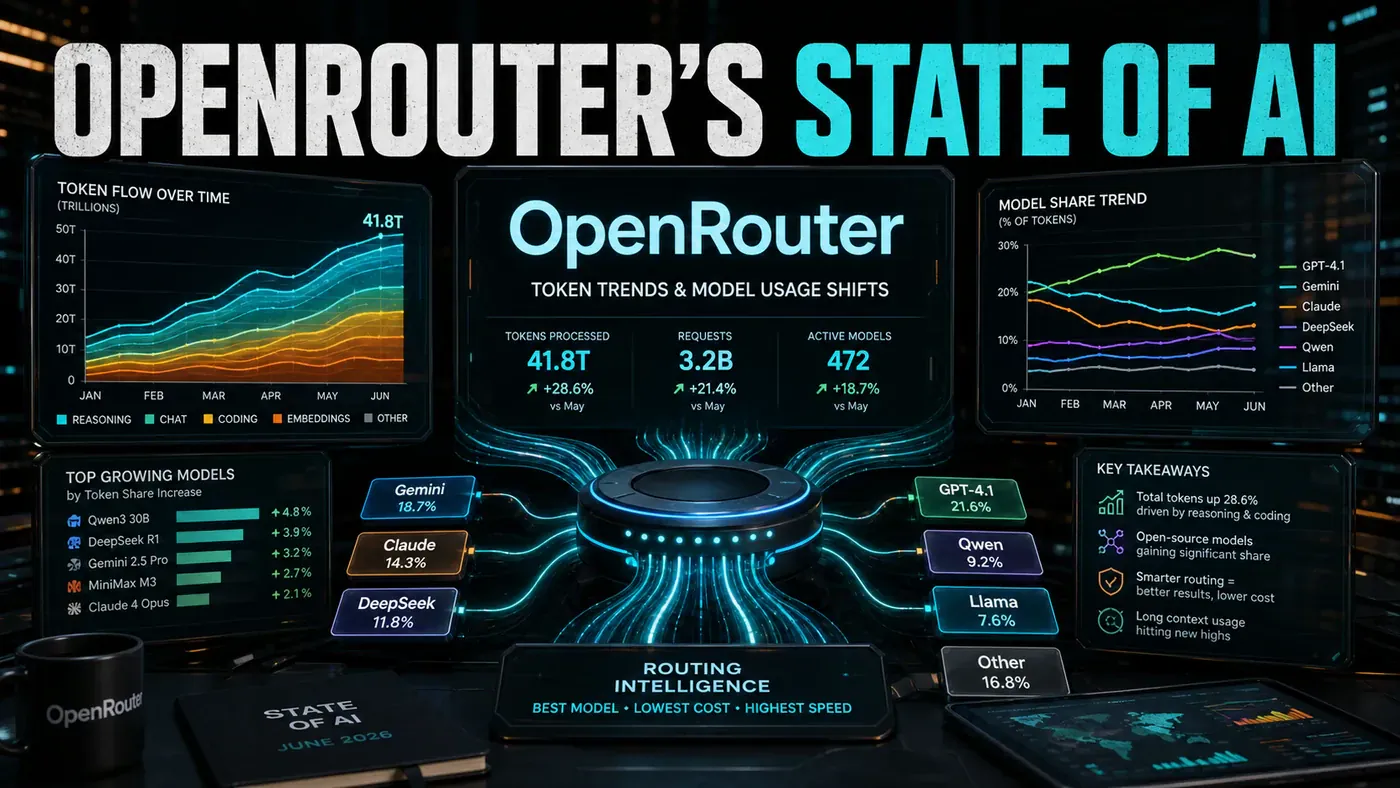
OpenRouter is the plumbing for a big slice of that traffic. It sits between apps and dozens of model providers, and because switching models is a single line of code, the platform sees real choices play out in real time. The company's published State of AI study (opens in a new tab), run with a16z, looked at roughly 100 trillion tokens of usage. That kind of data is closer to a market signal than any vendor benchmark.
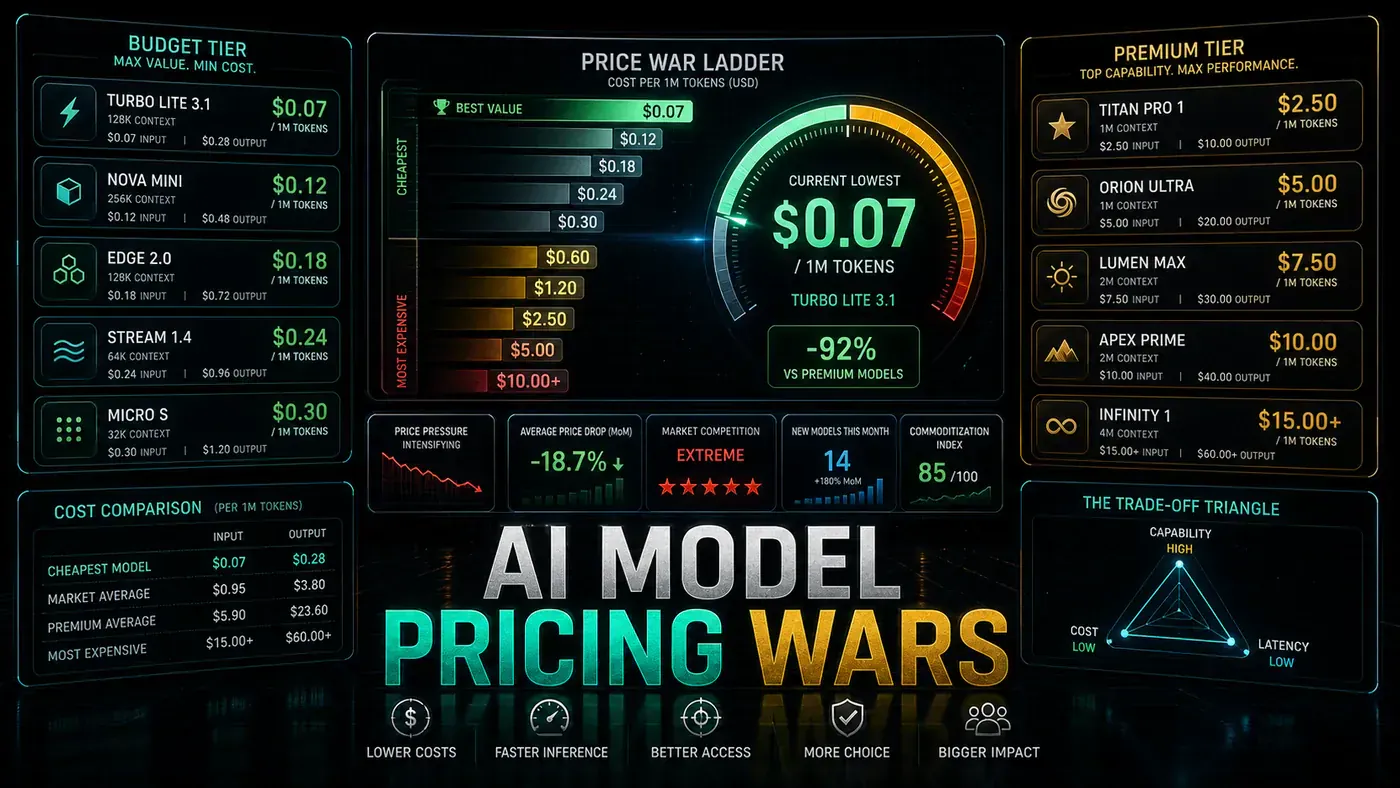
The story it tells is awkward for the expensive end of the market. Budget models are reportedly soaking up traffic, premium models are losing it, and the thing developers increasingly optimise for is not the last few points on a benchmark. It's price and how much context the model can hold at once. For an Australian team deciding where to spend an AI budget, that's the headline: the gap between "good enough" and "best in class" is narrowing, and the price gap is not.
A caution before the numbers. Several of the precise figures and one or two of the model names below come from a reported mid-2026 OpenRouter snapshot that we could not confirm against the company's own publications. We've flagged those as reported rather than established. The overall pattern, though, holds up across independent reporting.
The Rise of Budget Models
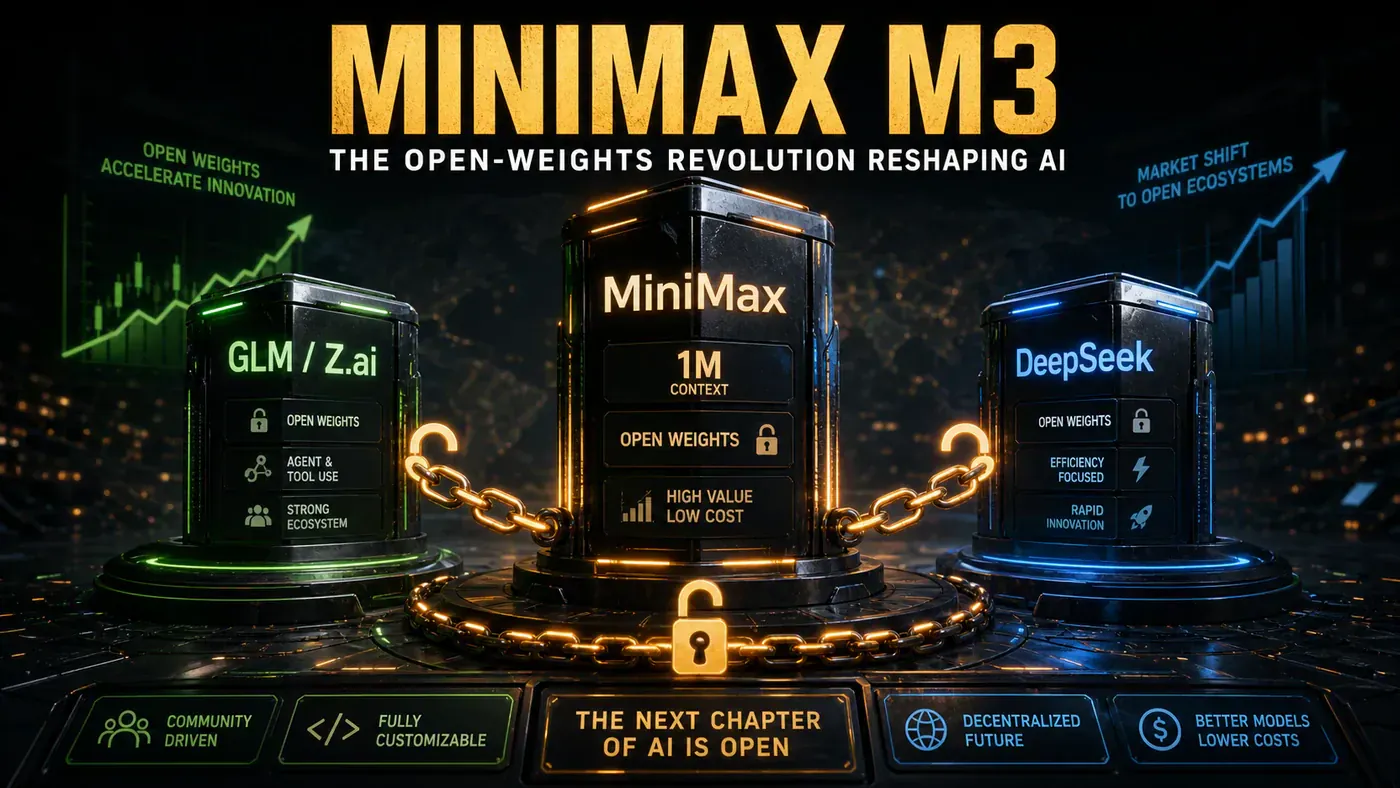
The clearest move is toward cheap models. By the reported mid-2026 snapshot, models priced under $1 per million input tokens had grown from about 18% of OpenRouter's request volume in January to roughly 41% by June. (These exact share figures are reported and unconfirmed.) The named winners in that account included DeepSeek (reported as "V3.5", a version that does not actually exist, DeepSeek's real 2026 line runs V3.2 then the V4 family (opens in a new tab)), Gemini 3.5 Flash (opens in a new tab), and MiniMax M3, released on 1 June 2026 with a 1M-token context window (opens in a new tab).
Worth a correction here: Gemini 3.5 Flash is real, but it isn't actually a sub-$1 model. It's priced at $1.50 per million input and $9 per million output (opens in a new tab), so grouping it with the under-$1 tier is wrong.
The economics behind the shift are simple. As models converge on capability, the premium for a marginal improvement gets harder to justify. A team building a content moderation pipeline cares about accuracy and cost, not whether a model scores 86% or 82% on MMLU-Pro. When a budget model does the job at a fraction of the price of a flagship, the decision makes itself.
Context as the Key Selection Criterion
After price, the reported snapshot puts context window size as the next biggest factor in picking a model. Requests asking for more than 128K tokens of context reportedly grew from 8% of the total in January to 27% in June. (Unconfirmed figures, though OpenRouter's published study does document rising average sequence length.) Models with million-token contexts get picked for these jobs even when their per-token price is higher.
That tracks with how the work is splitting. Short-context tasks, quick answers, simple text generation, increasingly go to budget models or smaller specialised systems. What's left for the frontier models is the work that genuinely needs the long context: reading whole codebases, reviewing stacks of documents, reasoning across a large body of information at once.
The Switching Dynamic
Because switching models on OpenRouter is one parameter change, developers do it constantly. The reported snapshot puts the average account at 3.2 models in regular use, up from 1.8 in early 2025. (Unconfirmed.) That's commoditisation in action: when models are close to interchangeable, you use a different one for each job and optimise cost and capability per request.
The same account reports low loyalty, of developers who had GPT-5.5 as their primary model in January 2026, only 38% still did by June, with the rest moving to cheaper options, more capable ones, or juggling several. Treat that one with real skepticism: GPT-5.5 didn't launch until 23 April 2026, so nobody could have had it as a primary model in January. The retention breakdown appears to be invented.
OpenRouter Token Trends: answer-first summary
OpenRouter Token Trends matters because it can change how Founders and operators plan, build, or govern an tool evaluation workflow. What OpenRouter token data reveals about a market in transition, which models developers are adopting and which they are quietly abandoning.
The direct answer is this: do not treat the topic as a standalone trend. Treat it as a decision about inputs, outputs, review ownership, data exposure, and whether the workflow produces a result that is faster, safer, or more useful than the current process.
OpenRouter Token Trends: implementation checklist
- Define the user, job to be done, and success metric for the tool evaluation workflow.
- Collect real examples, policies, source files, customer questions, or search queries before writing prompts or choosing tools.
- Separate low-risk drafts from decisions that need approval, privacy checks, or senior review.
- Document what the AI is allowed to access, what it must not access, and who signs off before production use.
- Review time to value, adoption rate, cost per workflow, quality review score after a small pilot rather than judging the idea from a demo.
This keeps the work practical. It also gives search engines and AI answer engines a clean factual structure: what the topic is, who it helps, what to do next, and which risks matter before implementation.
Decision criteria for OpenRouter Token Trends
| Decision area | What to check | Production signal |
|---|---|---|
| Intent | Does OpenRouter Token Trends solve a real workflow problem? | The use case has a named owner and measurable outcome. |
| Data | Can the required data be used safely? | Sensitive data is classified and access is controlled. |
| Quality | Can a reviewer judge the output consistently? | Examples, rubrics, or acceptance criteria exist. |
| Scale | Can the workflow be repeated without hero effort? | The process is documented and can be handed to another team member. |
Practical example for OpenRouter Token Trends
A small business could use this article to choose one practical test. For example, a manager might take one customer-facing process, one internal document workflow, or one recurring content task and redesign only that step with AI support. The goal is not to automate the whole business at once; it is to learn where AI News creates reliable leverage.
The useful deliverable is a short operating note: the trigger, the source material, the prompt or tool, the review checklist, the escalation rule, and the metric. That note becomes the handover asset for staff training, SEO/GEO content, service delivery, or future agent work.
Risks and controls for OpenRouter Token Trends
The common failure pattern is moving too quickly from a promising idea into an unmanaged workflow. For OpenRouter Token Trends, the risk is not only bad output. It can also be unclear data permission, staff confusion, duplicate content, unreviewed customer advice, or a tool that quietly changes cost or capability.
- Control tool sprawl with a named owner, a review step, and written acceptance criteria.
- Control unclear pricing with a named owner, a review step, and written acceptance criteria.
- Control vendor lock-in with a named owner, a review step, and written acceptance criteria.
- Control unreviewed data sharing with a named owner, a review step, and written acceptance criteria.
Measurement plan for OpenRouter Token Trends
A useful AI or SEO initiative should leave evidence. Track time to value, adoption rate, cost per workflow, quality review score and compare the pilot against the current process. If the measure does not improve, keep the learning but avoid scaling the workflow.
For GEO readiness, the page should also answer the core question directly, define the entities involved, include implementation steps, explain tradeoffs, and link readers to the next relevant AI Kick Start service, guide, tool, or article.
Definitions and entities for OpenRouter Token Trends
For search, GEO, and staff handover, define the core entities in plain language. In this article the important entities are the workflow owner, the AI tool or model, the source material, the review process, the risk boundary, and the measurable business outcome. Clear definitions make the page easier for people to scan and easier for AI answer engines to quote accurately.
- Workflow owner: the person accountable for deciding whether OpenRouter Token Trends belongs in the business process.
- Source material: the documents, examples, policies, URLs, prompts, videos, or customer questions that ground the output.
- Review boundary: the point where a human checks accuracy, privacy, brand voice, or customer impact before the result is used.
- Success metric: the measure that proves whether the tool evaluation workflow is worth repeating.
OpenRouter Token Trends versus doing nothing
Doing nothing is also a decision. The cost may be slow manual work, weaker search visibility, inconsistent advice, duplicated effort, or staff using unmanaged AI tools without a shared process. The practical question is whether a controlled pilot can reduce that cost without creating a larger governance problem.
| Option | When it makes sense | What to watch |
|---|---|---|
| Do nothing | The workflow is rare, low value, or already reliable. | Competitors may improve speed, content depth, or service consistency first. |
| Run a small pilot | The task repeats often and has clear review criteria. | Keep scope tight and measure the result against the current process. |
| Build a production workflow | The pilot is repeatable and risk controls are documented. | Assign ownership, monitoring, training, and a rollback path. |
AI Kick Start handover package for OpenRouter Token Trends
A production handover should be concrete enough that another person can run it. For OpenRouter Token Trends, that means a short brief, a workflow map, approved prompts or tool settings, source material, a review checklist, internal links to supporting resources, and a simple measurement sheet. This is the difference between reading about AI and turning it into operational capability.
That packaging also strengthens E-E-A-T. It shows experience through implementation notes, expertise through decision criteria, authoritativeness through source-aware structure, and trust through risks, controls, and review steps. The article becomes useful even if the reader never buys a tool because it helps them make a better operational decision.