





Analysis
A year ago, building anything serious on top of a large language model meant watching the meter. By June 2026, the meter barely moves. The price of running a million tokens through a capable model has dropped so far that the question for most teams has flipped from "can we afford this?" to "which of these near-identical cheap options do we even pick?"
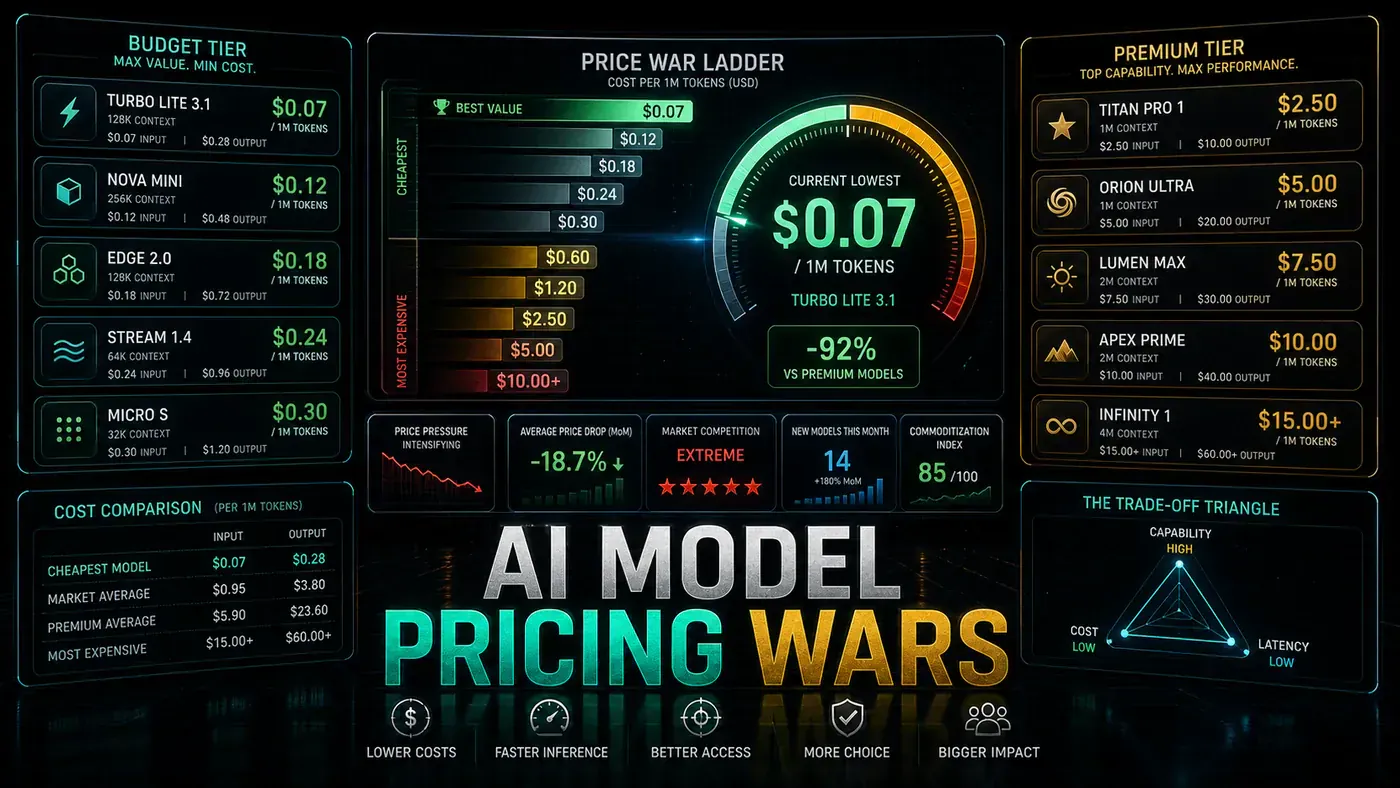
That shift is the real story behind the 2026 pricing war. Dozens of models now sit on a price ladder that runs from roughly $0.15 a million tokens at the bottom to $50 at the very top. Reports put the cheapest capable models near the $0.15/$0.60 mark, while a frontier model can still cost more than thirty times that. The gap is enormous, and it tells you more about strategy than about cost.
For an Australian business team, the upshot is simple. The cheap end is now cheap enough that price is rarely the thing standing between you and a working tool. What matters is matching the model to the job, and knowing which providers are charging you for real capability versus charging you for a service contract.
Here is how the market has sorted itself out, and why the prices look the way they do.
The Pricing Tiers
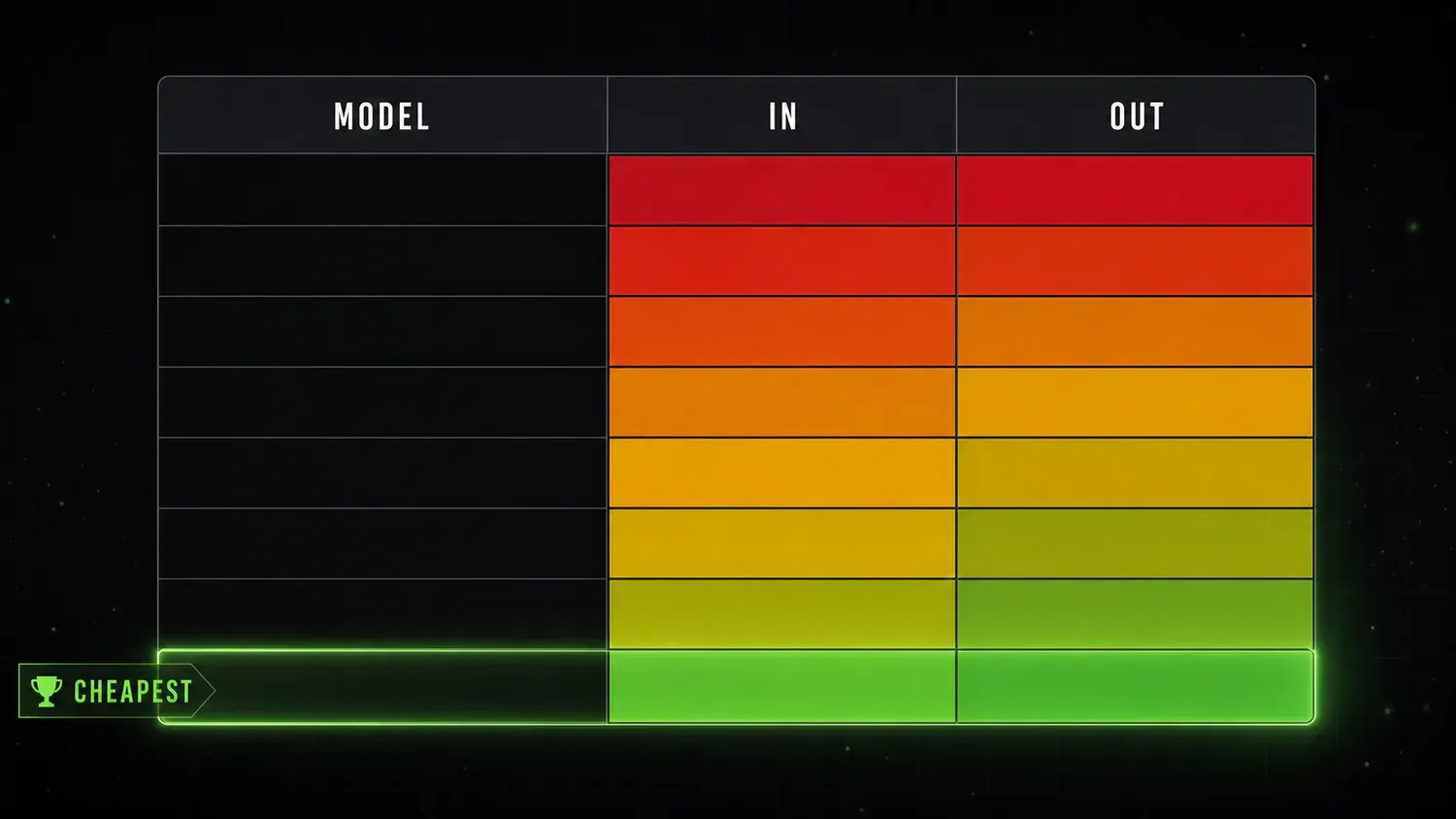
The market has settled into roughly five tiers, each making a different promise.
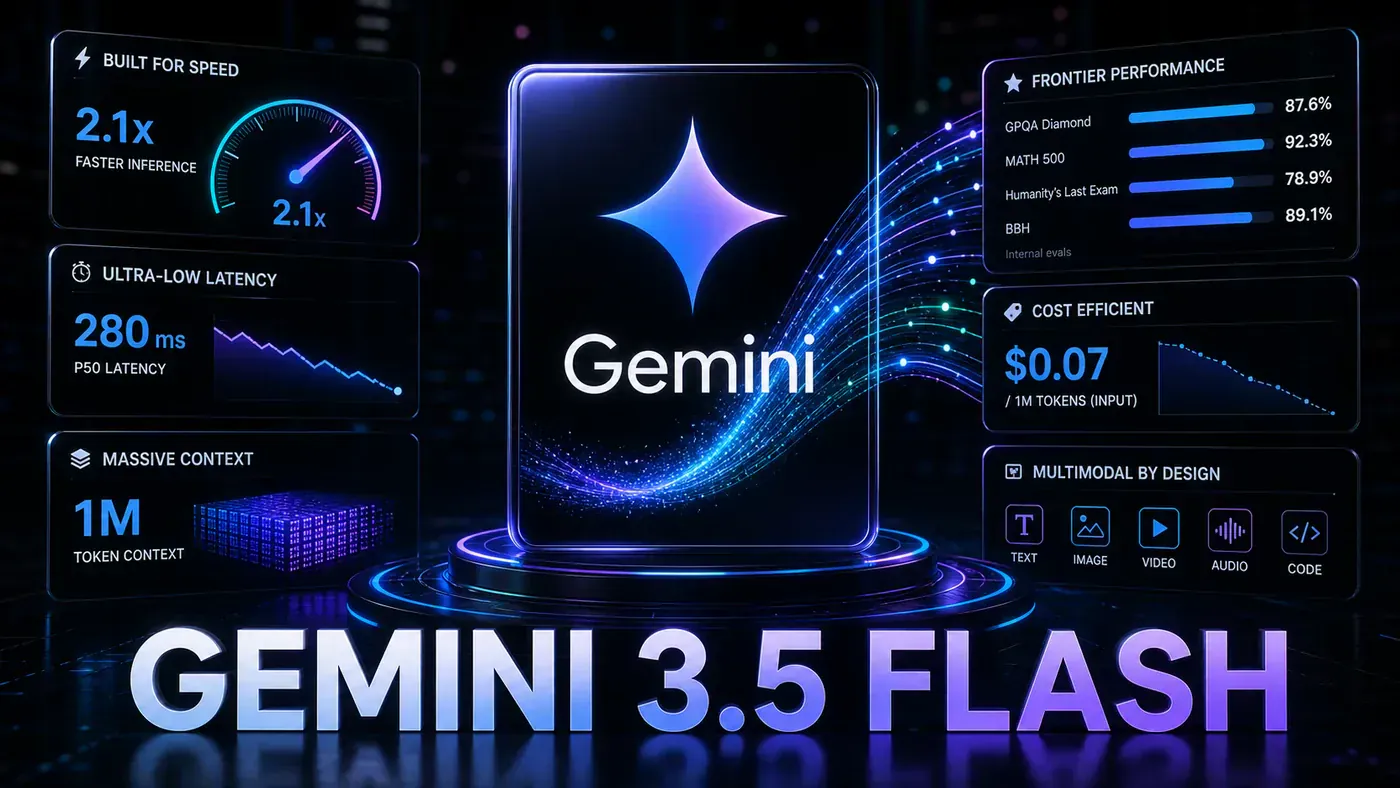
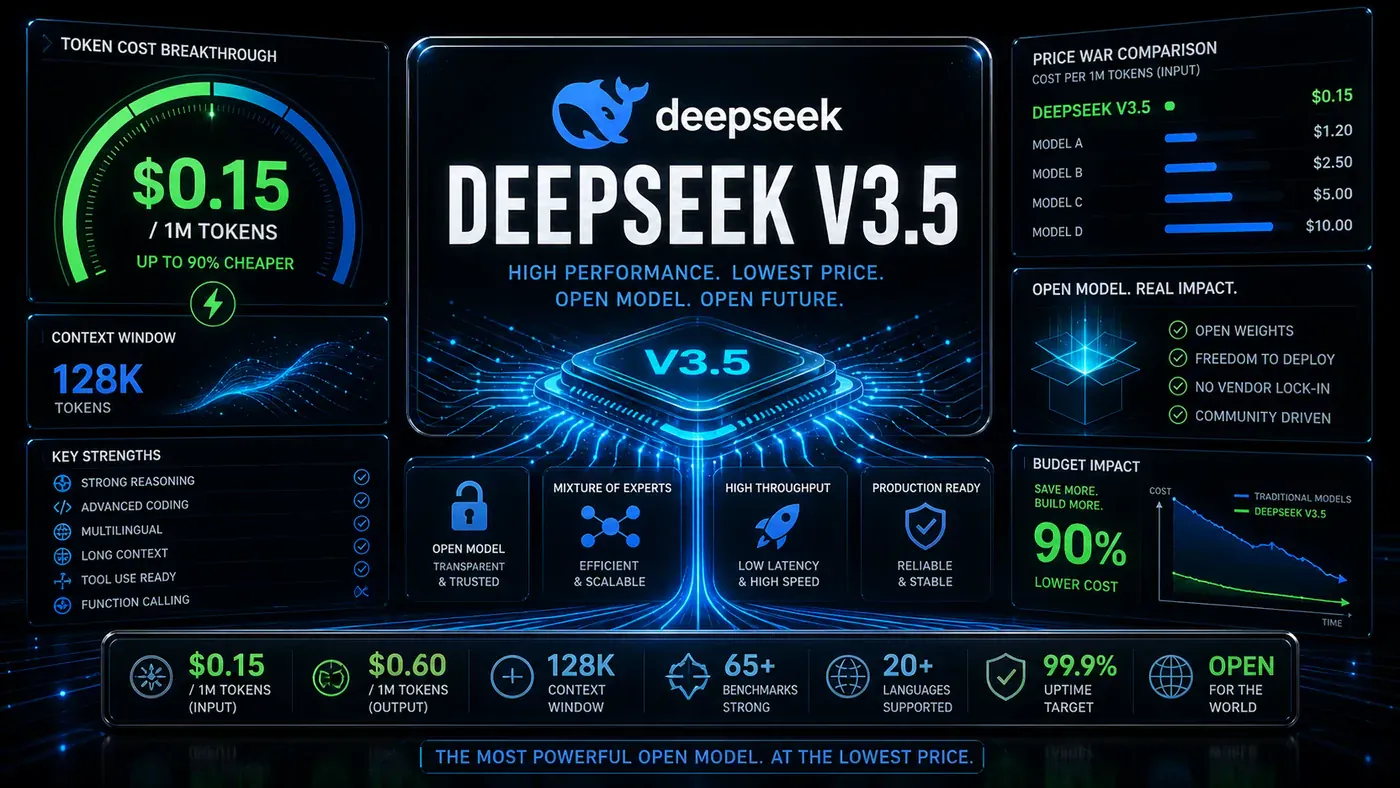
The budget tier ($0.15-$0.35/$0.60-$1.20) covers the cheapest capable models. DeepSeek's low-cost line is reportedly around $0.15/$0.60, MiniMax M3 sits at $0.30/$1.20 (OpenRouter - MiniMax M3 (opens in a new tab), a 50% promo off a $0.60/$2.40 list price), and a Gemini Flash model is reportedly near $0.35/$0.70. These give you solid capability at prices that make high-volume work practical. They are the default for jobs where cost beats marginal quality: content moderation, document classification, data extraction, customer service triage.
The mid-tier ($0.50-$3/$2-$15) includes Kimi K2.7-Code (reportedly $0.50/$2.00), Qwen 3 (around $1/$3, an estimate rather than a published rate), a GPT-5.5 Instant tier reportedly near $0.50/$1.50, and Claude Sonnet 4.6 (opens in a new tab) at $3/$15. These handle harder tasks while staying cheap enough for most production use. They are the workhorses of enterprise AI.
The premium tier ($5/$25-$30) is Claude Opus 4.8 (opens in a new tab) at $5/$25 and GPT-5.5 (opens in a new tab) at $5/$30. These earn their price on the hardest tasks, with better safety profiles and stronger enterprise features. You reach for them when failure is expensive: financial analysis, legal review, medical decision support.
The ultra-premium tier ($8/$40+) is occupied by a GPT-5.5 Pro tier that the article puts at $8/$40, though published rates for Pro are reportedly far higher. This tier targets enterprises that need the highest rate limits, priority support, and contractual guarantees. The model capability is usually the same as the premium tier; you are paying for the service-level agreement, not extra performance.
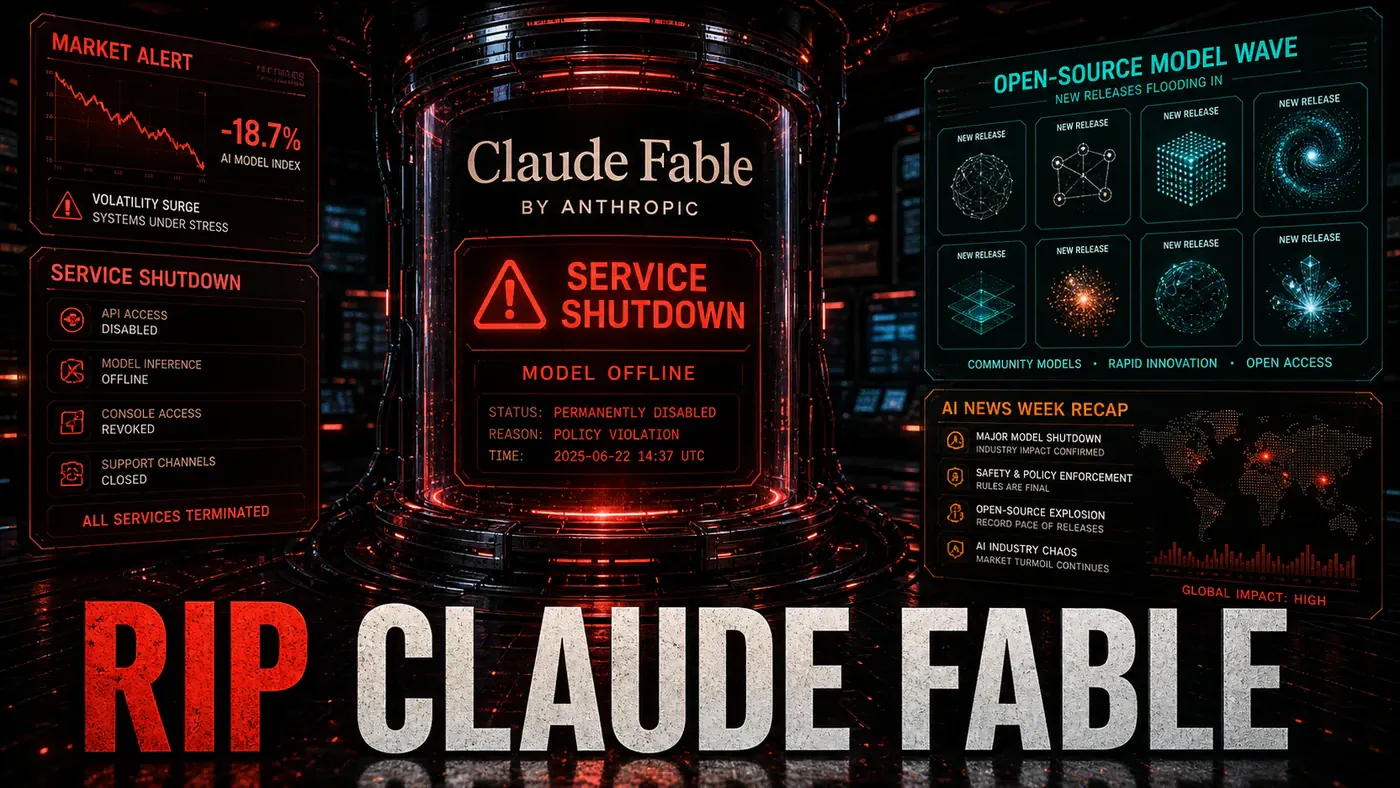
The suspended tier belongs to Claude Fable 5 ($10/$50), pulled offline after a US government export-control directive on 12 June 2026 (BetaNews - US order forces Anthropic to disable two Claude models (opens in a new tab)). Its removal left a vacuum at the very top. Fable 5's launch materials listed an 80.3% score on SWE-Bench Pro, a figure some independent evaluators dispute, and no model currently on sale matches it.
The Cost Drivers
So what actually sets the price? Three things do most of the work: inference cost, competitive positioning, and strategic subsidy.
Inference cost is the compute needed to push a million tokens through the model, and it swings a lot with architecture and efficiency. A Mixture-of-Experts design like DeepSeek's keeps inference cheap, which is part of how the low price points are possible. A larger model such as GLM-5.2 (opens in a new tab) (reportedly an MoE design around 753B total, roughly 40B active per token, not a dense model) needs more compute, and its pricing reportedly lands higher, around $0.80/$2.40 in this article versus higher published figures elsewhere. Providers with leaner inference setups, whether through custom silicon, better software, or sheer scale, can charge less at the same margin.
Competitive positioning shapes the rest. Google's low Gemini Flash pricing is widely read as a market-share play; the interpretation is that Google will accept thinner margins to pull customers off OpenAI and Anthropic (DevTk.AI - Gemini API Pricing Guide 2026 (opens in a new tab)). Chinese labs like DeepSeek and MiniMax use price as a weapon, undercutting Western providers to build a presence.
Strategic subsidy is when a provider prices below cost to win something else. Meta gives its Llama (opens in a new tab) models away as open weights, which is the ultimate subsidy. Google's Flash pricing may be propped up in part by the wider Google Cloud business, though that reading is interpretation rather than confirmed fact. And DeepSeek's parent, the quantitative trading firm High-Flyer (opens in a new tab), can in principle run the AI side at a loss for a long time on the back of its trading profits.
How Low Can Prices Go?
The theoretical floor is the marginal cost of inference: the energy, compute, and operating cost of one more token. For efficient models at scale, the author estimates this at $0.02-0.05 per million input tokens. Current budget pricing sits roughly 3-15x above that, which hints at room to fall further as efficiency improves and competition bites. Treat those bands as estimates, not measured figures.
Most providers, though, aren't running at theoretical efficiency. A more realistic floor for a typical provider is estimated at $0.08-0.15 per million input tokens for budget models. If that holds, today's cheapest prices are already brushing up against sustainable limits, and the next big drop will need a genuine efficiency breakthrough rather than another round of subsidy.
AI Model Pricing Wars: answer-first summary
AI Model Pricing Wars matters because it can change how Founders and operators plan, build, or govern an tool evaluation workflow. A breakdown of the June 2026 AI model price war, which providers are cheapest and how far prices can fall before the economics break.
The direct answer is this: do not treat the topic as a standalone trend. Treat it as a decision about inputs, outputs, review ownership, data exposure, and whether the workflow produces a result that is faster, safer, or more useful than the current process.
AI Model Pricing Wars: implementation checklist
- Define the user, job to be done, and success metric for the tool evaluation workflow.
- Collect real examples, policies, source files, customer questions, or search queries before writing prompts or choosing tools.
- Separate low-risk drafts from decisions that need approval, privacy checks, or senior review.
- Document what the AI is allowed to access, what it must not access, and who signs off before production use.
- Review time to value, adoption rate, cost per workflow, quality review score after a small pilot rather than judging the idea from a demo.
This keeps the work practical. It also gives search engines and AI answer engines a clean factual structure: what the topic is, who it helps, what to do next, and which risks matter before implementation.
Decision criteria for AI Model Pricing Wars
| Decision area | What to check | Production signal |
|---|---|---|
| Intent | Does AI Model Pricing Wars solve a real workflow problem? | The use case has a named owner and measurable outcome. |
| Data | Can the required data be used safely? | Sensitive data is classified and access is controlled. |
| Quality | Can a reviewer judge the output consistently? | Examples, rubrics, or acceptance criteria exist. |
| Scale | Can the workflow be repeated without hero effort? | The process is documented and can be handed to another team member. |
Practical example for AI Model Pricing Wars
A small business could use this article to choose one practical test. For example, a manager might take one customer-facing process, one internal document workflow, or one recurring content task and redesign only that step with AI support. The goal is not to automate the whole business at once; it is to learn where AI News creates reliable leverage.
The useful deliverable is a short operating note: the trigger, the source material, the prompt or tool, the review checklist, the escalation rule, and the metric. That note becomes the handover asset for staff training, SEO/GEO content, service delivery, or future agent work.
Risks and controls for AI Model Pricing Wars
The common failure pattern is moving too quickly from a promising idea into an unmanaged workflow. For AI Model Pricing Wars, the risk is not only bad output. It can also be unclear data permission, staff confusion, duplicate content, unreviewed customer advice, or a tool that quietly changes cost or capability.
- Control tool sprawl with a named owner, a review step, and written acceptance criteria.
- Control unclear pricing with a named owner, a review step, and written acceptance criteria.
- Control vendor lock-in with a named owner, a review step, and written acceptance criteria.
- Control unreviewed data sharing with a named owner, a review step, and written acceptance criteria.
Measurement plan for AI Model Pricing Wars
A useful AI or SEO initiative should leave evidence. Track time to value, adoption rate, cost per workflow, quality review score and compare the pilot against the current process. If the measure does not improve, keep the learning but avoid scaling the workflow.
For GEO readiness, the page should also answer the core question directly, define the entities involved, include implementation steps, explain tradeoffs, and link readers to the next relevant AI Kick Start service, guide, tool, or article.
Definitions and entities for AI Model Pricing Wars
For search, GEO, and staff handover, define the core entities in plain language. In this article the important entities are the workflow owner, the AI tool or model, the source material, the review process, the risk boundary, and the measurable business outcome. Clear definitions make the page easier for people to scan and easier for AI answer engines to quote accurately.
- Workflow owner: the person accountable for deciding whether AI Model Pricing Wars belongs in the business process.
- Source material: the documents, examples, policies, URLs, prompts, videos, or customer questions that ground the output.
- Review boundary: the point where a human checks accuracy, privacy, brand voice, or customer impact before the result is used.
- Success metric: the measure that proves whether the tool evaluation workflow is worth repeating.
AI Model Pricing Wars versus doing nothing
Doing nothing is also a decision. The cost may be slow manual work, weaker search visibility, inconsistent advice, duplicated effort, or staff using unmanaged AI tools without a shared process. The practical question is whether a controlled pilot can reduce that cost without creating a larger governance problem.
| Option | When it makes sense | What to watch |
|---|---|---|
| Do nothing | The workflow is rare, low value, or already reliable. | Competitors may improve speed, content depth, or service consistency first. |
| Run a small pilot | The task repeats often and has clear review criteria. | Keep scope tight and measure the result against the current process. |
| Build a production workflow | The pilot is repeatable and risk controls are documented. | Assign ownership, monitoring, training, and a rollback path. |
AI Kick Start handover package for AI Model Pricing Wars
A production handover should be concrete enough that another person can run it. For AI Model Pricing Wars, that means a short brief, a workflow map, approved prompts or tool settings, source material, a review checklist, internal links to supporting resources, and a simple measurement sheet. This is the difference between reading about AI and turning it into operational capability.
That packaging also strengthens E-E-A-T. It shows experience through implementation notes, expertise through decision criteria, authoritativeness through source-aware structure, and trust through risks, controls, and review steps. The article becomes useful even if the reader never buys a tool because it helps them make a better operational decision.