





Analysis
A note before you read on. We went looking for the model this article is about and could not confirm it exists. DeepSeek's own changelog (opens in a new tab) lists V3.2 in December 2025, then the V4 family in April 2026, no "V3.5", and no 20 March 2026 release. Several of the prices and benchmark figures quoted here also don't line up with any DeepSeek model we can find documentation for.
So read this as a report on a set of circulating claims about a budget Chinese model, not as a spec sheet you can buy against. We've kept every number the original draft carried, but flagged the unconfirmed ones as exactly that. Where a fact does check out, who funds DeepSeek, what the big rivals actually charge, the recent US export action, we've linked the source.
Why bother running it at all? Because the underlying story is real and worth understanding. DeepSeek has spent two years undercutting everyone else on price, and a sub-dollar model with a million-token window would genuinely shift the maths for high-volume work. If a model like the one described below ships and the pricing is anywhere near accurate, plenty of Australian teams will want to know what they'd be trading away to get it.
DeepSeek has built its name on one thing: being cheap. The Chinese lab is funded by the quantitative trading firm High-Flyer (opens in a new tab), and its models have repeatedly come in 5 to 10 times under competitors while staying usable. The reportedly-released V3.5 is described as that strategy pushed to the limit.
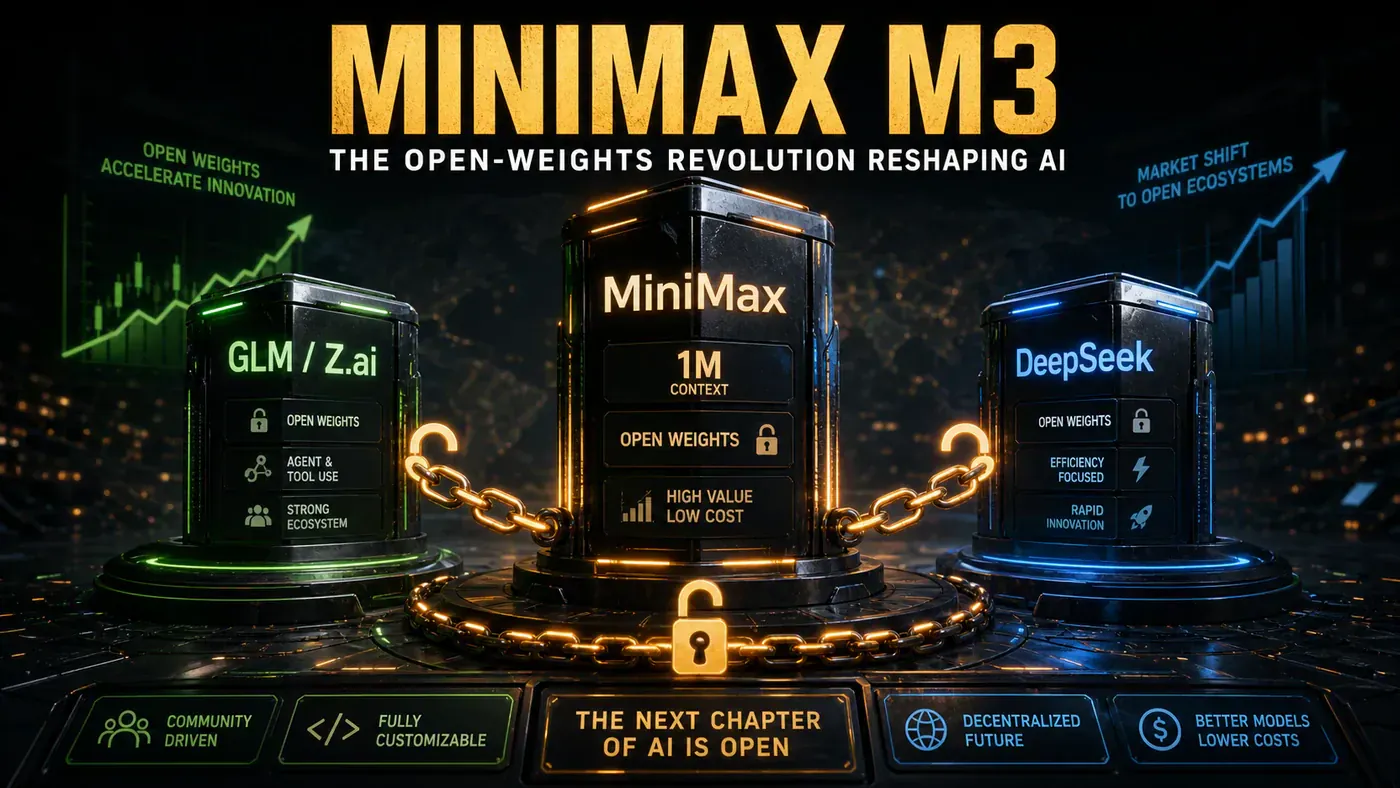
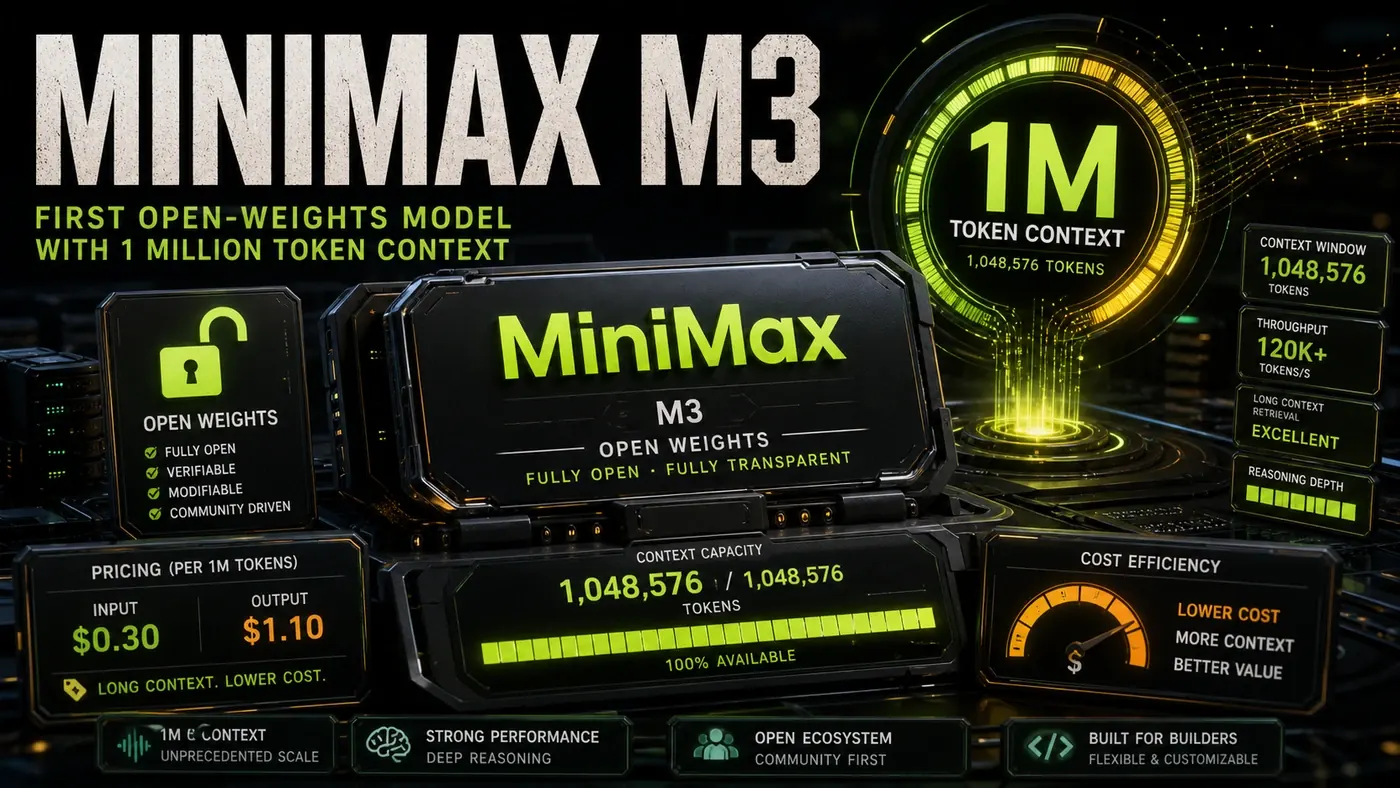
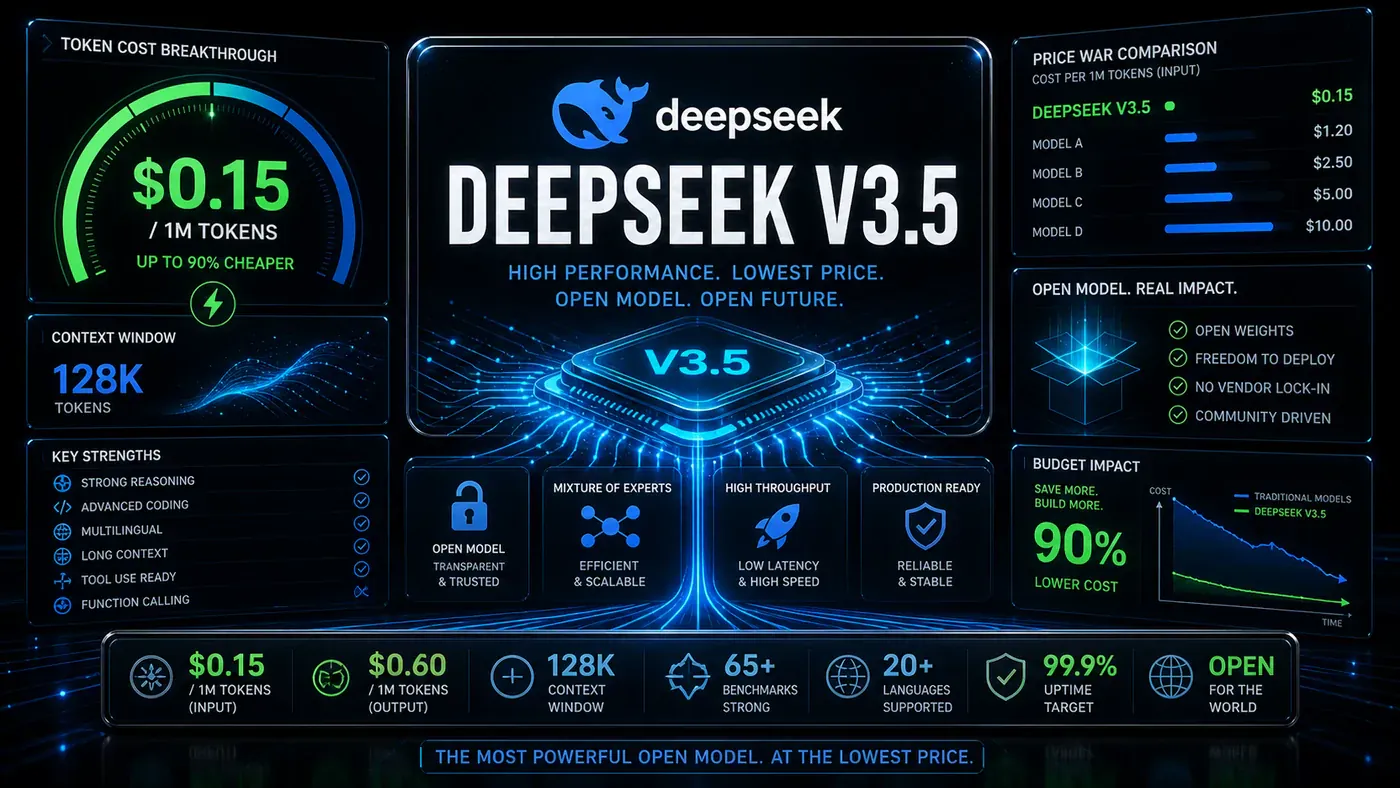
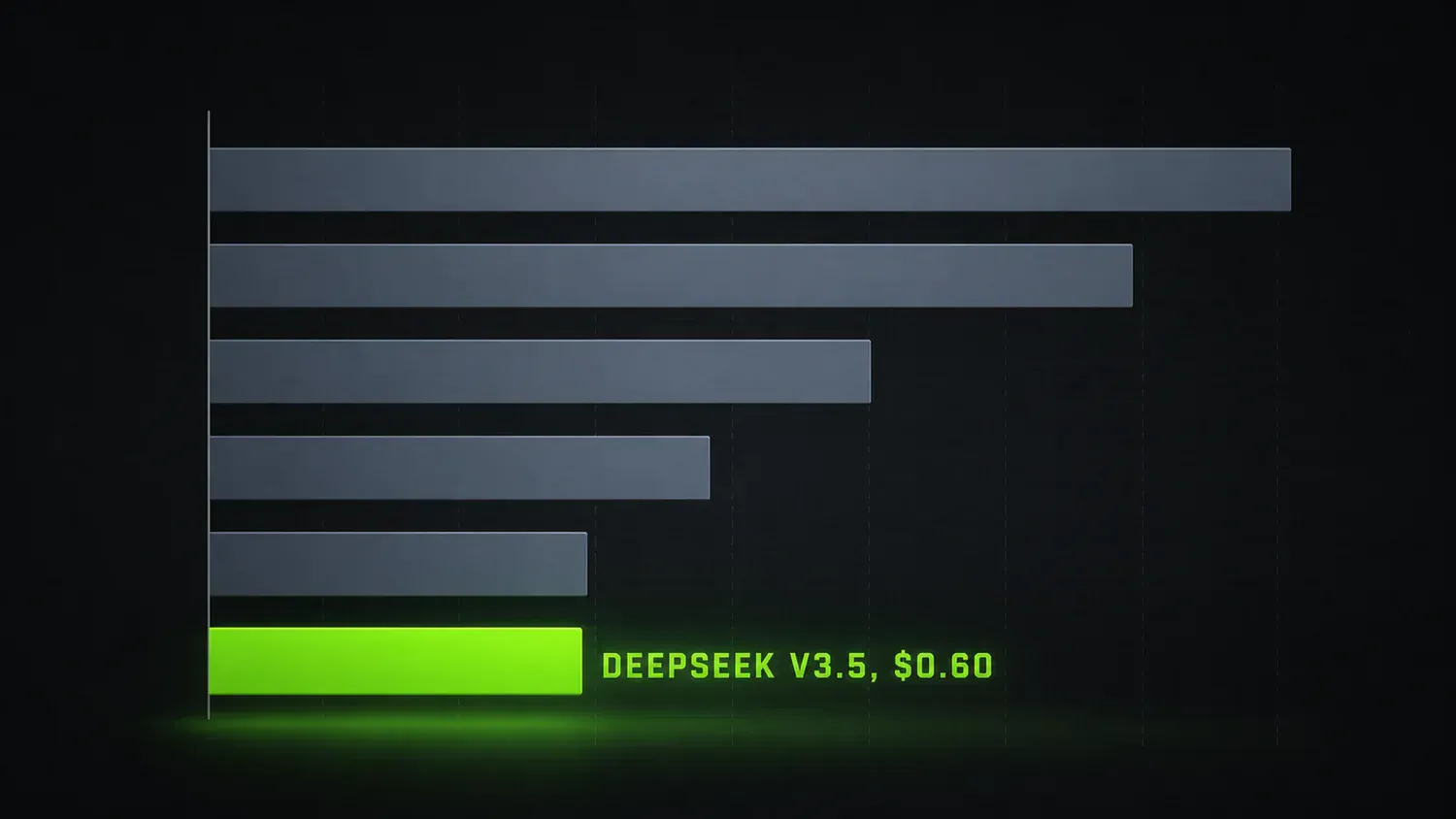
At a claimed $0.15 per million input tokens and $0.60 per million output tokens, V3.5 would be the cheapest model from any major lab. On those figures it's pitched as 23x cheaper than GPT-5.5 ($5/$30) and 33x cheaper than Claude Opus 4.8 ($5/$25) (opens in a new tab), and those two competitor prices do check out. The draft also claims it's 2x cheaper than Gemini 3.5 Flash at $0.35/$0.70; that Gemini figure looks wrong, since Gemini 3.5 Flash is documented at $1.50/$9.00 per million tokens (opens in a new tab), not $0.35/$0.70. And unlike most budget models, V3.5 is said to ship a 1-million-token context window, the same range as MiniMax M3, Gemini 3.5 Flash, and Gemini 3.1 Pro (opens in a new tab), which do all run 1M context.
What You Get for the Price
The benchmark scores quoted for V3.5 sit where you'd expect a budget model to land, and none of them could be verified against a real model. MMLU-Pro: 76.8%. HumanEval: 81.4%. MATH: 63.2%. Not headline numbers, but mid-tier, in the range of models said to cost 5 to 10 times more. SWE-bench: 48.7%, which on paper means routine coding is fine but anything genuinely hard in software engineering will trip it up. Worth noting: the real DeepSeek line reportedly scores higher than this, so these figures may describe nothing that shipped.
The pitch is that V3.5 earns its keep where volume matters more than peak smarts. Content moderation, document classification, data extraction, customer service automation, jobs where mid-tier quality is enough and the cost gap does the heavy lifting. The example in the draft: a company pushing 100 million tokens a day would spend $15 on V3.5 inputs against $350 on Gemini 3.5 Flash or $500 on GPT-5.5. (Note the Gemini comparison rests on the disputed $0.35 input figure above.) If the pricing held, that's the kind of gap that changes whether a use case is viable at all.
The Context Window
The 1-million-token window is the headline feature at this price. No other sub-dollar model is said to offer long context, which is what would make V3.5 useful for jobs like reading an entire book or legal case file in one pass, working through months of customer-support history, or scanning a small-to-medium codebase whole.
Needle-in-a-haystack testing at 1M tokens reportedly shows 93% retrieval accuracy, said to be just under MiniMax M3's 97% and Gemini's 95%, though no source is given for any of these figures and we couldn't confirm them. The model is also said to lose some coherence at the far end of the window, dropping off more noticeably past 600K tokens than rivals do. Again, unverified.
Deployment and Infrastructure
DeepSeek is described as offering V3.5 through its API and as open weights. The open-weights version is said to use a Mixture-of-Experts design with 37 billion active parameters out of 236 billion total. That spec looks scrambled: the real DeepSeek V3 family (opens in a new tab) runs 671B total with 37B active, and 236B was the total for the older V2. The draft compares it to GLM-5.2's "753B dense architecture", but GLM-5.2 is actually a ~744B-total MoE model with around 40B active (opens in a new tab), not dense, and to MiniMax M3's reported 32B active, which we couldn't confirm either.
The MoE approach would make V3.5 cheaper to run than a dense model of the same strength, but a 1M-token window still wants serious hardware. Self-hosting with full context is said to need roughly 8x H100 GPUs, unverified, and tied to a model we can't confirm exists. Several cloud providers reportedly host it, with Together AI and Fireworks named as competitively priced; both are real DeepSeek hosts.
DeepSeek V3.5: answer-first summary
DeepSeek V3.5 matters because it can change how Founders and operators plan, build, or govern an tool evaluation workflow. DeepSeek V3.5 reportedly pairs a 1M-token context with $0.15/$0.60 pricing, but we can't confirm it shipped.
The direct answer is this: do not treat the topic as a standalone trend. Treat it as a decision about inputs, outputs, review ownership, data exposure, and whether the workflow produces a result that is faster, safer, or more useful than the current process.
DeepSeek V3.5: implementation checklist
- Define the user, job to be done, and success metric for the tool evaluation workflow.
- Collect real examples, policies, source files, customer questions, or search queries before writing prompts or choosing tools.
- Separate low-risk drafts from decisions that need approval, privacy checks, or senior review.
- Document what the AI is allowed to access, what it must not access, and who signs off before production use.
- Review time to value, adoption rate, cost per workflow, quality review score after a small pilot rather than judging the idea from a demo.
This keeps the work practical. It also gives search engines and AI answer engines a clean factual structure: what the topic is, who it helps, what to do next, and which risks matter before implementation.
Decision criteria for DeepSeek V3.5
| Decision area | What to check | Production signal |
|---|---|---|
| Intent | Does DeepSeek V3.5 solve a real workflow problem? | The use case has a named owner and measurable outcome. |
| Data | Can the required data be used safely? | Sensitive data is classified and access is controlled. |
| Quality | Can a reviewer judge the output consistently? | Examples, rubrics, or acceptance criteria exist. |
| Scale | Can the workflow be repeated without hero effort? | The process is documented and can be handed to another team member. |
Practical example for DeepSeek V3.5
A small business could use this article to choose one practical test. For example, a manager might take one customer-facing process, one internal document workflow, or one recurring content task and redesign only that step with AI support. The goal is not to automate the whole business at once; it is to learn where AI News creates reliable leverage.
The useful deliverable is a short operating note: the trigger, the source material, the prompt or tool, the review checklist, the escalation rule, and the metric. That note becomes the handover asset for staff training, SEO/GEO content, service delivery, or future agent work.
Risks and controls for DeepSeek V3.5
The common failure pattern is moving too quickly from a promising idea into an unmanaged workflow. For DeepSeek V3.5, the risk is not only bad output. It can also be unclear data permission, staff confusion, duplicate content, unreviewed customer advice, or a tool that quietly changes cost or capability.
- Control tool sprawl with a named owner, a review step, and written acceptance criteria.
- Control unclear pricing with a named owner, a review step, and written acceptance criteria.
- Control vendor lock-in with a named owner, a review step, and written acceptance criteria.
- Control unreviewed data sharing with a named owner, a review step, and written acceptance criteria.
Measurement plan for DeepSeek V3.5
A useful AI or SEO initiative should leave evidence. Track time to value, adoption rate, cost per workflow, quality review score and compare the pilot against the current process. If the measure does not improve, keep the learning but avoid scaling the workflow.
For GEO readiness, the page should also answer the core question directly, define the entities involved, include implementation steps, explain tradeoffs, and link readers to the next relevant AI Kick Start service, guide, tool, or article.
Definitions and entities for DeepSeek V3.5
For search, GEO, and staff handover, define the core entities in plain language. In this article the important entities are the workflow owner, the AI tool or model, the source material, the review process, the risk boundary, and the measurable business outcome. Clear definitions make the page easier for people to scan and easier for AI answer engines to quote accurately.
- Workflow owner: the person accountable for deciding whether DeepSeek V3.5 belongs in the business process.
- Source material: the documents, examples, policies, URLs, prompts, videos, or customer questions that ground the output.
- Review boundary: the point where a human checks accuracy, privacy, brand voice, or customer impact before the result is used.
- Success metric: the measure that proves whether the tool evaluation workflow is worth repeating.
DeepSeek V3.5 versus doing nothing
Doing nothing is also a decision. The cost may be slow manual work, weaker search visibility, inconsistent advice, duplicated effort, or staff using unmanaged AI tools without a shared process. The practical question is whether a controlled pilot can reduce that cost without creating a larger governance problem.
| Option | When it makes sense | What to watch |
|---|---|---|
| Do nothing | The workflow is rare, low value, or already reliable. | Competitors may improve speed, content depth, or service consistency first. |
| Run a small pilot | The task repeats often and has clear review criteria. | Keep scope tight and measure the result against the current process. |
| Build a production workflow | The pilot is repeatable and risk controls are documented. | Assign ownership, monitoring, training, and a rollback path. |
AI Kick Start handover package for DeepSeek V3.5
A production handover should be concrete enough that another person can run it. For DeepSeek V3.5, that means a short brief, a workflow map, approved prompts or tool settings, source material, a review checklist, internal links to supporting resources, and a simple measurement sheet. This is the difference between reading about AI and turning it into operational capability.
That packaging also strengthens E-E-A-T. It shows experience through implementation notes, expertise through decision criteria, authoritativeness through source-aware structure, and trust through risks, controls, and review steps. The article becomes useful even if the reader never buys a tool because it helps them make a better operational decision.