




Analysis
For years, the standard way to make an AI read a long document was to chop it into pieces, store the pieces, and feed the model only the bits that looked relevant to your question. It worked, but it was fiddly, and it broke in annoying ways. As of mid-2026, a handful of models will just take the whole thing.
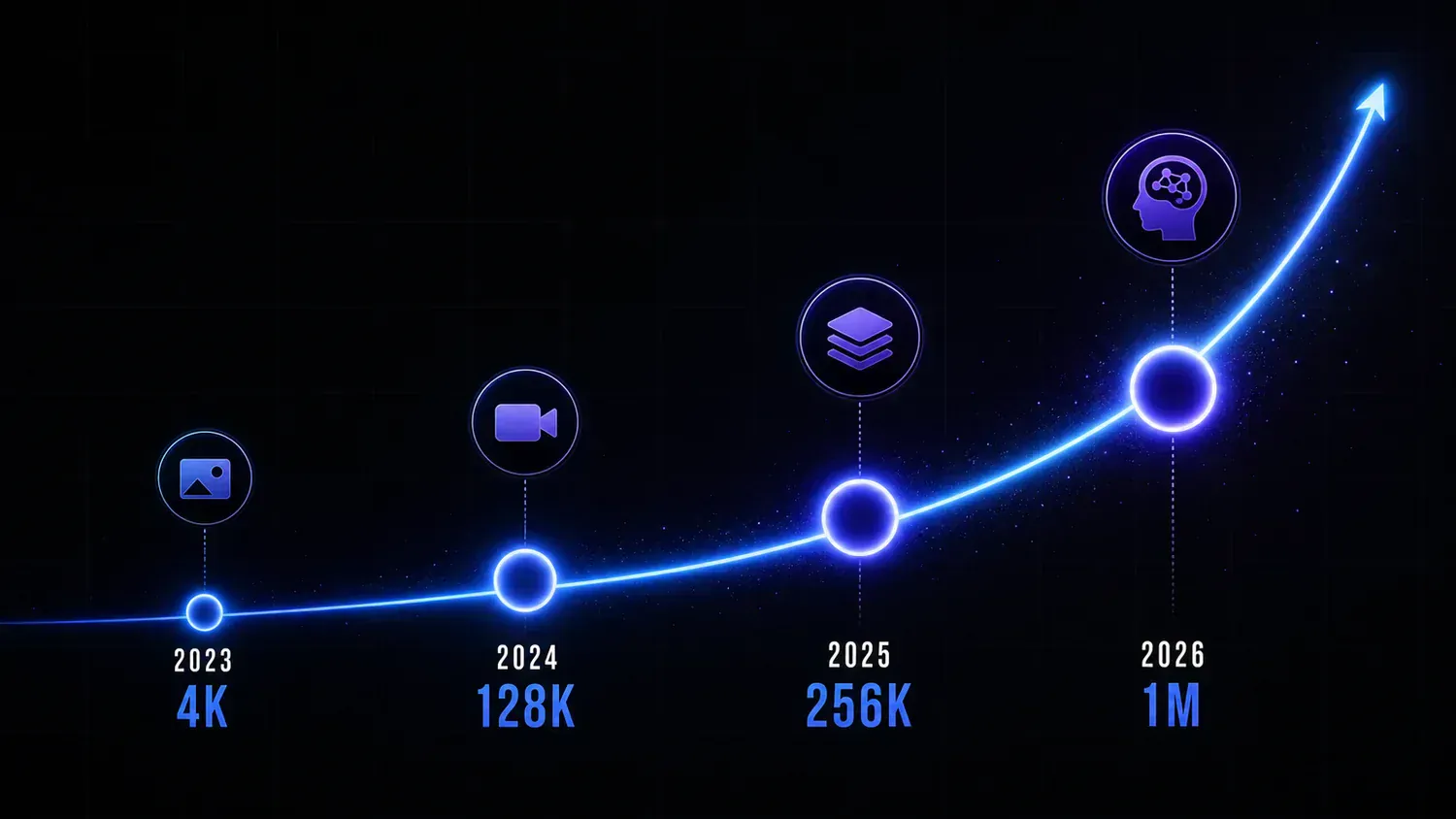
A million tokens of context is roughly 750,000 words. That is the entire works of Shakespeare, or a medium-sized software project, dropped into a single prompt and read in one go. Twelve months ago, 128,000 tokens counted as a long context window. The new ceiling is about eight times bigger.
For an Australian business team, the "so what" is straightforward. A lot of work that used to need a custom retrieval system, a search layer, a vector database, a pile of glue code, can now be done by handing the model the source material directly and asking a plain question. That is cheaper to build and easier to reason about.
The catch is that bigger isn't automatically better. These long-context requests cost more per call, run slower, and reward teams who structure their inputs carefully. The rest of this piece walks through what the million-token window actually unlocks, and where it bites.
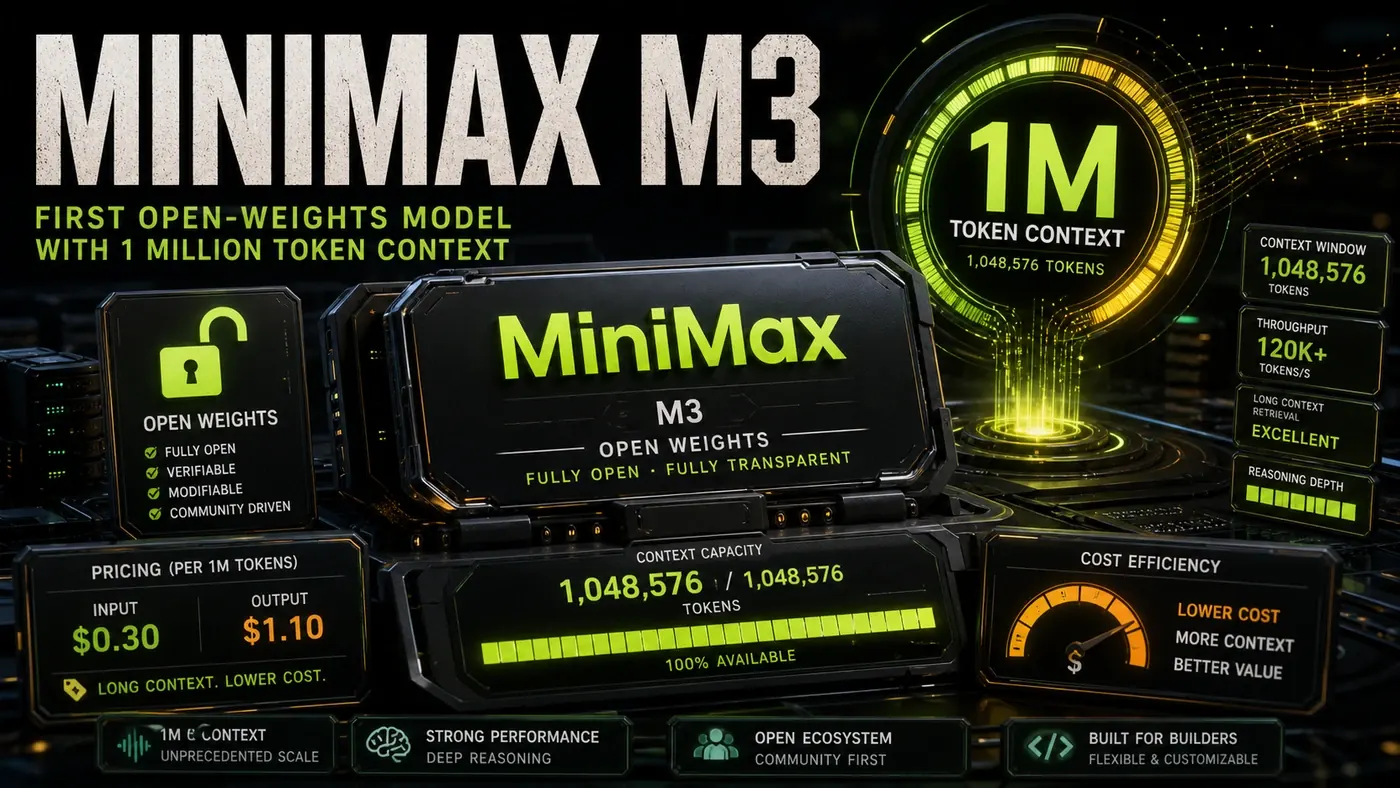
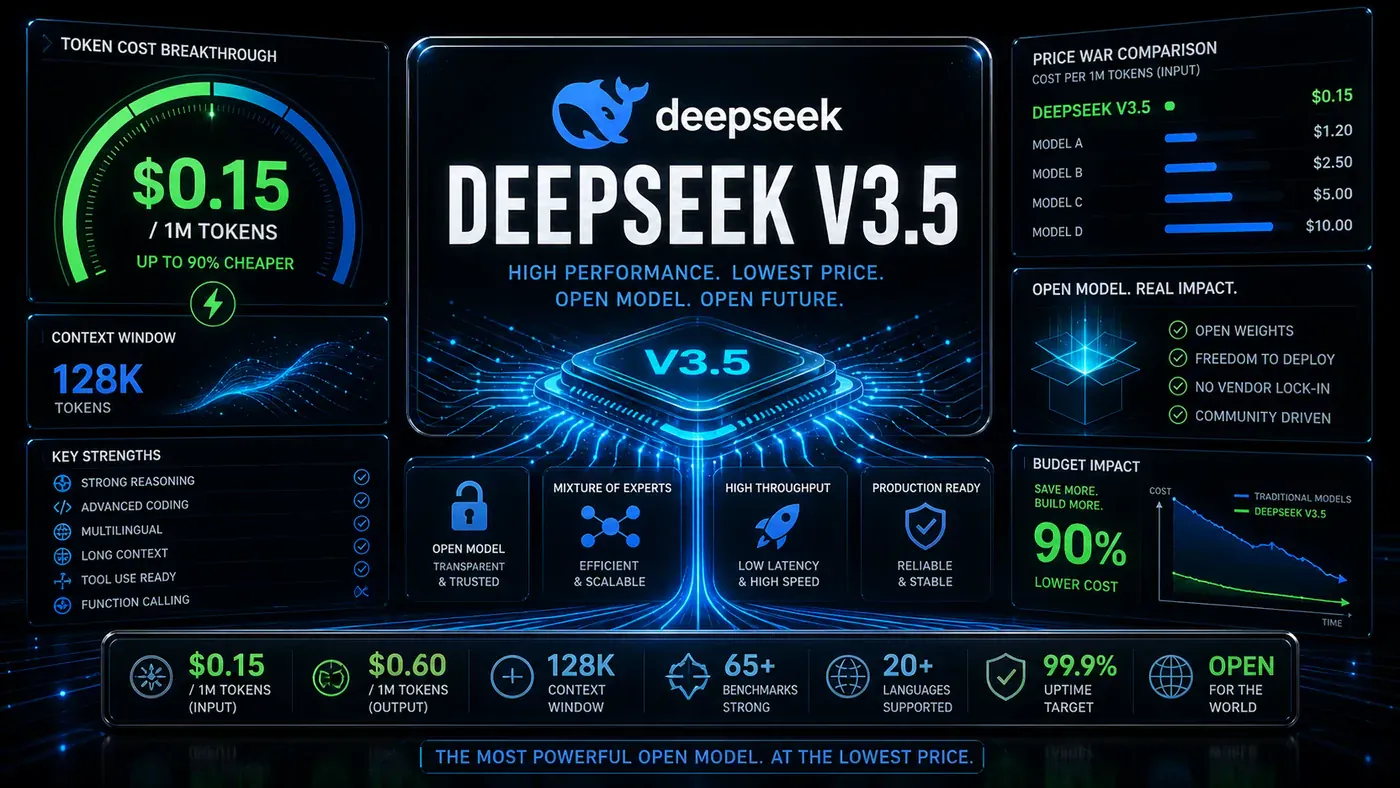
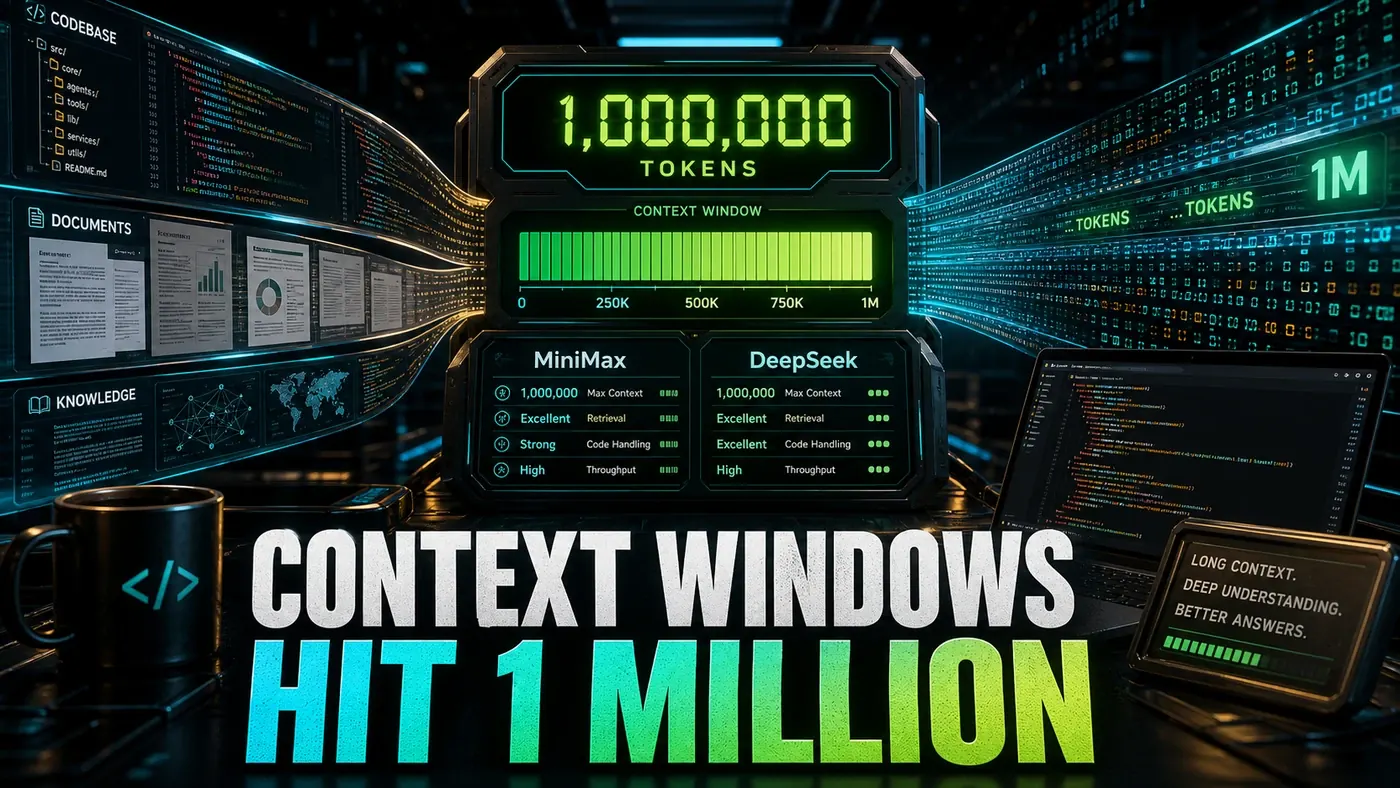
The million-token context window has arrived. In June 2026, developers can choose from several models built around 1 million tokens of context. MiniMax M3 is open-weight and launched at roughly $0.30/$1.20 per million input/output tokens, though that is a 50%-off launch promotion; the standard rate is closer to $0.60/$2.40 (OpenRouter, MiniMax M3 pricing & benchmarks (opens in a new tab)). DeepSeek's newest open-weight release also ships a native 1M context, note that DeepSeek's line went from V3.2 to a V4 Preview in April 2026, so there is no "V3.5", and the often-quoted $0.15/$0.60 figure for it is unconfirmed (DeepSeek API Docs, V4 Preview release (opens in a new tab)). Google's Gemini 3.5 Flash carries a 1M-token input window too, reportedly priced nearer $1.50/$9.00 rather than the lower $0.35/$0.70 sometimes cited (OpenRouter, Gemini 3.5 Flash (opens in a new tab)), and Gemini 3.1 Pro is, by available accounts, a 2M-token model priced around $2/$12 rather than the $3.50/$10.50 figure that circulates. A year ago, 128K tokens was considered long context. Today that is 8x shorter than the new standard (The Decoder, million-token context for open models (opens in a new tab)).
This is more than a spec bump. It changes what these systems can do. A million tokens is about 750,000 words (token-to-word ratio, industry standard ~0.75 words/token (opens in a new tab)), enough to hold the entire King James Bible, the complete works of Shakespeare, or a medium-sized software codebase in a single prompt. Work that used to demand a complex retrieval architecture can now run on plain prompt engineering.
What 1M Tokens Enables
The new applications fall into three broad areas.
Full codebase understanding: a 1M-token context can hold somewhere around 500,000 to 700,000 lines of code, depending on the language and how heavily it's commented, an order-of-magnitude estimate rather than a measured figure. That covers most individual microservices, libraries, or apps. You can ask "how does authentication work in this codebase?" or "find every place we sanitise user input" and have the model read the whole repository in one pass. Tools like Kimi K2.7 Code have shown real strength at spotting cross-file dependencies and refactoring opportunities, though K2.7 Code runs a 256K-token window rather than a full 1M, so the very largest repos still need to be fed in sections (Codersera, Kimi K2.7 Code guide (opens in a new tab)).
Multi-document legal and financial analysis: case files, financial filings, and regulatory submissions often run to hundreds or thousands of pages. With a 1M-token context, a lawyer can load an entire case file, complaints, motions, depositions, exhibits, and ask the model to flag inconsistencies, summarise the key arguments, or draft a responsive pleading. A financial analyst can pull in years of filings, earnings-call transcripts, and analyst notes to build out an investment thesis.
Long-form content creation and analysis: authors, researchers, and content teams can work at document length instead of paragraph length. A novelist can ask the model to check a 200,000-word manuscript for plot holes. A researcher can pull findings together across dozens of papers. A journalist can run thousands of pages of leaked documents to surface patterns and connections.
The Practical Challenges
The enthusiasm is warranted, but long-context work comes with real constraints you have to plan around.
Cost: even at budget pricing, a full 1M-token prompt runs somewhere around $0.15-0.35 in input alone, and the lower end of that range leans on the unconfirmed DeepSeek figure noted earlier. Add a long response, say 100K tokens, and a single request can hit $0.75-1.50. Across many documents that adds up fast. A legal discovery job running 10,000 documents at full context could, on these numbers, cost in the region of $15,000 per run, an illustrative projection, not a quoted price.
Latency: long-context inference is slower than short-context, full stop. Generic estimates put a 1M-token request at 30-90 seconds, though that's a loose ceiling: MiniMax M3 in particular is considerably faster thanks to its sparse-attention design, named MiniMax Sparse Attention rather than the "dynamic sparse attention" tag that sometimes gets attached to it (GitHub, MiniMax-AI/MiniMax-M3 (opens in a new tab)). Either way, this suits batch workflows far better than anything real-time.
Effective utilisation: models don't all use long context equally well. Needle-in-a-haystack tests, can the model find one specific fact buried in a long document?, show wide variation. Figures circulating put MiniMax M3 near 97% accuracy at 1M tokens and some DeepSeek models around 93%, but those specific numbers are unconfirmed and should be treated as rumoured rather than measured. What is well established is the broader pattern: some models that advertise a 1M-token window degrade noticeably past about 600K tokens in practice.
Context management: having room for 1M tokens doesn't mean you should fill it. Good long-context prompting takes structure, well-organised documents, clear sections, and explicit instructions about what to focus on. Skip that and the model can drown in the volume and hand back worse answers than it would from a shorter, tighter prompt.
1 Million Token Context Windows: answer-first summary
1 Million Token Context Windows matters because it can change how Founders and operators plan, build, or govern an tool evaluation workflow. One-million-token context windows now ship from several providers.
The direct answer is this: do not treat the topic as a standalone trend. Treat it as a decision about inputs, outputs, review ownership, data exposure, and whether the workflow produces a result that is faster, safer, or more useful than the current process.
1 Million Token Context Windows: implementation checklist
- Define the user, job to be done, and success metric for the tool evaluation workflow.
- Collect real examples, policies, source files, customer questions, or search queries before writing prompts or choosing tools.
- Separate low-risk drafts from decisions that need approval, privacy checks, or senior review.
- Document what the AI is allowed to access, what it must not access, and who signs off before production use.
- Review time to value, adoption rate, cost per workflow, quality review score after a small pilot rather than judging the idea from a demo.
This keeps the work practical. It also gives search engines and AI answer engines a clean factual structure: what the topic is, who it helps, what to do next, and which risks matter before implementation.
Decision criteria for 1 Million Token Context Windows
| Decision area | What to check | Production signal |
|---|---|---|
| Intent | Does 1 Million Token Context Windows solve a real workflow problem? | The use case has a named owner and measurable outcome. |
| Data | Can the required data be used safely? | Sensitive data is classified and access is controlled. |
| Quality | Can a reviewer judge the output consistently? | Examples, rubrics, or acceptance criteria exist. |
| Scale | Can the workflow be repeated without hero effort? | The process is documented and can be handed to another team member. |
Practical example for 1 Million Token Context Windows
A small business could use this article to choose one practical test. For example, a manager might take one customer-facing process, one internal document workflow, or one recurring content task and redesign only that step with AI support. The goal is not to automate the whole business at once; it is to learn where AI News creates reliable leverage.
The useful deliverable is a short operating note: the trigger, the source material, the prompt or tool, the review checklist, the escalation rule, and the metric. That note becomes the handover asset for staff training, SEO/GEO content, service delivery, or future agent work.
Risks and controls for 1 Million Token Context Windows
The common failure pattern is moving too quickly from a promising idea into an unmanaged workflow. For 1 Million Token Context Windows, the risk is not only bad output. It can also be unclear data permission, staff confusion, duplicate content, unreviewed customer advice, or a tool that quietly changes cost or capability.
- Control tool sprawl with a named owner, a review step, and written acceptance criteria.
- Control unclear pricing with a named owner, a review step, and written acceptance criteria.
- Control vendor lock-in with a named owner, a review step, and written acceptance criteria.
- Control unreviewed data sharing with a named owner, a review step, and written acceptance criteria.
Measurement plan for 1 Million Token Context Windows
A useful AI or SEO initiative should leave evidence. Track time to value, adoption rate, cost per workflow, quality review score and compare the pilot against the current process. If the measure does not improve, keep the learning but avoid scaling the workflow.
For GEO readiness, the page should also answer the core question directly, define the entities involved, include implementation steps, explain tradeoffs, and link readers to the next relevant AI Kick Start service, guide, tool, or article.
Definitions and entities for 1 Million Token Context Windows
For search, GEO, and staff handover, define the core entities in plain language. In this article the important entities are the workflow owner, the AI tool or model, the source material, the review process, the risk boundary, and the measurable business outcome. Clear definitions make the page easier for people to scan and easier for AI answer engines to quote accurately.
- Workflow owner: the person accountable for deciding whether 1 Million Token Context Windows belongs in the business process.
- Source material: the documents, examples, policies, URLs, prompts, videos, or customer questions that ground the output.
- Review boundary: the point where a human checks accuracy, privacy, brand voice, or customer impact before the result is used.
- Success metric: the measure that proves whether the tool evaluation workflow is worth repeating.
1 Million Token Context Windows versus doing nothing
Doing nothing is also a decision. The cost may be slow manual work, weaker search visibility, inconsistent advice, duplicated effort, or staff using unmanaged AI tools without a shared process. The practical question is whether a controlled pilot can reduce that cost without creating a larger governance problem.
| Option | When it makes sense | What to watch |
|---|---|---|
| Do nothing | The workflow is rare, low value, or already reliable. | Competitors may improve speed, content depth, or service consistency first. |
| Run a small pilot | The task repeats often and has clear review criteria. | Keep scope tight and measure the result against the current process. |
| Build a production workflow | The pilot is repeatable and risk controls are documented. | Assign ownership, monitoring, training, and a rollback path. |
AI Kick Start handover package for 1 Million Token Context Windows
A production handover should be concrete enough that another person can run it. For 1 Million Token Context Windows, that means a short brief, a workflow map, approved prompts or tool settings, source material, a review checklist, internal links to supporting resources, and a simple measurement sheet. This is the difference between reading about AI and turning it into operational capability.
That packaging also strengthens E-E-A-T. It shows experience through implementation notes, expertise through decision criteria, authoritativeness through source-aware structure, and trust through risks, controls, and review steps. The article becomes useful even if the reader never buys a tool because it helps them make a better operational decision.