


Briefing
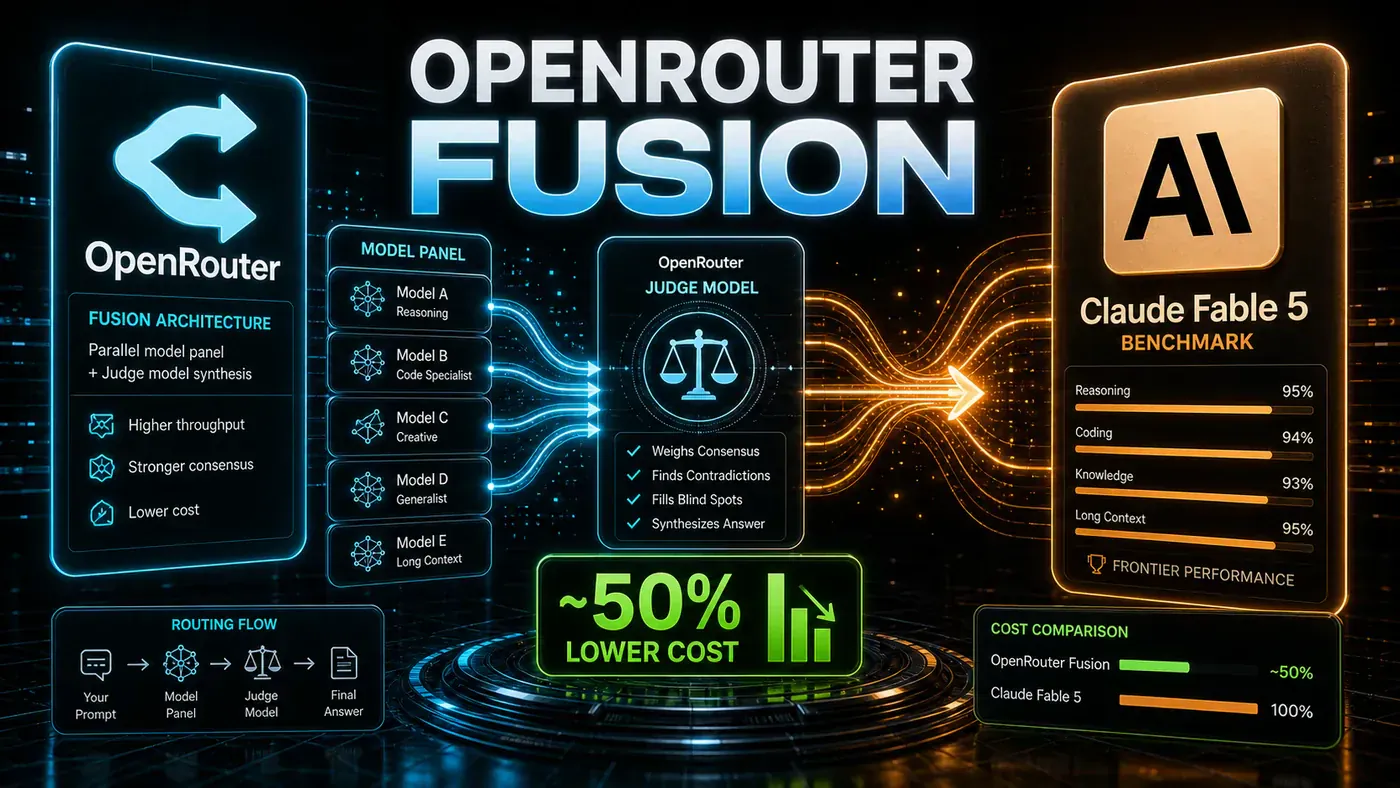
When OpenRouter announced its new Fusion model with the bold claim that it could match Anthropic's Claude Fable 5 at roughly half the price, the AI community's collective eyebrows raised in unison. It is not every day that a routing platform promises frontier-level intelligence at a mid-tier cost. But Fusion is not a single model in the traditional sense. It is something far more architecturally interesting: a compound system that fires your prompt at a panel of models in parallel, then employs a judge model to weigh consensus, contradictions, and blind spots before synthesising a final answer. In a recent livestream, the team at Creator Magic put this claim to the test, building their own self-hosted version and subjecting Fusion to real-world scrutiny. The results reveal both the remarkable potential and the practical limitations of ensemble AI architectures.
What Is OpenRouter Fusion, and How Does It Actually Work?
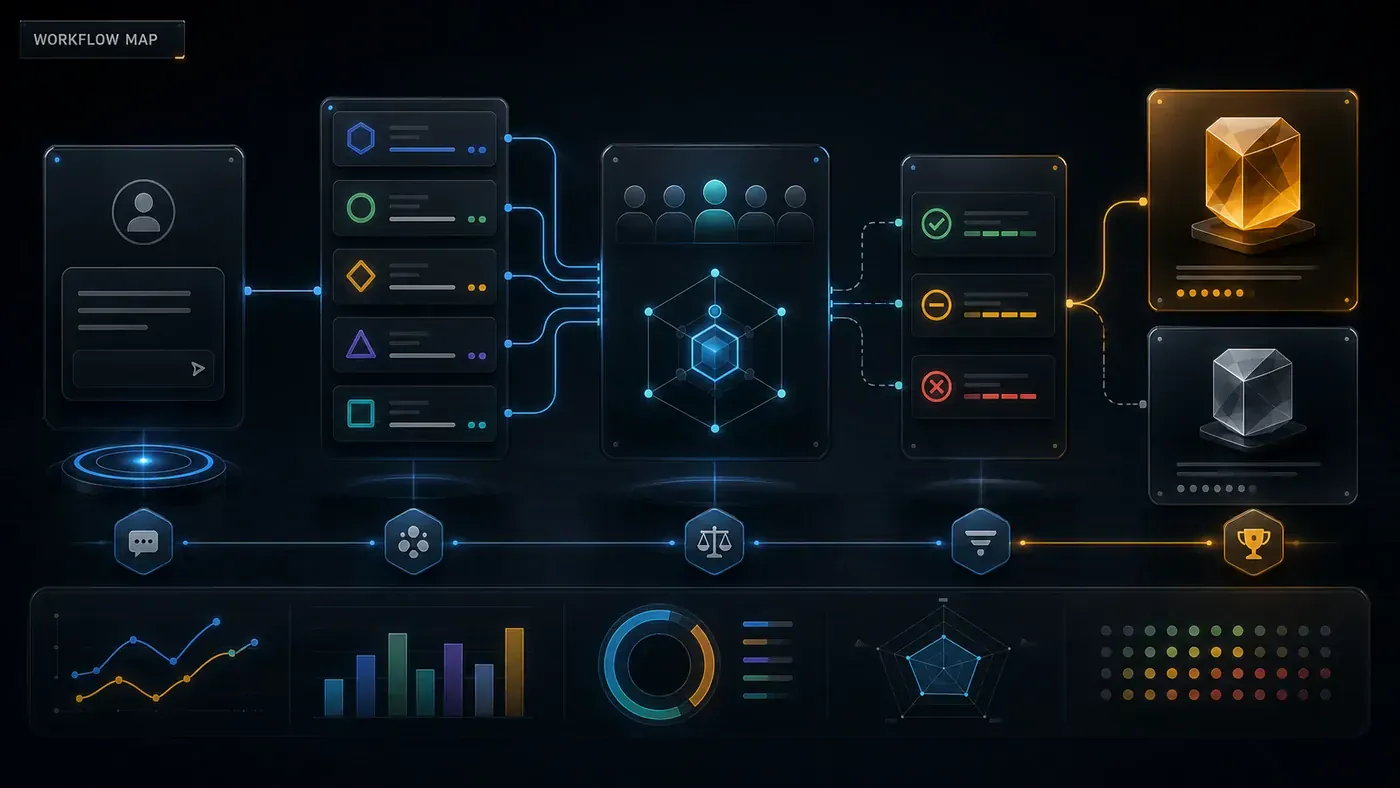
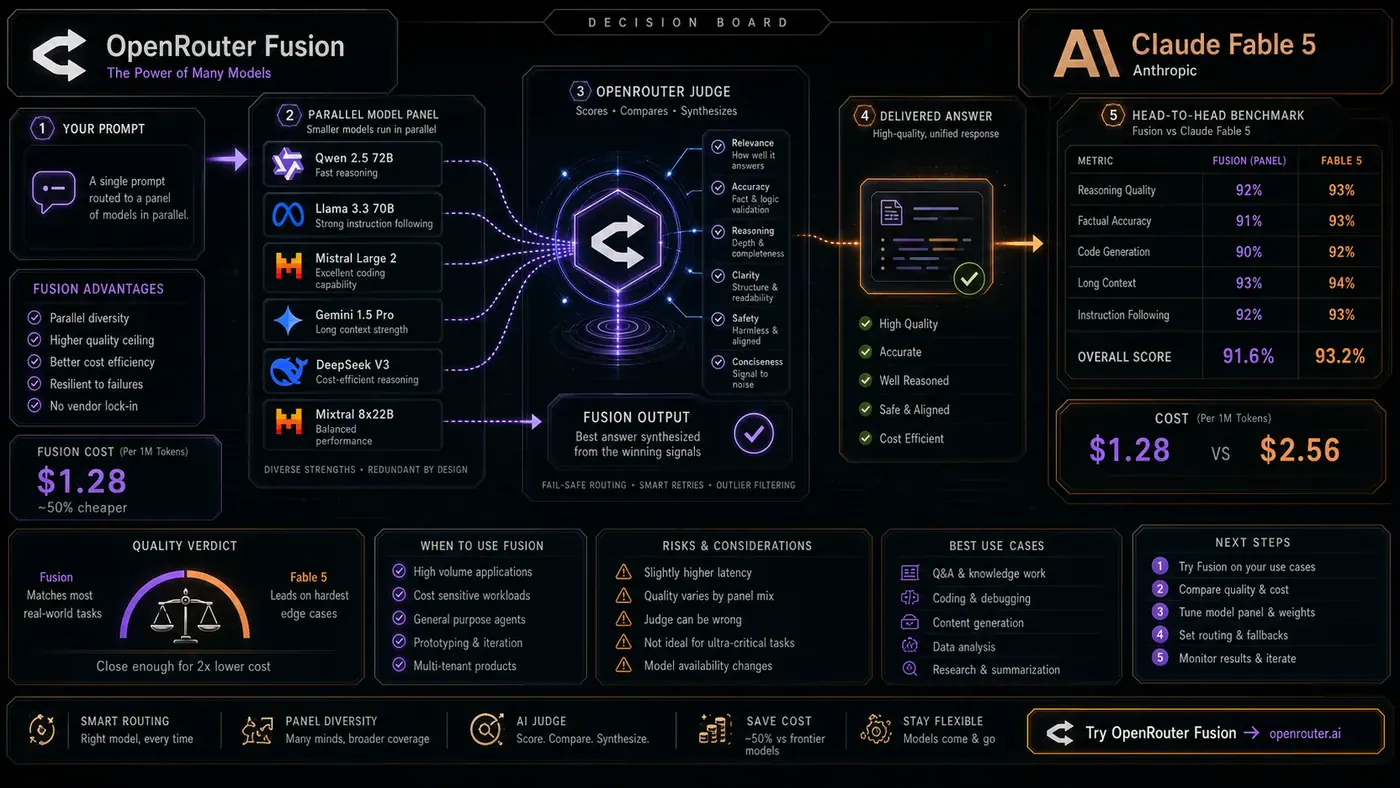
At its core, Fusion represents a fundamentally different approach to AI inference. Rather than relying on a single monolithic model to handle every query, Fusion adopts an ensemble architecture that distributes prompts across multiple models simultaneously. When a query arrives, Fusion dispatches it to several underlying models running in parallel. Each model generates its own response independently, drawing on its unique training data, architectural strengths, and reasoning patterns.
The cleverness, however, lies in what happens next. A dedicated judge model reviews all the individual responses, analysing where the models agree, where they contradict one another, and what blind spots might exist across the entire panel. This judge then synthesises a unified final answer that ideally captures the best insights from each participant while filtering out individual model weaknesses. It is a form of artificial deliberation, one that mimics how human expert panels might convene to solve complex problems.
OpenRouter's pitch is straightforward: by combining the outputs of several capable but individually less expensive models, Fusion can achieve or even surpass the quality of a single expensive frontier model like Claude Fable 5, whilst simultaneously reducing costs by approximately fifty per cent. During the Creator Magic stream, the presenter spent considerable time unpacking this claim, noting that the architecture inherently trades latency for quality and cost efficiency. Each query triggers multiple model invocations plus a judge evaluation, which means response times are necessarily longer than a single model call. The presenter questioned whether this trade-off works for every workflow.
Live Testing: Putting Fusion Through Its Paces
The Creator Magic stream adopted a refreshingly hands-on approach to evaluating Fusion. Rather than simply accepting benchmark scores at face value, the presenter ran live queries through the system and analysed the results in real time, offering viewers an unfiltered look at how the system performs under actual working conditions.
The Vitamin Supplement Query: A First Impression
The first test query focused on vitamin supplement stacks, a domain that requires synthesising nutritional science, medical contraindications, and practical lifestyle advice. When the results came back, the presenter immediately began analysing the panel of models and the judge model's approach to consensus building. What became apparent was that Fusion excels at identifying areas of broad agreement across models, effectively using consensus as a confidence signal. Where multiple models independently converge on the same recommendation, the judge can present that finding with greater certainty.
However, the test also revealed the complexity of handling contradictions. When panel models disagreed on specific recommendations, the judge model's approach to resolving or presenting those disagreements became critical. The presenter noted that how a judge handles contradiction, whether by selecting one view, presenting multiple perspectives, or flagging uncertainty, fundamentally shapes the utility of the final output. This first query demonstrated that Fusion's value proposition is strongest in domains where cross-referencing multiple expert perspectives genuinely improves answer quality.
Analysing Model Agreement and Blind Spots
A significant portion of the stream was dedicated to understanding Fusion's handling of agreement patterns and blind spots across the model panel. The presenter explained that blind spots, areas where every model in the panel happens to be wrong or incomplete in similar ways, represent the most dangerous failure mode for ensemble systems. Unlike contradictions, which the judge can detect, blind spots silently propagate if every model shares the same limitation.
This analysis revealed one of Fusion's more subtle strengths: the ability to select models with genuinely different architectures and training corpora, thereby minimising the probability of correlated blind spots. If your panel consists entirely of models trained on similar data with similar architectures, the ensemble provides far less protection than a diverse panel. The Creator Magic discussion highlighted this as a key consideration for anyone building their own Fusion implementation, which the presenter then proceeded to do.
Where Fusion Shines: Deep Research and Consensus Building
The stream's analysis identified deep research tasks as Fusion's strongest suit. When queries require synthesising information across multiple domains, evaluating conflicting sources, or providing nuanced recommendations where trade-offs exist, the multi-model panel approach genuinely adds value. The ability to have several models independently reason through a problem and then have a judge reconcile their findings produces outputs that tend to be more comprehensive and better balanced than single-model responses.
For knowledge workers, analysts, and researchers, this represents a genuinely compelling use case. Tasks like literature reviews, competitive analysis, policy evaluation, and complex decision support all benefit from the multi-perspective approach. The presenter emphasised that in these scenarios, the additional latency is typically acceptable because the user would likely have spent more time manually cross-referencing multiple AI tools anyway. For organisations processing large volumes of research queries, a fifty per cent reduction in API costs translates into substantial savings over time, potentially funding hardware investments or additional AI tooling within months.
Where Fusion Struggles: Coding Tasks and Latency Concerns
The assessment was not uniformly positive, however. The stream identified coding tasks as a notable weak point for Fusion. Code generation is fundamentally different from research synthesis: it requires precise syntax, exact API calls, and coherent logical structure across an entire implementation. When multiple models independently generate code suggestions, the judge model faces the extremely difficult task of reconciling potentially incompatible implementations into a single working solution.
The presenter noted that whilst Fusion can produce functional code for simple tasks, it reportedly struggles with more complex programming challenges where a single coherent implementation is required. The ensemble approach that works so well for open-ended research questions becomes a liability when the output must be a single, correct, executable program. In these scenarios, the presenter suggested that a single capable coding model like Claude Fable 5 or specialised code models may still be the better choice.
Latency also emerged as a practical concern. Each Fusion query requires multiple model calls in parallel plus a judge evaluation, meaning response times are inherently longer than single-model alternatives. For interactive applications or real-time workflows, this additional delay can be problematic. The presenter acknowledged this trade-off, suggesting that Fusion is best suited to asynchronous tasks where users can wait for higher-quality outputs rather than conversational interfaces requiring immediate responses.
Building a Self-Hosted Fusion: The Tank Framework Implementation
Perhaps the most technically ambitious portion of the stream involved building a self-hosted version of Fusion directly into the Tank Framework, a community project developed by Creator Magic for their members. This undertaking demonstrated that the Fusion concept can be replicated and customised for local deployment.
Architecture and Planning
The presenter began by mapping out the architecture for a local Fusion implementation. The core components mirror OpenRouter's approach: an orchestration layer that dispatches queries to multiple local models, a collection of model endpoints serving responses, and a judge model that synthesises the final output. The Tank Framework's dashboard was extended with new UI components for configuring the local Fusion endpoint, selecting which models participate in the panel, and adjusting the judge model's behaviour.
The planning stage involved careful consideration of hardware constraints. Running multiple large language models simultaneously on local hardware demands substantial GPU resources, particularly VRAM. The presenter discussed the trade-offs between model capability and resource requirements, noting that local Fusion implementations require more thoughtful model selection than cloud-based versions where compute is effectively unlimited.
Selecting Local Models: Qwen, GPT-OSS, and Gemma
A significant portion of the stream focused on evaluating local model options for the self-hosted Fusion panel. Three model families emerged as leading candidates: Qwen, GPT-OSS, and Gemma. Each offers different strengths and resource profiles that make them suitable for different roles within a local Fusion architecture.
Qwen models, particularly the larger parameter variants, impressed the presenter with their strong reasoning capabilities and relatively efficient inference. GPT-OSS, OpenAI's open-weights offering, provided strong general-purpose performance that made it a solid panel member. Gemma, Google's open model family, offered the smallest footprint, making it attractive for users with limited GPU memory who still wanted to run a multi-model ensemble.
The presenter emphasised that successful local Fusion implementations benefit from diversity. Combining models from different families, trained by different organisations on different data, maximises the probability that the panel will catch individual model errors and provide genuinely independent perspectives for the judge to evaluate.
Backend Implementation and Integration
The technical meat of the stream involved writing the backend code to orchestrate the local Fusion pipeline. The presenter implemented the multi-model dispatch logic, handling parallel inference requests to each panel model, collecting responses, and feeding them into the judge model for final synthesis. This included managing error cases where individual models failed or timed out, ensuring that the overall system remained robust even when panel members were unavailable.
Integration with the Tank Framework's existing dashboard required extending the UI to support Fusion-specific configuration options. Users needed the ability to enable or disable individual panel models, adjust judge model parameters, and monitor the system's performance. The presenter walked through implementing these settings within the Tank Framework's modular architecture.
Deployment and Troubleshooting
After building and testing the implementation, the presenter successfully deployed the local Fusion feature to the Tank Framework. The deployment process involved reviewing the code, preparing the feature branch, and verifying that the integration worked correctly across different configuration scenarios. The stream captured the genuine excitement of seeing the self-hosted Fusion produce its first successful outputs.
However, the deployment also revealed practical challenges. Hardware troubleshooting consumed a notable portion of the stream, with the presenter working through VRAM constraints and memory issues that arise when running multiple large models on a single machine. The presenter eventually resolved the issues by testing with lightweight models, demonstrating that even smaller local deployments can achieve meaningful results.
Cost Analysis: API Convenience Versus Local Investment
Throughout the stream, the presenter returned to the question of cost, comparing the economics of using OpenRouter's hosted Fusion API against building and maintaining a local implementation. This analysis is particularly relevant for organisations and power users who process significant query volumes.
OpenRouter's API offers convenience: no hardware investment, no maintenance burden, and immediate access to a carefully curated panel of frontier-grade models. The fifty per cent cost reduction compared to Claude Fable 5 makes this an attractive option for many users, particularly those without the technical expertise or infrastructure to self-host.
Local implementation, by contrast, requires upfront hardware investment, particularly in GPU resources with substantial VRAM. The presenter discussed the trade-offs candidly, noting that a capable local setup might require thousands of pounds in hardware but could process unlimited queries at effectively zero marginal cost thereafter. For users with privacy-sensitive workloads, regulatory requirements keeping data on-premises, or simply very high query volumes, local deployment can become the more economical choice over a relatively short payback period.
The analysis also touched on the hidden costs of self-hosting: electricity, maintenance, model updates, and the ongoing technical expertise required to keep the system running. The presenter concluded that the optimal approach depends heavily on individual circumstances, with API access being ideal for many users whilst local deployment offers compelling advantages for specific use cases.
The Verdict: Clever Marketing or Genuine Innovation?
By the stream's conclusion, the presenter had assembled enough evidence to offer a nuanced assessment of OpenRouter's claims. Fusion is neither pure marketing hype nor an unqualified breakthrough. It is a genuinely innovative architectural approach that delivers real value for specific use cases, particularly deep research and complex analytical tasks where multi-perspective reasoning improves output quality.
The claim of matching Claude Fable 5 at half the price holds up reasonably well for these strengths. Fusion's ensemble approach can produce research-quality outputs that rival or exceed single frontier models in comprehensiveness and balance. However, the claim requires qualification: Fusion is not universally superior. Coding tasks and latency-sensitive applications remain areas where single capable models often perform better.
What makes Fusion genuinely exciting is not just the cost savings but the architectural paradigm it represents. Ensemble AI systems that leverage multiple models with judge-based synthesis open new possibilities for building more capable, more robust, and more cost-effective AI applications. The Creator Magic stream demonstrated that this paradigm can be replicated locally, giving developers and organisations the ability to customise the approach for their specific needs.
Conclusion
OpenRouter Fusion represents one of the more interesting architectural innovations in the current AI landscape. By moving beyond the "one model to rule them all" mentality and embracing an ensemble approach with judge-based synthesis, Fusion demonstrates that significant quality improvements and cost reductions are possible through clever system design rather than simply training larger models.
The Creator Magic livestream provided a rare and valuable look at how these systems perform in practice, warts and all. From the impressive deep research capabilities to the coding task limitations, from the smooth API experience to the hardware headaches of local deployment, the stream captured the full complexity of working with ensemble AI systems.
For practitioners evaluating Fusion, the recommendation is clear: if your work involves research synthesis, complex analysis, or any domain where multiple perspectives genuinely improve outcomes, Fusion deserves serious consideration. Start with the OpenRouter API to validate the approach for your specific use cases, and consider local deployment only if your volumes, privacy requirements, or cost structure justify the infrastructure investment. For coding-heavy workflows or latency-sensitive applications, frontier models remain the better choice for now.
The broader lesson is that the future of AI inference likely lies not in monolithic models but in intelligent orchestration systems that know how to combine multiple specialised capabilities. Fusion is an early but compelling glimpse of that future.
Helpful Resources
Official Platforms and APIs:
- OpenRouter (opens in a new tab) - The AI model routing platform offering access to Fusion and hundreds of other models through a unified API.
- OpenRouter Fusion (opens in a new tab) - Available through the OpenRouter API; a compound AI system using multiple models in parallel with judge-based synthesis.
Models Discussed:
- Claude Fable 5 (opens in a new tab) - Anthropic's frontier AI model, the benchmark against which Fusion was compared.
- Qwen Models (opens in a new tab) - Alibaba's open-weights language models, evaluated for local Fusion panel deployment.
- GPT-OSS (opens in a new tab) - OpenAI's open-weights model offering, suitable for local inference in ensemble architectures.
- Gemma (opens in a new tab) - Google's family of lightweight open models, ideal for resource-constrained local deployments.
Tools and Frameworks:
- Tank Framework (opens in a new tab) - Creator Magic's community project featuring a dashboard for AI model management, extended during the stream with local Fusion capabilities.
- Claude Code (opens in a new tab) - Anthropic's coding assistant tool used during the stream for mockup generation tasks.
Community:
- Creator Magic Community (opens in a new tab) - The Skool-based community where members access the Tank Framework and participate in AI tooling discussions.