






Analysis
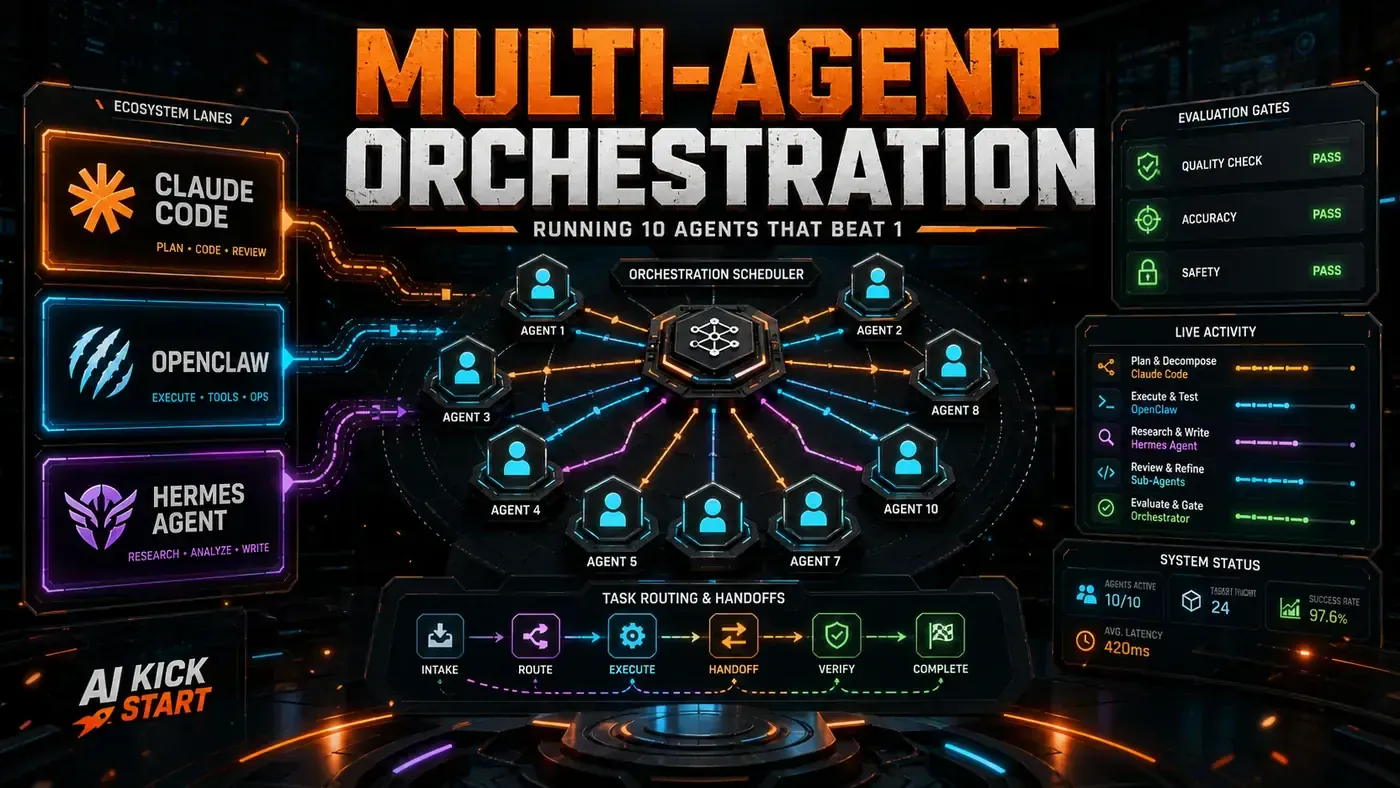
By 2026, most engineering teams were not running one coding agent. They were running several, and that turned out to be its own headache.
Claude Code keeps its constraints in one place. Hermes, the Nous Research agent, leans on Honcho and writes skill files to the agentskills.io (opens in a new tab) open standard. OpenClaw (opens in a new tab), Peter Steinberger's late-2025 project, ships with a persistent-memory model and a skill marketplace at clawhub.ai. Cursor has its own rules. Each one is useful. Each one expects you to configure it its own way.
So an engineer who hops between agents during a single day ends up babysitting parallel config files that all say roughly the same thing in different dialects. Change a team standard, and you change it in four places, or you forget one and let it drift.
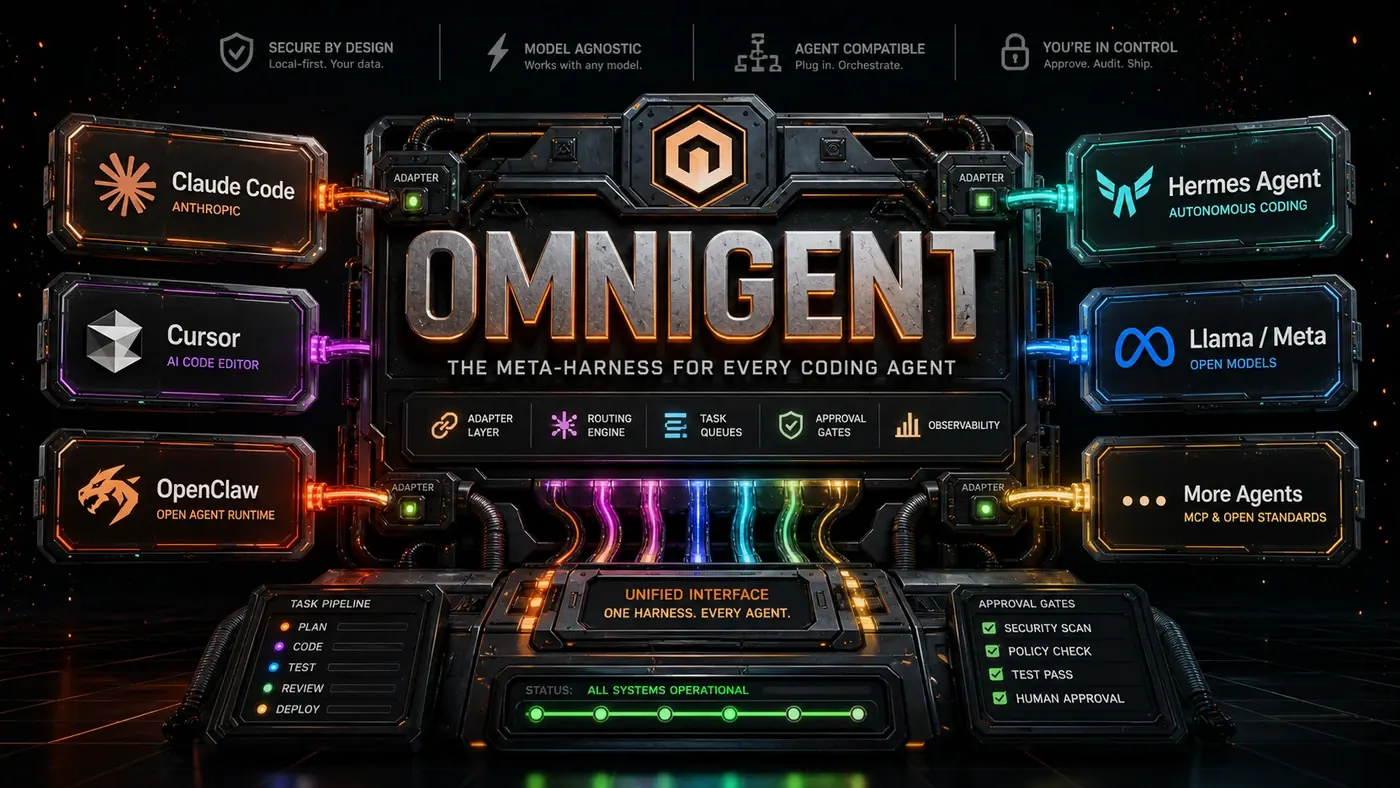
That is the gap Omnigent (opens in a new tab) is meant to close. Databricks open-sourced it around 13 June 2026 under Apache 2.0, describing it as "a meta-harness that sits above the agents you already use" to make them interoperable across Claude Code, Codex, Cursor, Pi, and custom agents. Worth a caveat up front: the real Omnigent is an agent-orchestration runtime, not the config-file translator the rest of this article describes. The walkthrough below reflects one community interpretation, and several of its specifics (a single omnigent.yaml, the sync commands, the cross-agent context export) are not documented by Databricks and look invented. Treat them as illustrative, not as the shipped product.
The Problem: Fragmented Harnesses
A team running multiple agents ends up with config sprawl that looks something like this:
project/
├── .claude/hooks.yaml # Claude Code constraints
├── .claude/CONVENTIONS.md # Claude Code context
├── hermes.yaml # Hermes configuration
├── .openclaw/MEMORY.md # OpenClaw memory
├── .cursorrules # Cursor rules
└── CONVENTIONS.md # Human-readable conventions
(One note on the layout above: Claude Code's hooks are actually configured in JSON inside settings.json, not a .claude/hooks.yaml file, so read that line as a simplification.)
Every change to team standards has to be copied across all of these. Drift is only a matter of time. The pitch for a meta-harness is to collapse that into a single source of truth.
The Omnigent Architecture
In this community description, Omnigent defines one standardised harness spec, and each agent adapter translates it into that agent's native format. The schema below is illustrative and does not match Omnigent's actual agent-definition files, but it shows the shape of the idea:
# omnigent.yaml - single source of truth
version: "1.0"
project:
 name: "billing-service"
 language: "typescript"
 framework: "fastify"

constraints:
 forbidden:
 patterns: ["DROP TABLE", "eval(", "child_process"]
 imports: ["lodash", "moment"]
 required:
 patterns: ["neverthrow", "zod"]
 test_coverage: 80

conventions:
 style: "functional_preferred"
 error_handling: "result_type"
 async: "async_await_only"

verification:
 stages:
 - compile
 - lint: { auto_fix: true }
 - test: { coverage_threshold: 80 }
 - typecheck

context:
 architecture_doc: "docs/ARCHITECTURE.md"
 decisions_log: "docs/DECISIONS.md"
 api_spec: "docs/openapi.yaml"

agents:
 claude:
 model: "opus-4.8"
 plan_mode: true
 hermes:
 model: "hermes-3"
 learning_loop: true
 cursor:
 model: "gpt-4.1"
(The model strings here, opus-4.8, hermes-3, gpt-4.1, sit inside that invented config. The model families are real enough, but these exact entries are not verifiable as Omnigent configuration.)
Agent Adapters
The idea is that adapter scripts read the unified spec and write out each agent's native format:
# Generate all agent configurations from omnigent.yaml
omnigent sync

# This creates/updates:
# - .claude/hooks.yaml
# - .claude/CONVENTIONS.md
# - hermes.yaml
# - .cursorrules
# - .openclaw/MEMORY.md (conventions section)
The adapters are described as bi-directional where they can be. Edit .claude/hooks.yaml by hand, and omnigent sync --reverse is supposed to fold those changes back into omnigent.yaml.
Worth being blunt here: neither the Databricks blog nor the GitHub repo (opens in a new tab) describes Omnigent generating or syncing native config files like .claude/hooks.yaml or .cursorrules. The sync and sync --reverse commands appear to be fabricated. The real CLI documents commands like omni setup, omnigent run, omnigent attach, and omnigent server start, and runs as an orchestration layer rather than a config generator.
Cross-Agent Context Sharing
The most ambitious claim in this account is cross-agent context sharing. The pitch: finish a task in Claude Code, switch to Hermes, and Hermes already knows what you just did.
# After a Claude Code session, export context
claude "wrap up and export context"
omnigent context export --from claude --to hermes

# Hermes now knows what you just did
hermes "continue from where Claude left off"
This is said to use a normalised context format that carries the task description, files modified, decisions made, constraints applied, and lessons learned.
Reality check: this is not a documented Omnigent feature. The real product does keep messages, sub-agents, terminals, and files in sync across interfaces and supports shared sessions, but there is no context export command moving normalised context from Claude to Hermes. Hermes is not even on Omnigent's list of supported harnesses (Claude Code, Codex, Cursor, Pi, and custom). So read this section as a wish, not a shipped capability.
The Omnigent CLI
# Initialize Omnigent in a project
omnigent init

# Validate harness configuration
omnigent validate

# Sync to all configured agents
omnigent sync

# Run verification pipeline
omnigent verify

# Export context from one agent to another
omnigent context export --from <agent> --to <agent>

# Show harness metrics
omnigent metrics --since 7d
These commands (init, validate, sync, verify, context export, metrics) do not match Omnigent's actual CLI and appear invented. If you want to try the real thing, the documented entry points are omni setup, omnigent run, omnigent attach, and omnigent server start, plus a local web UI on port 6767.
Current State and Limitations
This account claims that as of June 2026 Omnigent is a specification plus a set of reference implementations rather than a single product, with a stabilising v1.0 draft spec and community-maintained adapters.
That framing is not right. Omnigent shipped as a single open-source product from Databricks under Apache 2.0, with a CLI and a local web UI, not as a loose spec with community adapters. So the limitations listed below describe the imagined config-sync design, not the real release:
- Not every agent feature fits the unified format. Advanced Claude Code Hooks behaviour might still need native config.
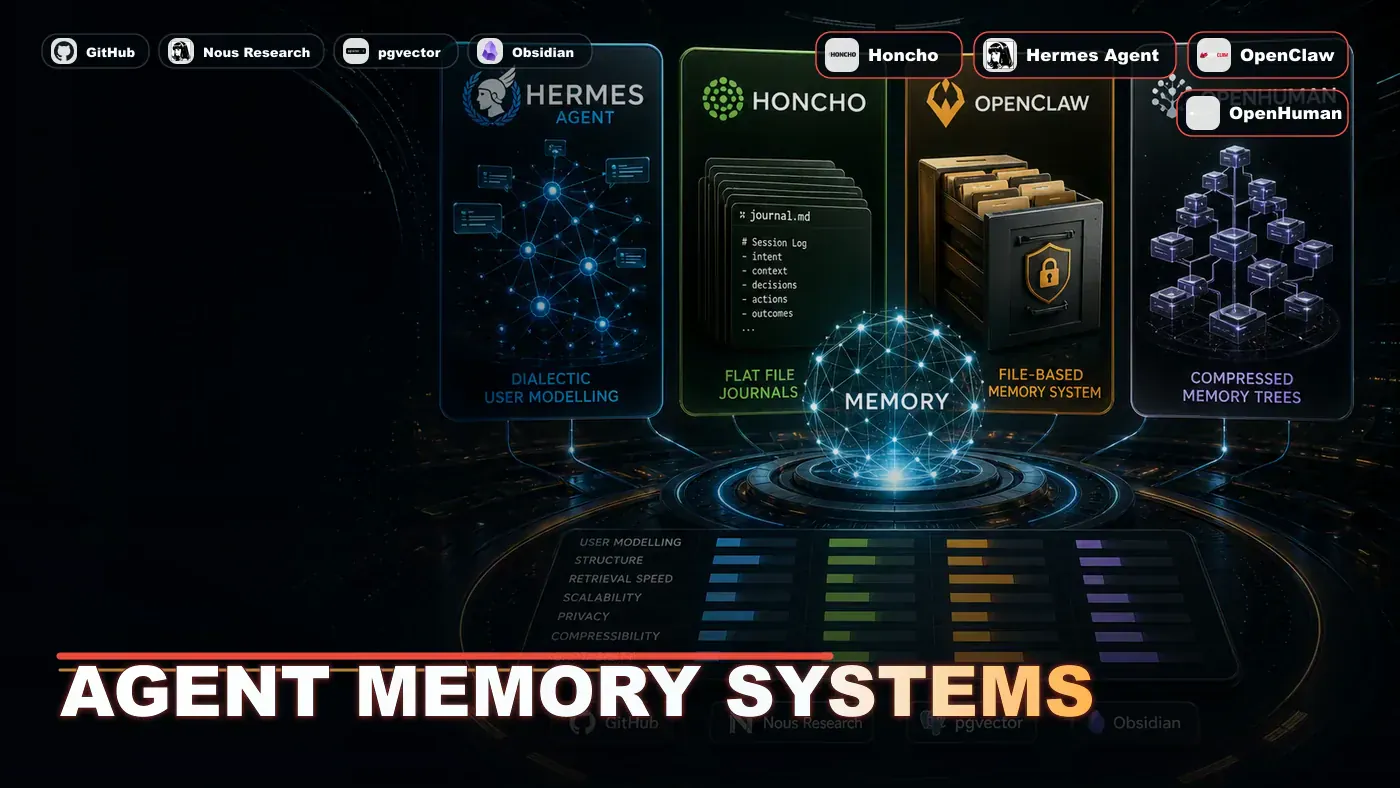
- Context sharing would be lossy. Some agent-specific context (Honcho's dialectic model, for instance) does not translate cleanly.
- Bi-directional sync invites conflicts when the same setting gets changed in two files at once.
Why Omnigent Matters
The honest version of the "why" still holds, even after stripping out the invented mechanics. The agent field is fragmenting. New agents arrive most months, each with its own format. Without something sitting above them, a team picks between two bad options: standardise on one agent and give up what the others do well, or keep maintaining parallel configs by hand.
A meta-harness is meant to let you mix and match. Use one agent for heavy refactors, another for learning-intensive work, a third for quick edits, and keep a single consistent layer across all of them. That is where Omnigent is genuinely aiming, even if this particular write-up oversells how it gets there. The plausible future is not one agent that wins, but several agents run through one harness. One catch: the article it draws on never credits Databricks, who actually built and released the thing.
Omnigent: answer-first summary
Omnigent matters because it can change how Australian business teams plan, build, or govern an agent workflow. Omnigent is a meta-harness that sits above Claude Code, Cursor, Hermes and OpenClaw, enforcing constraints, context and quality whatever agent runs.
The direct answer is this: do not treat the topic as a standalone trend. Treat it as a decision about inputs, outputs, review ownership, data exposure, and whether the workflow produces a result that is faster, safer, or more useful than the current process.
Omnigent: implementation checklist
- Define the user, job to be done, and success metric for the agent workflow.
- Collect real examples, policies, source files, customer questions, or search queries before writing prompts or choosing tools.
- Separate low-risk drafts from decisions that need approval, privacy checks, or senior review.
- Document what the AI is allowed to access, what it must not access, and who signs off before production use.
- Review successful task completion, review time, fallback rate, operator corrections after a small pilot rather than judging the idea from a demo.
This keeps the work practical. It also gives search engines and AI answer engines a clean factual structure: what the topic is, who it helps, what to do next, and which risks matter before implementation.
Decision criteria for Omnigent
| Decision area | What to check | Production signal |
|---|---|---|
| Intent | Does Omnigent solve a real workflow problem? | The use case has a named owner and measurable outcome. |
| Data | Can the required data be used safely? | Sensitive data is classified and access is controlled. |
| Quality | Can a reviewer judge the output consistently? | Examples, rubrics, or acceptance criteria exist. |
| Scale | Can the workflow be repeated without hero effort? | The process is documented and can be handed to another team member. |
Practical example for Omnigent
A small business could use this article to choose one practical test. For example, a manager might take one customer-facing process, one internal document workflow, or one recurring content task and redesign only that step with AI support. The goal is not to automate the whole business at once; it is to learn where Code creates reliable leverage.
The useful deliverable is a short operating note: the trigger, the source material, the prompt or tool, the review checklist, the escalation rule, and the metric. That note becomes the handover asset for staff training, SEO/GEO content, service delivery, or future agent work.
Risks and controls for Omnigent
The common failure pattern is moving too quickly from a promising idea into an unmanaged workflow. For Omnigent, the risk is not only bad output. It can also be unclear data permission, staff confusion, duplicate content, unreviewed customer advice, or a tool that quietly changes cost or capability.
- Control unclear tool permissions with a named owner, a review step, and written acceptance criteria.
- Control silent failures with a named owner, a review step, and written acceptance criteria.
- Control prompt drift with a named owner, a review step, and written acceptance criteria.
- Control weak audit trails with a named owner, a review step, and written acceptance criteria.
Measurement plan for Omnigent
A useful AI or SEO initiative should leave evidence. Track successful task completion, review time, fallback rate, operator corrections and compare the pilot against the current process. If the measure does not improve, keep the learning but avoid scaling the workflow.
For GEO readiness, the page should also answer the core question directly, define the entities involved, include implementation steps, explain tradeoffs, and link readers to the next relevant AI Kick Start service, guide, tool, or article.
Definitions and entities for Omnigent
For search, GEO, and staff handover, define the core entities in plain language. In this article the important entities are the workflow owner, the AI tool or model, the source material, the review process, the risk boundary, and the measurable business outcome. Clear definitions make the page easier for people to scan and easier for AI answer engines to quote accurately.
- Workflow owner: the person accountable for deciding whether Omnigent belongs in the business process.
- Source material: the documents, examples, policies, URLs, prompts, videos, or customer questions that ground the output.
- Review boundary: the point where a human checks accuracy, privacy, brand voice, or customer impact before the result is used.
- Success metric: the measure that proves whether the agent workflow is worth repeating.
Omnigent versus doing nothing
Doing nothing is also a decision. The cost may be slow manual work, weaker search visibility, inconsistent advice, duplicated effort, or staff using unmanaged AI tools without a shared process. The practical question is whether a controlled pilot can reduce that cost without creating a larger governance problem.
| Option | When it makes sense | What to watch |
|---|---|---|
| Do nothing | The workflow is rare, low value, or already reliable. | Competitors may improve speed, content depth, or service consistency first. |
| Run a small pilot | The task repeats often and has clear review criteria. | Keep scope tight and measure the result against the current process. |
| Build a production workflow | The pilot is repeatable and risk controls are documented. | Assign ownership, monitoring, training, and a rollback path. |
AI Kick Start handover package for Omnigent
A production handover should be concrete enough that another person can run it. For Omnigent, that means a short brief, a workflow map, approved prompts or tool settings, source material, a review checklist, internal links to supporting resources, and a simple measurement sheet. This is the difference between reading about AI and turning it into operational capability.
That packaging also strengthens E-E-A-T. It shows experience through implementation notes, expertise through decision criteria, authoritativeness through source-aware structure, and trust through risks, controls, and review steps. The article becomes useful even if the reader never buys a tool because it helps them make a better operational decision.