


Briefing
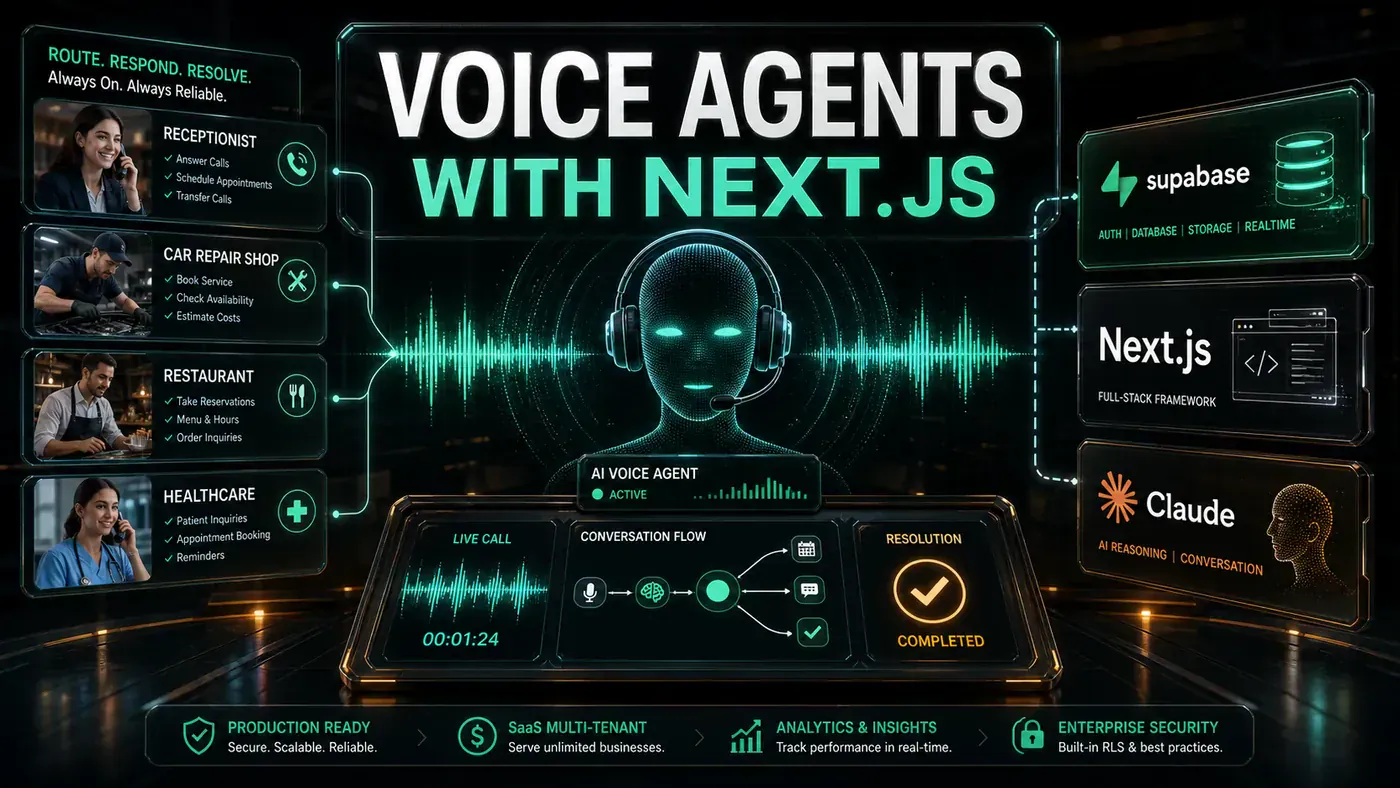
The voice AI revolution is here - and it's not just chatbots anymore. Businesses across every industry are discovering that voice agents powered by large language models (LLMs) can handle real customer conversations, book appointments, answer complex questions, and operate around the clock without human intervention. In a recent full-stack tutorial that has already attracted nearly 9,000 views in its first week, developer and educator Daulat Hussain walks through building a complete AI Voice Agent SaaS platform capable of serving receptionists, car repair shops, restaurants, and healthcare providers.
This article breaks down everything covered in this comprehensive 67-minute tutorial - from the underlying architecture and tech stack decisions to the practical implementation details that make a voice agent truly useful in production environments. Whether you are a developer looking to build AI-powered business applications, a SaaS founder exploring new opportunities, or a freelancer wanting to offer cutting-edge solutions to clients, this guide will give you the roadmap you need.
The Business Case for AI Voice Agents
Customer communication remains one of the most expensive operational challenges for small and medium businesses. A typical receptionist or front-desk operator handles dozens of calls daily - booking appointments, answering repetitive questions, and routing enquiries. When those calls come in after hours, on weekends, or during peak periods, businesses either miss opportunities or pay premium rates for extended staffing.
AI voice agents solve this by providing intelligent, conversational interfaces that can:
- Answer inbound calls 24/7 without human intervention
- Handle appointment scheduling and modifications in real time
- Respond to frequently asked questions with natural, context-aware dialogue
- Route complex enquiries to appropriate human staff when necessary
- Maintain consistent service quality regardless of call volume or time of day
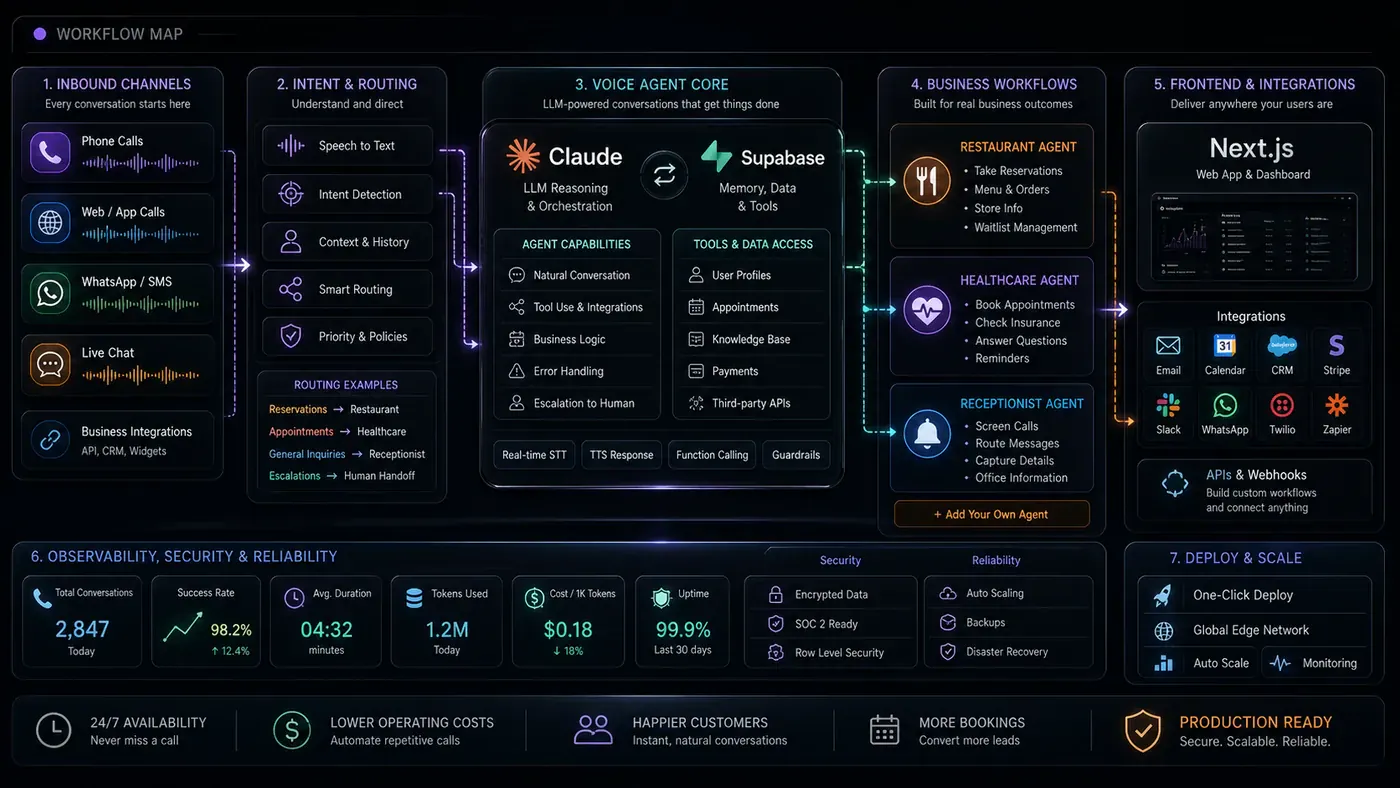
The tutorial demonstrates a platform that goes beyond simple call answering. It delivers a full SaaS solution with analytics dashboards, multi-tenant support for different business types, and integration with existing business systems. The demo interface shows impressive metrics including 24 calls handled in a single day, 17 bookings completed, and a 71% conversion rate - figures that would represent significant cost savings and revenue protection for any small business.
Understanding the Tech Stack
The tutorial makes deliberate choices about its technology stack, prioritising developer productivity, scalability, and ease of deployment. Here is how each piece fits together.
Next.js: The Full-Stack Foundation
Next.js serves as both the frontend framework and API layer. Its App Router architecture allows the tutorial to build server-side API routes that handle voice processing, database queries, and LLM interactions - all within a single codebase. The framework's built-in support for server components, streaming responses, and API endpoints makes it an ideal choice for real-time voice applications where latency matters.
The frontend leverages Next.js's component model alongside Tailwind CSS to create a polished, responsive dashboard that displays call analytics, active conversations, and business configuration panels. The result is a professional-grade interface that looks production-ready from day one.
Supabase: Backend-as-a-Service
Rather than building a custom backend infrastructure, the tutorial opts for Supabase to handle authentication, database storage, and real-time subscriptions. Supabase's PostgreSQL database stores customer records, appointment data, conversation logs, and business configurations. Its built-in Row Level Security (RLS) policies ensure that each business tenant only accesses their own data - a critical requirement for any multi-tenant SaaS application.
The authentication system handles user registration, login sessions, and role-based access control, allowing business owners to manage their voice agents through a secure dashboard without writing any authentication code from scratch.
Claude AI: The Conversational Brain
Anthropic's Claude AI powers the conversational intelligence behind each voice agent. Claude's strengths in following instructions, maintaining context across multi-turn conversations, and generating natural-sounding responses make it particularly well-suited for customer-facing voice applications. The tutorial demonstrates how to craft effective system prompts that give each voice agent its specific personality, knowledge domain, and business rules depending on the industry it serves.
The LLM integration handles intent recognition, entity extraction (dates, times, names, service types), and response generation - transforming raw speech input into structured business actions.
Tailwind CSS and JavaScript
The frontend uses Tailwind CSS for rapid, utility-first styling, producing a modern dark-themed interface with clean typography and intuitive navigation. Pure JavaScript (rather than TypeScript) keeps the tutorial accessible to a broader audience of developers, though production applications would likely benefit from TypeScript's type safety.
The Application Architecture
The AI Voice Agent platform follows a clear three-tier architecture designed for scalability and maintainability.
Multi-Industry Agent Configuration
One of the tutorial's standout features is its support for multiple business verticals through a single platform. The demo showcases four distinct agent types:
Car Repair & Auto Service Shops - The voice agent handles oil change enquiries, tyre rotation requests, and general automotive service questions. During the live demonstration, an inbound call about "oil change plus tyre rotation" is processed naturally, with the agent asking follow-up questions about vehicle type and preferred appointment times.
Restaurants & Table Booking - The restaurant agent manages table reservations, answers questions about menu items and opening hours, and handles party size enquiries. It integrates booking data directly into the Supabase database, making reservations immediately available to restaurant staff.
Receptionist & Front Desk Services - A general-purpose receptionist agent screens calls, routes enquiries to appropriate departments, takes messages, and handles appointment scheduling for professional services businesses.
Healthcare & Patient Management - The healthcare-focused agent manages patient appointment bookings, answers questions about clinic hours and services, and collects preliminary information - all while maintaining appropriate sensitivity for medical contexts.
Real-Time Voice Processing Pipeline
The voice processing flow follows a well-architected pipeline:
- Speech Recognition - Incoming voice audio is converted to text using speech-to-text services
- Intent Processing - The transcribed text is sent to Claude AI along with the conversation context and business-specific system prompt
- Business Logic Execution - The LLM response triggers appropriate actions - querying availability, creating bookings, or retrieving information from Supabase
- Speech Synthesis - The text response is converted back to natural-sounding speech for the caller
- Analytics Logging - Every interaction is logged for dashboard reporting and conversation analysis
Dashboard and Analytics
The tutorial includes a comprehensive analytics dashboard that gives business owners visibility into their voice agent's performance. Key metrics displayed include:
- Calls Today: Total number of calls handled in the current day
- Bookings: Appointments or reservations successfully completed
- Conversion Rate: Percentage of calls that result in a booking or qualified lead
- 14-Day Conversation Trend: A visual chart showing call volume and outcomes over a two-week period
- Live Call Monitor: A real-time view of active calls with conversation context
These analytics transform the voice agent from a simple answering service into a genuine business intelligence tool.
Building the Application: A Step-by-Step Breakdown
The tutorial is structured to take developers from starter template to deployed application. Here is what the journey involves.
Project Setup and Installation
The tutorial begins with cloning the starter template and installing dependencies. Key configuration steps include:
- Setting up environment variables for Supabase credentials, Claude AI API keys, and voice service configurations
- Configuring the Supabase project with the required database schema for users, businesses, appointments, and conversation logs
- Installing core dependencies including the Next.js framework, Supabase client libraries, and voice processing SDKs
- Running the development server to verify the initial setup
The starter files provide a pre-configured project structure with routing, component scaffolding, and database migrations already in place - allowing developers to focus on the voice agent logic rather than boilerplate setup.
Understanding the Source Code Structure
The complete source code walkthrough covers approximately twelve minutes of the tutorial and explains the organisation of the application:
- API Routes: Server-side endpoints that handle voice webhooks, LLM requests, and database operations
- Components: Reusable React components for the dashboard, call interface, analytics charts, and business configuration forms
- Database Layer: Supabase client configuration and query helpers for reading and writing business data
- Voice Integration: The speech-to-text and text-to-speech pipeline that connects callers to the AI agent
- Prompt Engineering: System prompts that define each voice agent's personality, knowledge, and business rules
Configuring Business-Specific Voice Agents
A significant portion of the tutorial focuses on how to customise the voice agent for different business types. This involves:
- Writing industry-specific system prompts that give the agent appropriate domain knowledge
- Configuring available services, pricing, and business rules in the database
- Setting up appointment slot templates (e.g., 30-minute slots for healthcare, 60-minute slots for car repairs)
- Customising the agent's greeting, tone, and conversational style for each industry
The tutorial emphasises that the same underlying platform can serve entirely different business types simply by changing the configuration and prompts - a powerful demonstration of the platform's flexibility.
Live Testing and Real-World Validation
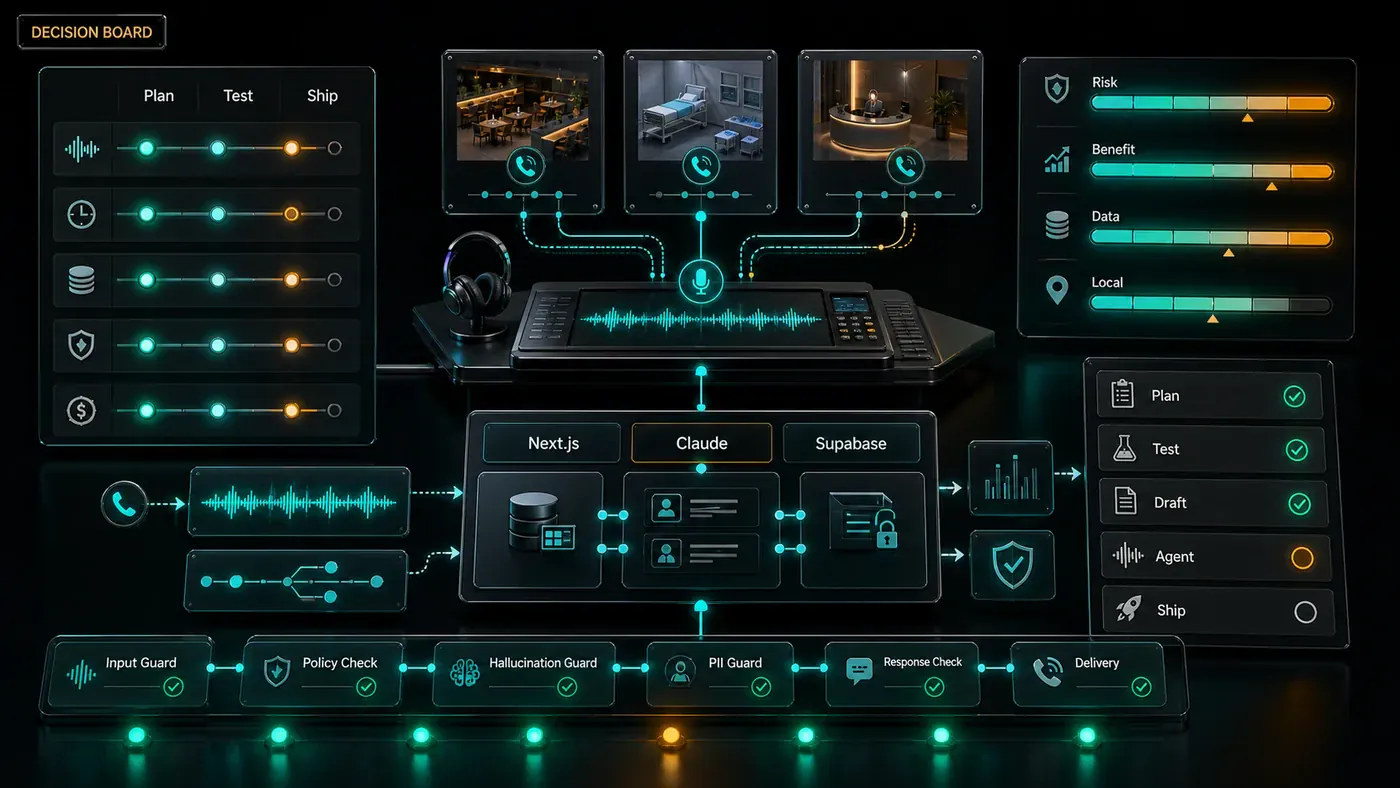
The final twenty-four minutes of the tutorial are dedicated to live testing - a crucial section that separates theoretical tutorials from genuinely useful ones.
Voice Conversation Testing
Daulat demonstrates the voice agent in action through simulated phone calls. Viewers can hear the natural back-and-forth between a simulated caller and the AI agent, showcasing:
- Natural conversational flow without robotic delays
- Accurate understanding of complex multi-part requests (e.g., "I need an oil change and tyre rotation")
- Appropriate follow-up questions to gather missing information
- Confirmation and summarisation of booked appointments
Cross-Industry Scenario Testing
The testing phase validates each of the four business verticals:
- A car repair scenario where the agent discusses service options and books a maintenance appointment
- A restaurant booking where the agent handles party size, date preferences, and seating requests
- A receptionist call where the agent takes a message and routes an enquiry appropriately
- A healthcare scenario where the agent books a patient consultation and collects preliminary details
Deployment Verification
The tutorial concludes with deploying the application and verifying that the voice agent works correctly in the production environment. This includes testing the webhook endpoints, confirming database writes are persisting, and validating that the dashboard accurately reflects live call data.
Key Lessons and Best Practices
Beyond the specific implementation steps, the tutorial offers several valuable insights for anyone building voice AI applications.
Prompt Engineering Is Everything
The quality of a voice agent's conversations depends heavily on the system prompt. The tutorial demonstrates that well-crafted prompts - which include business context, available services, response constraints, and personality guidelines - produce dramatically better results than generic AI responses. Investing time in prompt engineering yields better customer experiences than fine-tuning technical infrastructure.
Analytics Drive Improvement
The built-in analytics are not just for business owners - they are essential development tools. Reviewing conversation logs and conversion metrics reveals where the voice agent struggles, which questions confuse it, and where human handoff should occur. Continuous monitoring and prompt refinement based on real conversation data is the path to production-quality voice agents.
Multi-Tenancy Requires Careful Data Architecture
Supporting multiple businesses on a single platform demands rigorous data isolation. The tutorial's use of Supabase Row Level Security policies ensures that each business's customer data, appointments, and conversation logs remain completely separated. Getting this architecture right from the start prevents costly security issues as the platform scales.
Voice Latency Matters
In voice conversations, even small delays feel unnatural. The tutorial emphasises the importance of efficient API calls, streaming LLM responses where possible, and optimising the speech-to-text and text-to-speech pipeline. Every millisecond of latency impacts the caller's perception of the agent's intelligence.
Market Opportunities and Commercial Potential
The tutorial is not just an educational resource - it is a blueprint for a viable SaaS business. The voice AI market is experiencing explosive growth, with small businesses particularly underserved by existing solutions that are either too expensive, too complex, or too generic.
Pricing Model Possibilities
A platform like this could be monetised through:
- Per-Call Pricing: Charging businesses based on the number of calls handled monthly
- Subscription Tiers: Fixed monthly fees based on call volume, features, and number of agents
- White-Label Licensing: Selling the platform to agencies who resell it to their business clients
- Setup and Customisation Services: Charging implementation fees for businesses needing bespoke agent configurations
Target Customer Profiles
The tutorial's choice of four business verticals is strategically sound. Car repair shops, restaurants, healthcare clinics, and professional services all share common characteristics: they handle high volumes of appointment-related calls, operate on thin margins where staffing costs matter, and serve customers who increasingly expect immediate responses.
Competitive Positioning
Existing voice AI solutions tend to fall into two categories: enterprise-grade platforms with enterprise pricing (think thousands of pounds per month) or simple chatbot-style services that lack genuine conversational intelligence. A Next.js-based SaaS built on this architecture can occupy the middle ground - offering sophisticated LLM-powered conversations at price points accessible to small businesses.
Conclusion
Daulat Hussain's tutorial represents one of the most practical, end-to-end guides available for building production-capable AI voice agents. Unlike theoretical explanations or simplified demos, this 67-minute walkthrough covers the complete journey from project setup through live testing - including the real-world concerns of multi-tenancy, analytics, prompt engineering, and deployment.
The choice of Next.js, Supabase, and Claude AI creates a stack that is both powerful and approachable. Developers familiar with React can leverage their existing skills while adding voice AI capabilities to their toolkit. The multi-industry architecture demonstrates how a single platform can serve diverse business needs through configuration rather than custom development.
For SaaS founders, this tutorial offers more than technical instruction - it provides a validated business model with clear customer segments, demonstrable ROI (71% conversion rates speak volumes), and a technology foundation that can scale. The voice AI market is still in its early stages, and tutorials like this democratise access to a technology that will fundamentally reshape how businesses communicate with their customers.
The message is clear: the tools to build intelligent voice agents are now accessible to any competent full-stack developer. The businesses that need them are everywhere. The opportunity is substantial. And this tutorial provides the roadmap to capture it.
Helpful Resources
Source Code and Project Files
- AI Voice Agents Project Source Code (opens in a new tab) - Complete source code for the tutorial project
- The Blockchain Coders - Pro Courses (opens in a new tab) - Full library of courses and tutorials
- Complete HTML Course by Daulat Hussain (opens in a new tab) - Foundational web development course
Official Documentation and Tools
- Next.js Official Documentation (opens in a new tab) - Framework documentation for building the frontend and API routes
- Supabase Documentation (opens in a new tab) - Backend-as-a-service platform for authentication and database
- Anthropic Claude AI (opens in a new tab) - LLM powering the voice agent conversations
- Tailwind CSS Documentation (opens in a new tab) - Utility-first CSS framework for frontend styling
Video and Learning Resources
- Original YouTube Tutorial - Build & Deploy AI Voice Agents - The full 67-minute video by Daulat Hussain
- NFT Marketplace Playlist (opens in a new tab) - Related blockchain development tutorials
- API Development Playlist (opens in a new tab) - Backend API development guides
- JavaScript Zero to Expert Playlist (opens in a new tab) - JavaScript fundamentals course
- Solidity Course Playlist (opens in a new tab) - Smart contract development tutorials
Hosting and Infrastructure
- DomainRacer Hosting (opens in a new tab) - Recommended hosting provider for deployment