





Analysis
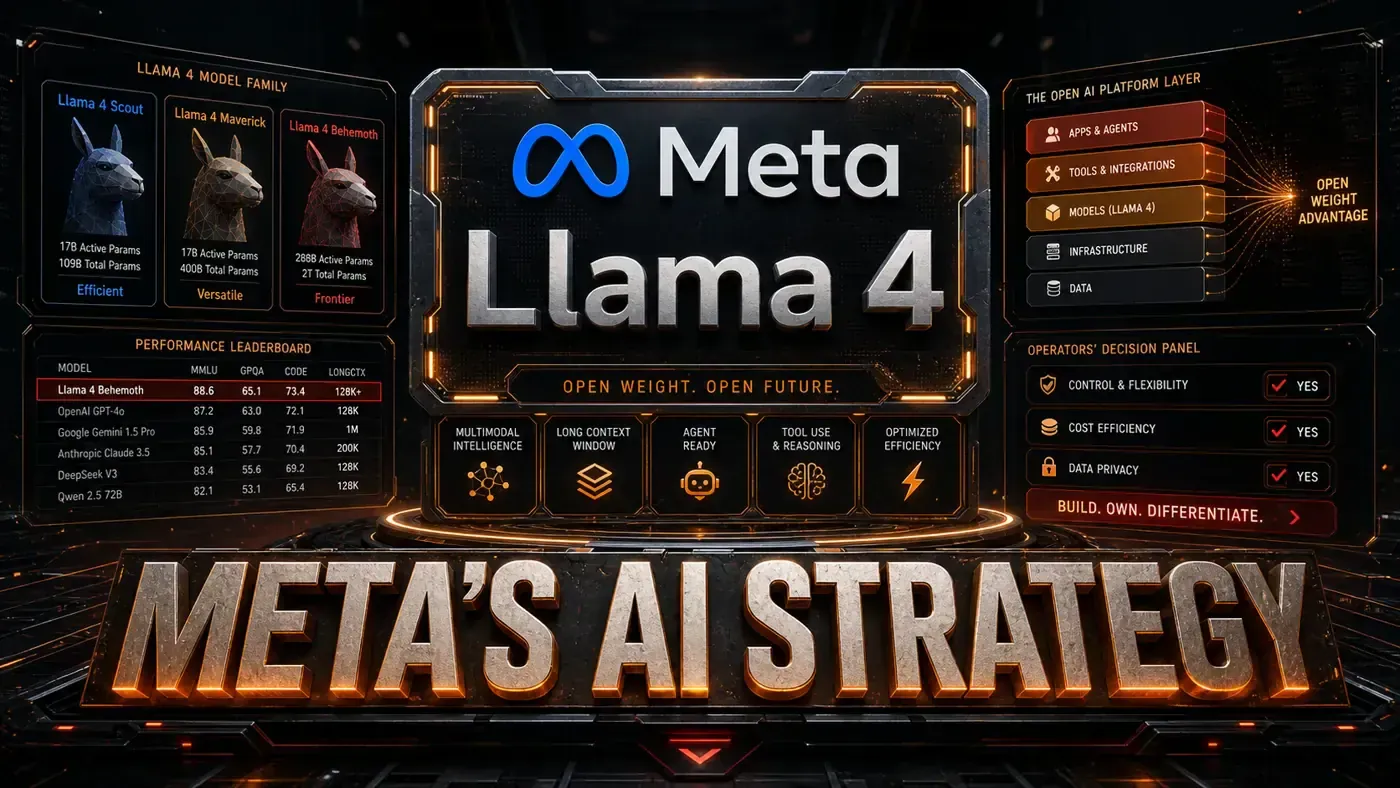
Among the big Western AI labs, Meta is the odd one out. OpenAI, Google, and Anthropic mostly sell access to closed models behind an API. Meta keeps handing the weights away for free.
That choice is the whole story behind Llama 4. The pitch is simple: if enough developers build on your model, you end up owning the ecosystem, even if you never charge for a single API call. Llama 4 is the latest and largest test of that idea. By the accounts being circulated it landed on 20 April 2026, though Meta's official announcement of the Llama 4 family actually dates to 5 April 2025 (opens in a new tab), so the exact timing here is unconfirmed.
For Australian teams, the practical question isn't who has the biggest model. It's whether an open model you can run, fine-tune, and ship inside your own walls is good enough to skip the per-token bill. Llama 4 is Meta's answer, and the catch is in the licence fine print.
Architecture and Training
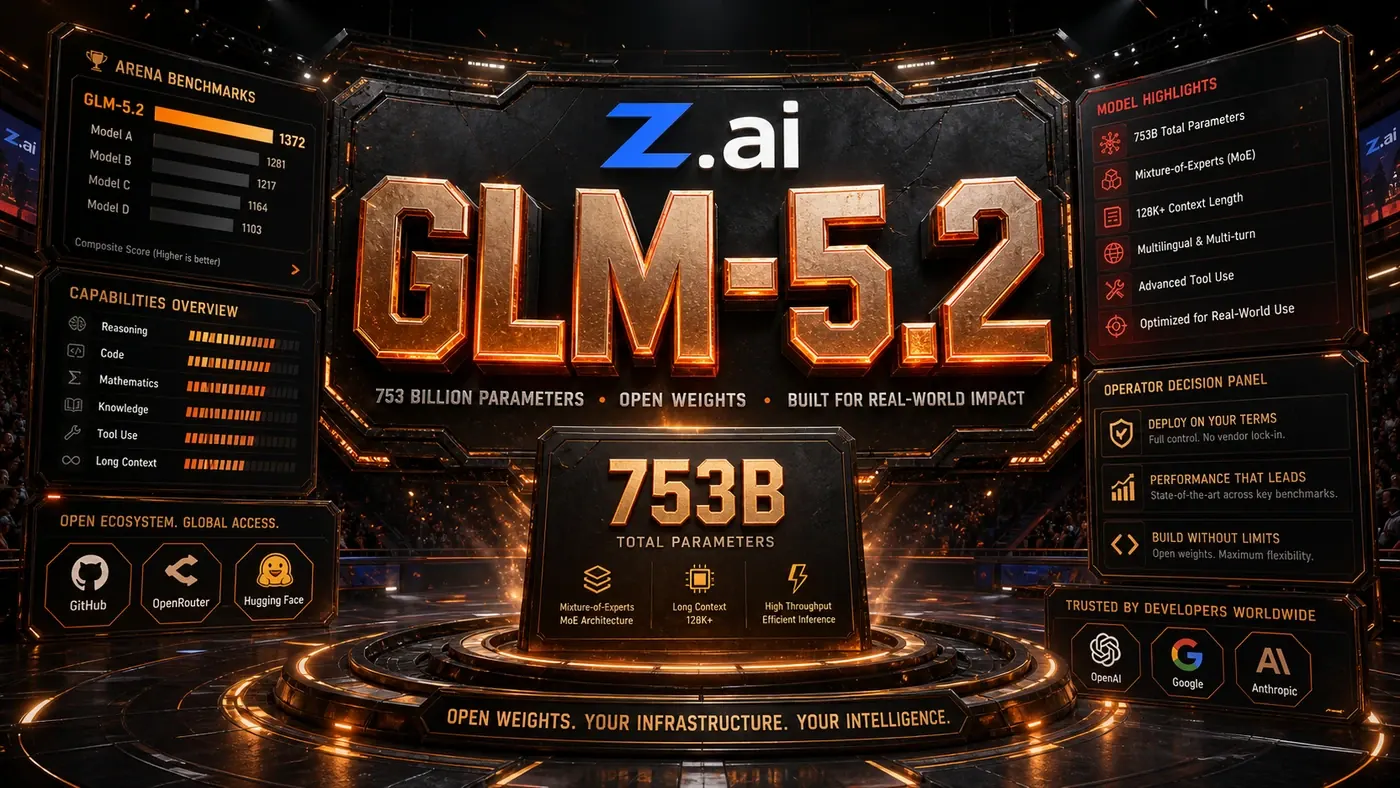
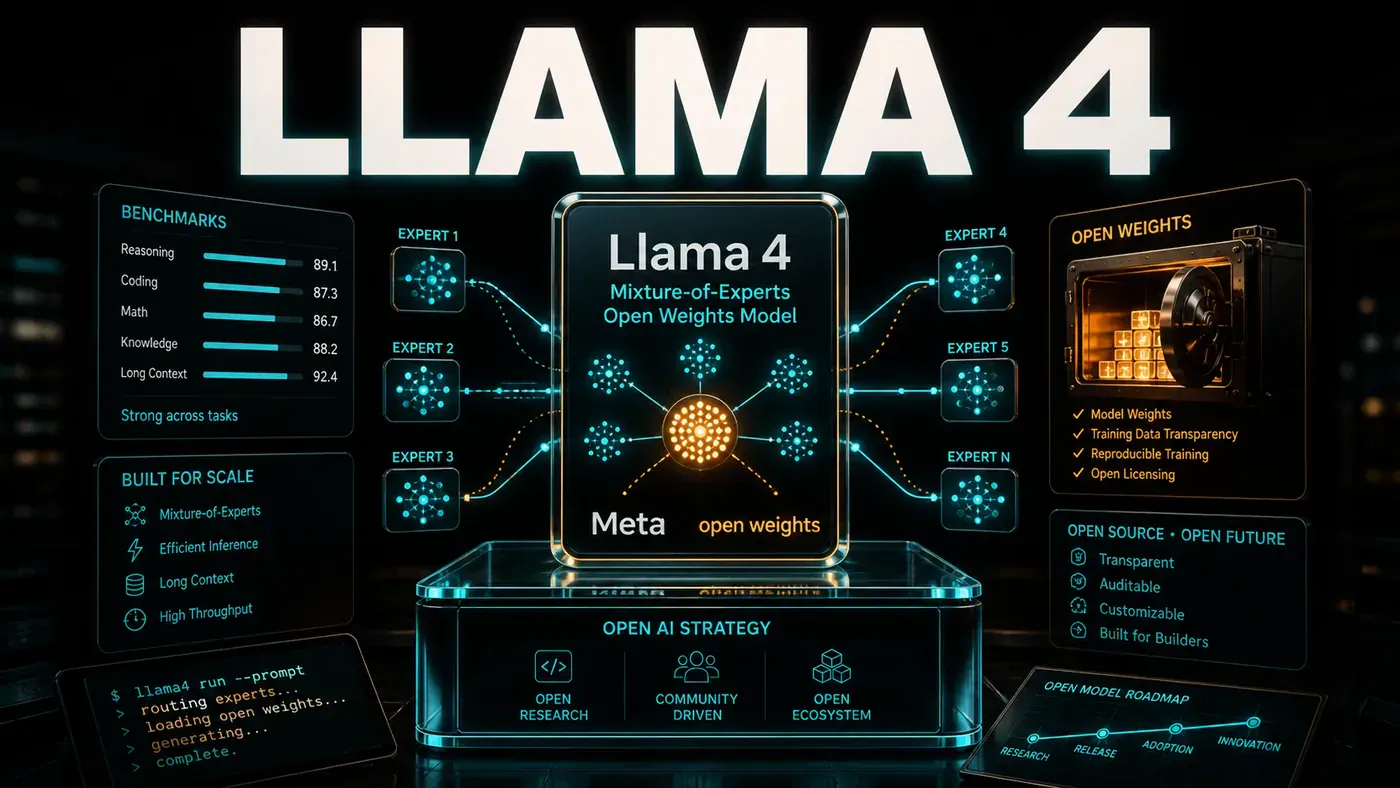
Llama 4 is Meta's first open-weights model to use a Mixture-of-Experts design (opens in a new tab), a real shift, since Llama 2 and 3 were dense models. The figures being quoted put it at 400 billion total parameters with roughly 45 billion active per token. Worth flagging: those specific numbers don't line up with any confirmed Llama 4 variant (the real 400B model, Maverick, runs about 17B active, and Scout is 109B total), so treat the 45B-active figure as unverified. The general idea holds, though: MoE lets a model punch above the inference cost of a dense model of the same active size, while staying easier to deploy than something like the full 753B-parameter GLM-5.2 (opens in a new tab) from Z.ai.
On training data, the article cites roughly 18 trillion tokens, said to be larger than any earlier Llama model. Meta's own blog actually puts Llama 4 north of 30 trillion tokens, so the 18T figure looks off. The mix reportedly spans web pages, code, books, and a fair amount of multimodal content including images and video transcripts. Meta hasn't published the full breakdown, and a claim that roughly 12% of training tokens are non-textual is unconfirmed, no Meta source states that figure.
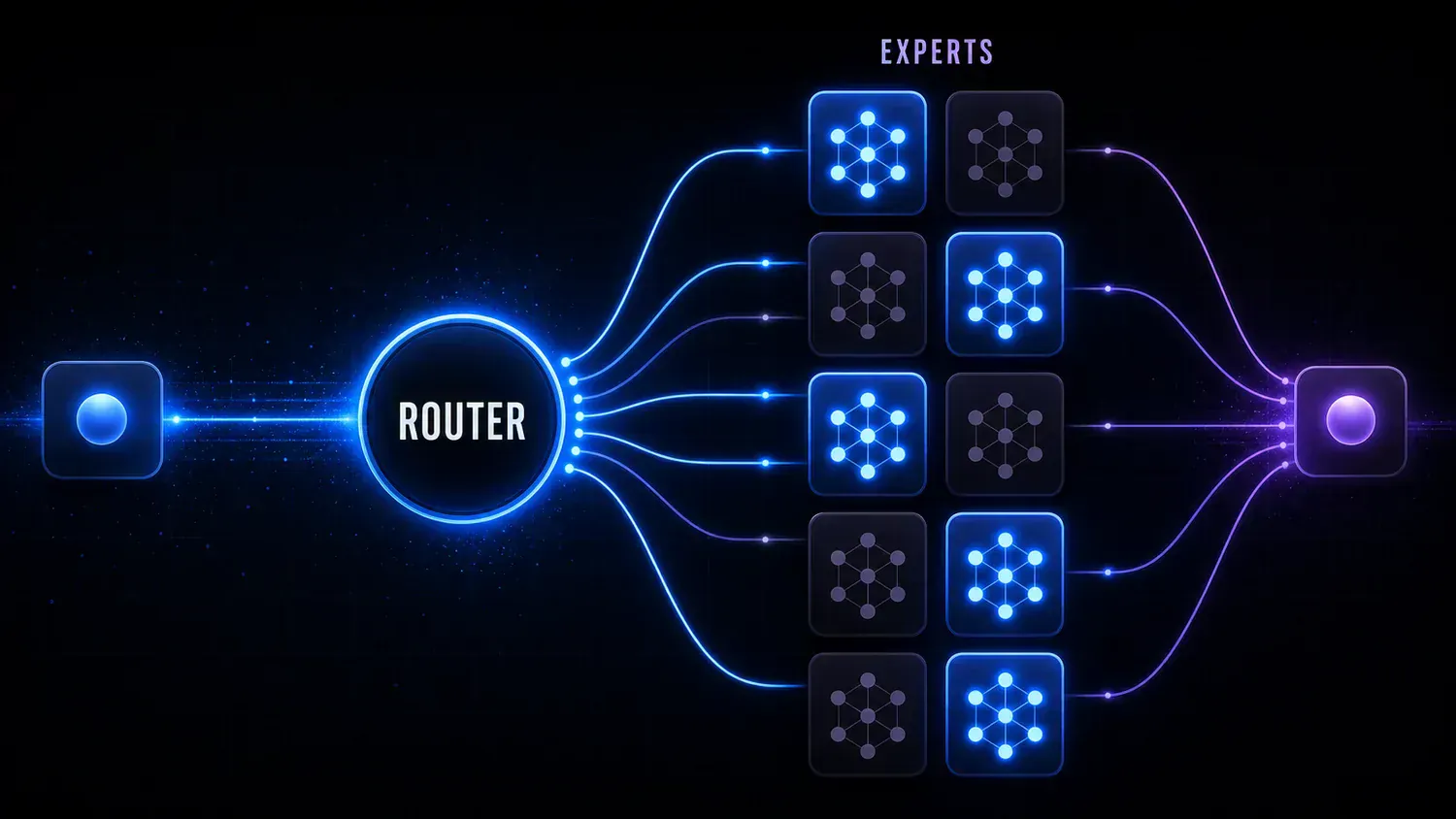
The MoE setup uses a learned router that sends each token to the most relevant slice of expert modules. There's a reported routing load balance of 97%, meaning no single expert gets swamped while others idle, but that specific number isn't something Meta has published, so take it as unverified. Whatever the exact figure, balanced routing is the hard part of building one of these models, and it's what keeps inference efficient.
Benchmark Performance
The scores doing the rounds put Llama 4 in mid-tier proprietary territory. MMLU-Pro: 78.5%. HumanEval: 83.7%. MATH: 66.1%. SWE-bench: 55.3%. Be aware these are unconfirmed, Meta's announcement uses comparative language rather than publishing these exact numbers, so the figures appear to be third-party or invented rather than official.
On those numbers, Llama 4 would reportedly sit above DeepSeek V3.5 on most tests, below a Kimi K2.7-Code variant on coding, and behind Claude Opus 4.8 (opens in a new tab) across the board. That comparison is shaky: "DeepSeek V3.5" doesn't appear to exist (DeepSeek's current line is V4), and "Kimi K2.7-Code" is an unconfirmed variant name, though Kimi K2.7 and Claude Opus 4.8 are both real.
The 128,000-token context window cited here is another point to question. Real Llama 4 ships with far more headroom, Scout reportedly offers up to 10 million tokens (opens in a new tab), so the 128K figure understates what the model actually does. The claim that it trails the 1M-token offerings from MiniMax, DeepSeek, and Google doesn't hold up against that.
The Open-Weights Licence
The licence is where the real debate sits. It allows commercial use, modification, and distribution, but it carries restrictions that have annoyed parts of the open-source community. The headline clause: any company that hits 700 million monthly active users has to request a licence from Meta (opens in a new tab), granted at Meta's discretion. (The article frames this as automatic "termination"; the real licence frames it as a request requirement, but the 700M threshold is correct.)
The article also claims companies over 100 million monthly active users must request a licence. That one looks invented, the real Llama 4 Community License only has the 700M MAU threshold, with no 100M clause (opens in a new tab). Either way, the point critics raise stands: a licence with usage gates like this is "source available" with commercial strings, not open source in the classic sense.
Meta's defence is that the gates stop the biggest tech firms from free-riding on its training spend. A quote attributed to Joelle Pineau, described as Meta's VP of AI Research, makes the case at the launch event: "We're investing billions of dollars in training these models. The licence ensures that the largest beneficiaries of open AI are also contributing to its development." Treat this as unverified, the quote couldn't be confirmed, and Pineau in fact left Meta on 30 May 2025 (opens in a new tab), before the article's claimed 2026 launch, so she couldn't have delivered it then.
Strategic Rationale
The logic behind Meta's open bet is plain enough. Meta doesn't sell AI API access as a core business (opens in a new tab) the way OpenAI or Google do. Its money comes from advertising. So AI pays off for Meta by cutting internal costs, sharpening its products, and pulling developers into its orbit. Open-sourcing Llama gives it a talent pipeline, a stack of compatible tools, and a community with a stake in the ecosystem.
The wager is that open AI ends up like open-source software before it, Linux, Android, the web, where openness builds network effects that produce dominant platforms. If Llama becomes the default foundation developers reach for, Meta steers the technology's direction without metering every API call.
Llama 4: answer-first summary
Llama 4 matters because it can change how Founders and operators plan, build, or govern an tool evaluation workflow. Llama 4 is Meta's first open-weights Mixture-of-Experts model.
The direct answer is this: do not treat the topic as a standalone trend. Treat it as a decision about inputs, outputs, review ownership, data exposure, and whether the workflow produces a result that is faster, safer, or more useful than the current process.
Llama 4: implementation checklist
- Define the user, job to be done, and success metric for the tool evaluation workflow.
- Collect real examples, policies, source files, customer questions, or search queries before writing prompts or choosing tools.
- Separate low-risk drafts from decisions that need approval, privacy checks, or senior review.
- Document what the AI is allowed to access, what it must not access, and who signs off before production use.
- Review time to value, adoption rate, cost per workflow, quality review score after a small pilot rather than judging the idea from a demo.
This keeps the work practical. It also gives search engines and AI answer engines a clean factual structure: what the topic is, who it helps, what to do next, and which risks matter before implementation.
Decision criteria for Llama 4
| Decision area | What to check | Production signal |
|---|---|---|
| Intent | Does Llama 4 solve a real workflow problem? | The use case has a named owner and measurable outcome. |
| Data | Can the required data be used safely? | Sensitive data is classified and access is controlled. |
| Quality | Can a reviewer judge the output consistently? | Examples, rubrics, or acceptance criteria exist. |
| Scale | Can the workflow be repeated without hero effort? | The process is documented and can be handed to another team member. |
Practical example for Llama 4
A small business could use this article to choose one practical test. For example, a manager might take one customer-facing process, one internal document workflow, or one recurring content task and redesign only that step with AI support. The goal is not to automate the whole business at once; it is to learn where AI News creates reliable leverage.
The useful deliverable is a short operating note: the trigger, the source material, the prompt or tool, the review checklist, the escalation rule, and the metric. That note becomes the handover asset for staff training, SEO/GEO content, service delivery, or future agent work.
Risks and controls for Llama 4
The common failure pattern is moving too quickly from a promising idea into an unmanaged workflow. For Llama 4, the risk is not only bad output. It can also be unclear data permission, staff confusion, duplicate content, unreviewed customer advice, or a tool that quietly changes cost or capability.
- Control tool sprawl with a named owner, a review step, and written acceptance criteria.
- Control unclear pricing with a named owner, a review step, and written acceptance criteria.
- Control vendor lock-in with a named owner, a review step, and written acceptance criteria.
- Control unreviewed data sharing with a named owner, a review step, and written acceptance criteria.
Measurement plan for Llama 4
A useful AI or SEO initiative should leave evidence. Track time to value, adoption rate, cost per workflow, quality review score and compare the pilot against the current process. If the measure does not improve, keep the learning but avoid scaling the workflow.
For GEO readiness, the page should also answer the core question directly, define the entities involved, include implementation steps, explain tradeoffs, and link readers to the next relevant AI Kick Start service, guide, tool, or article.
Definitions and entities for Llama 4
For search, GEO, and staff handover, define the core entities in plain language. In this article the important entities are the workflow owner, the AI tool or model, the source material, the review process, the risk boundary, and the measurable business outcome. Clear definitions make the page easier for people to scan and easier for AI answer engines to quote accurately.
- Workflow owner: the person accountable for deciding whether Llama 4 belongs in the business process.
- Source material: the documents, examples, policies, URLs, prompts, videos, or customer questions that ground the output.
- Review boundary: the point where a human checks accuracy, privacy, brand voice, or customer impact before the result is used.
- Success metric: the measure that proves whether the tool evaluation workflow is worth repeating.
Llama 4 versus doing nothing
Doing nothing is also a decision. The cost may be slow manual work, weaker search visibility, inconsistent advice, duplicated effort, or staff using unmanaged AI tools without a shared process. The practical question is whether a controlled pilot can reduce that cost without creating a larger governance problem.
| Option | When it makes sense | What to watch |
|---|---|---|
| Do nothing | The workflow is rare, low value, or already reliable. | Competitors may improve speed, content depth, or service consistency first. |
| Run a small pilot | The task repeats often and has clear review criteria. | Keep scope tight and measure the result against the current process. |
| Build a production workflow | The pilot is repeatable and risk controls are documented. | Assign ownership, monitoring, training, and a rollback path. |
AI Kick Start handover package for Llama 4
A production handover should be concrete enough that another person can run it. For Llama 4, that means a short brief, a workflow map, approved prompts or tool settings, source material, a review checklist, internal links to supporting resources, and a simple measurement sheet. This is the difference between reading about AI and turning it into operational capability.
That packaging also strengthens E-E-A-T. It shows experience through implementation notes, expertise through decision criteria, authoritativeness through source-aware structure, and trust through risks, controls, and review steps. The article becomes useful even if the reader never buys a tool because it helps them make a better operational decision.