



Introduction: The Sleeper Model Awakens
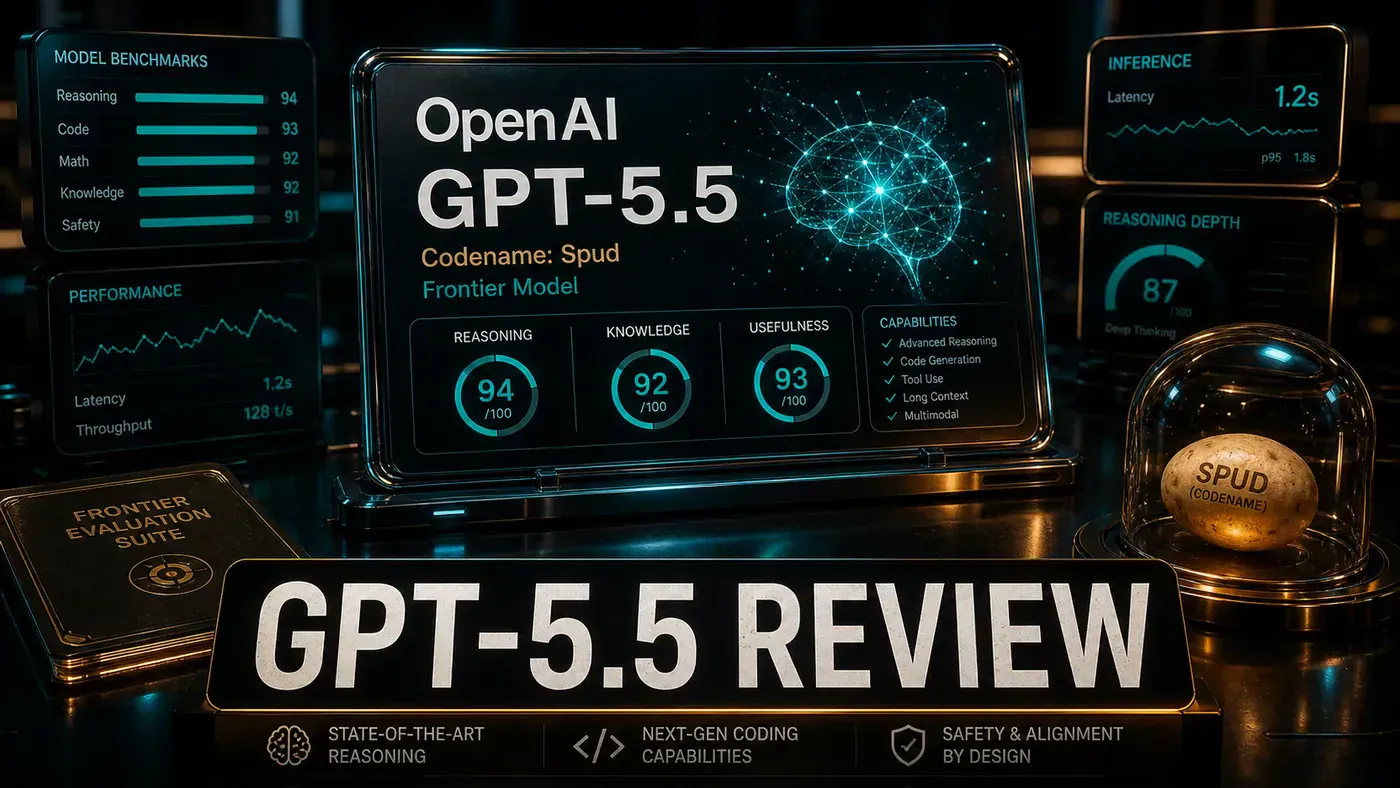
For months, the AI community has been waiting with bated breath. After the launch of GPT-5.5 and its Pro variant, many assumed OpenAI would take its time before unleashing the next iteration. But in the fast-moving world of large language models, assumptions have a short shelf life. Over the past week, whispers circulated across X that something was different. Users selecting "GPT-5.5 Pro" inside ChatGPT were reportedly receiving outputs that seemed... unexpectedly good. The kind of leap that does not happen without a new model running quietly behind the scenes.
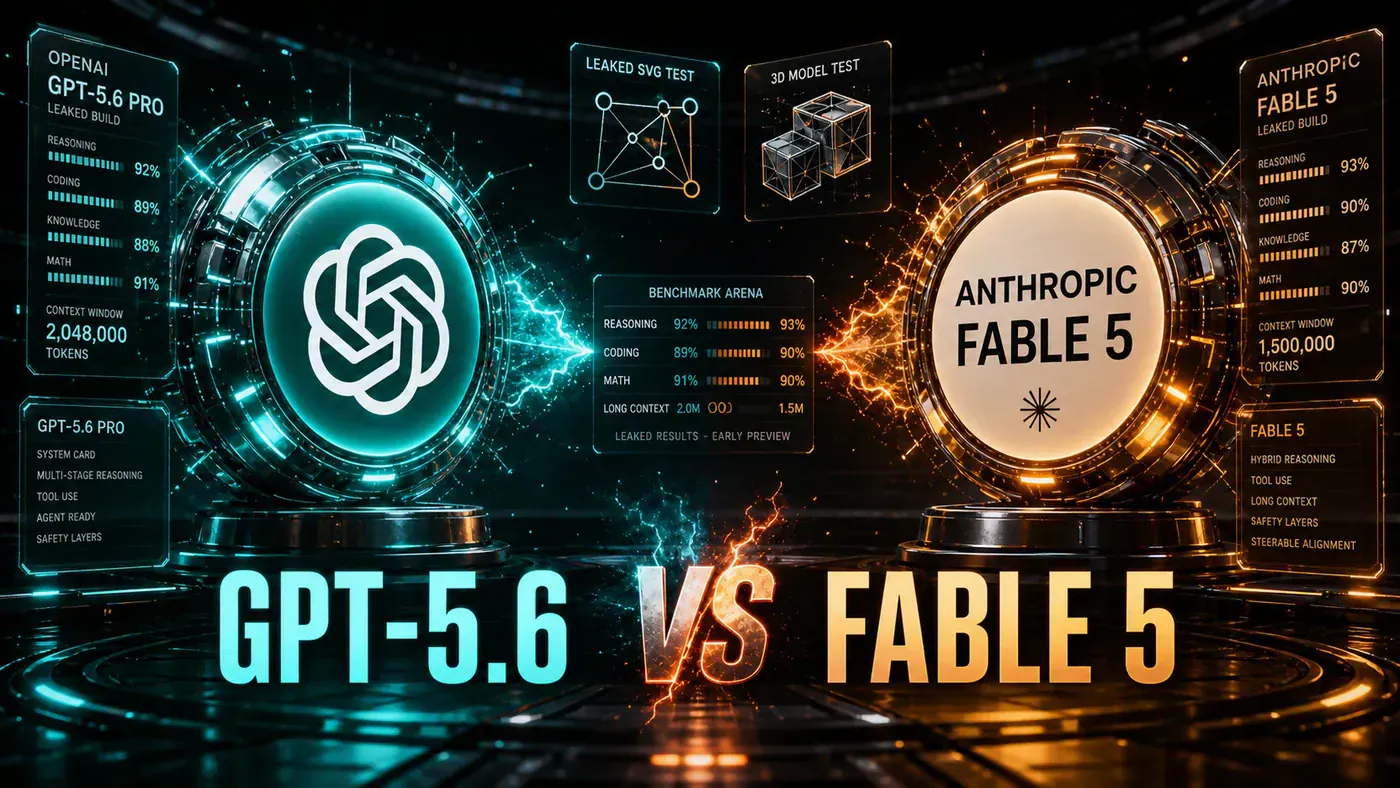
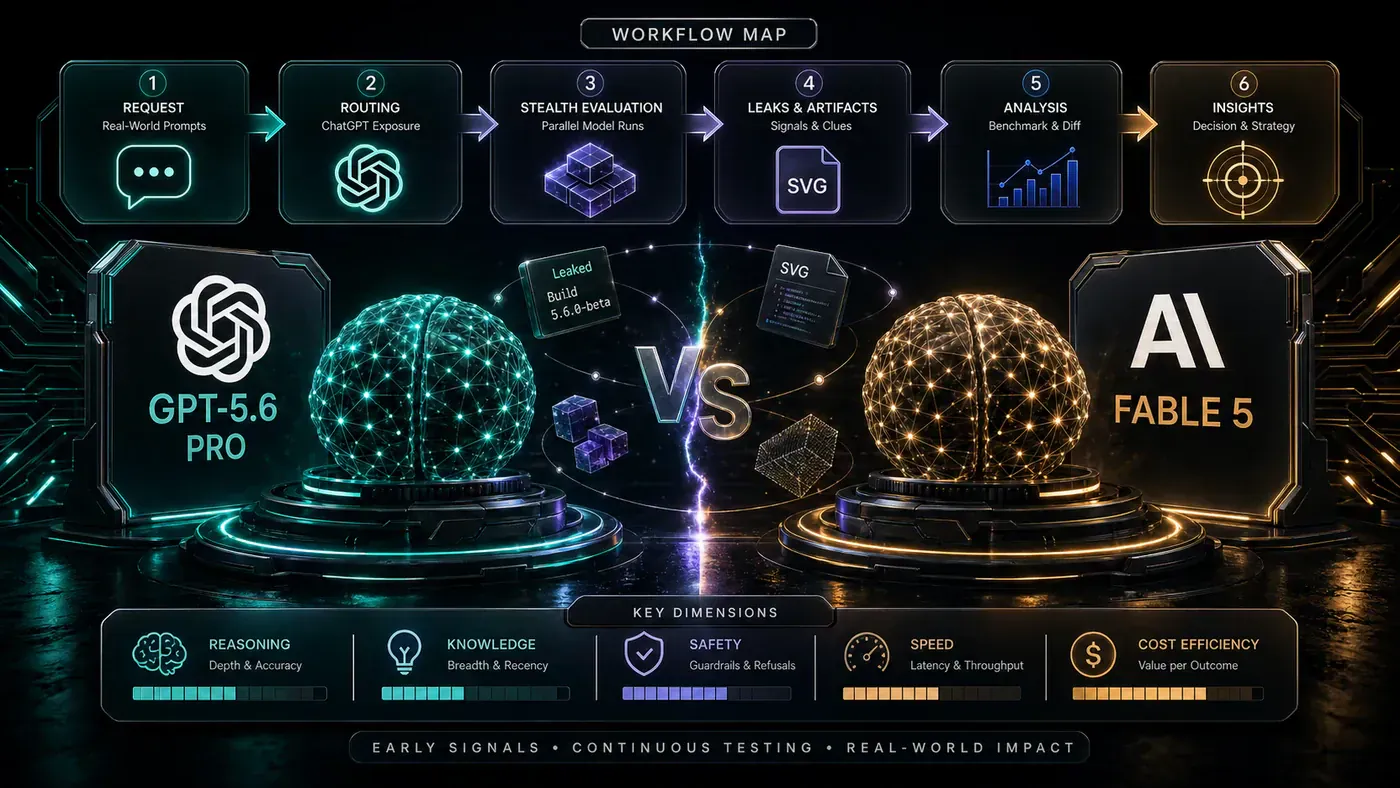
That model, according to multiple independent leak sources, is GPT-5.6 Pro - and it could be launching as early as next Thursday.
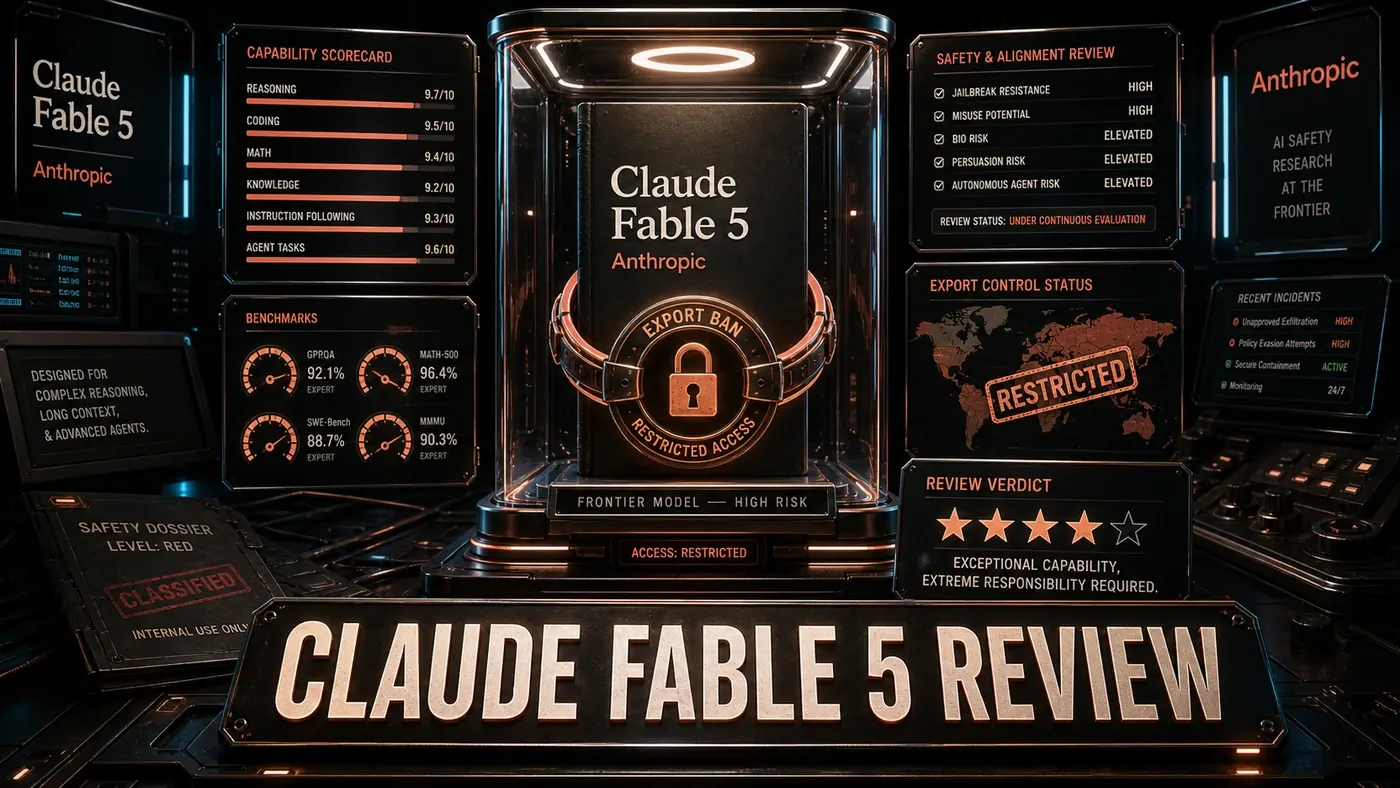
The timing is fascinating. Just days ago, Anthropic's Claude Fable 5 was pulled from public access, sending shockwaves through the developer community. A high-stakes meeting between OpenAI, Anthropic, and President Trump appeared to yield productive results, with rumours now suggesting Fable 5 may return alongside GPT-5.6's debut. If true, developers could soon have two powerhouse models vying for their attention.
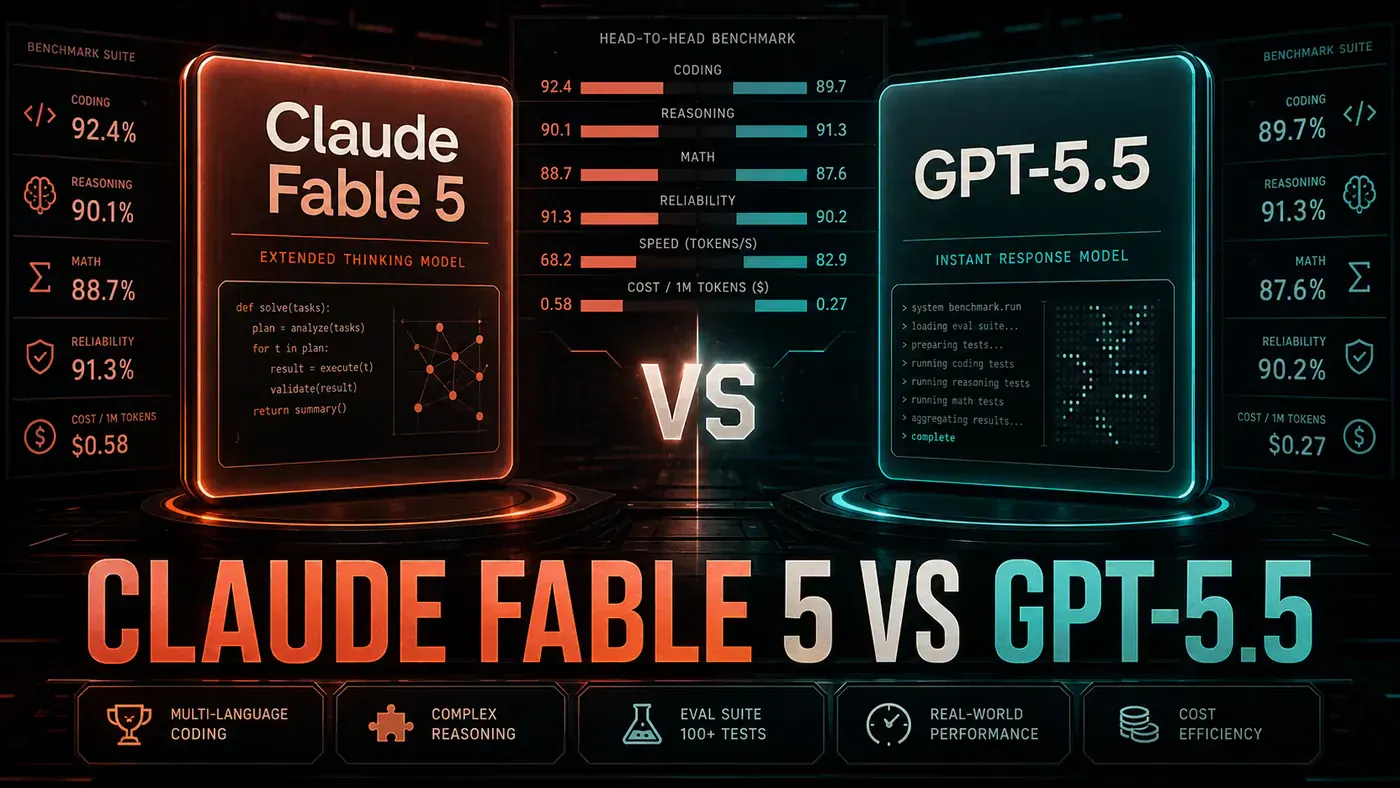
But the question on everyone's mind is simple: can GPT-5.6 Pro actually compete with Fable 5? Early leak comparisons suggest the answer is far more nuanced than a simple yes or no.
The GPT-5.6 Pro Leaks: What We Know So Far
The evidence for GPT-5.6 Pro's existence comes from multiple independent sources on X, including @chetaslua (opens in a new tab), @mirochill (opens in a new tab), @HarshithLucky3 (opens in a new tab), and @CallofdutyFan32 (opens in a new tab). These users have shared screenshots and output comparisons that paint a compelling picture of a model undergoing stealth testing inside ChatGPT.
The mechanism appears to be a classic A/B test. Users selecting GPT-5.5 Pro have occasionally been routed to what is believed to be the GPT-5.6 Pro backend, producing outputs markedly superior to GPT-5.5's documented capabilities. OpenAI has a history of quietly rolling out model updates to subsets of users before wider announcements, but the scale and consistency of these reports suggest something more significant than a minor patch.
What makes these leaks credible is the breadth of test cases - comparisons across SVG generation, 3D modelling, JavaScript visualisations, game simulations, and front-end web development. The outputs share a common thread: dramatically improved reasoning, richer creative detail, and coherence noticeably above GPT-5.5's ceiling.
The potential release timeline - "as early as next Thursday" - positions this as one of the most consequential model drops of 2026. But as any seasoned AI observer knows, release dates in this industry are written in pencil, not ink.
The Political Backdrop: When AI Becomes a Matter of State
What makes this launch cycle uniquely intriguing is the geopolitical dimension. The video transcript references a meeting between OpenAI, Anthropic, and President Trump - a gathering that signals just how deeply artificial intelligence has embedded itself into national strategic conversations.
The Fable 5 situation underscores this tension. Anthropic's decision to restrict access to its most capable coding model - presumably over safety concerns, competitive positioning, or regulatory pressure - left a gaping hole in the developer tooling ecosystem. For a community dependent on Fable 5's exceptional front-end and reasoning capabilities, its sudden unavailability was more than an inconvenience; it was a disruption to workflows, products, and businesses.
The fact that a presidential meeting may have contributed to Fable 5's potential return speaks volumes about the soft power now wielded by frontier AI labs. These are no longer mere technology companies operating in a vacuum - they are strategic national assets, their products subject to the same diplomatic negotiation as trade agreements. For developers, the implication is clear: the availability of the world's best models may increasingly depend on forces beyond engineering timelines.
If both GPT-5.6 Pro and Fable 5 become available simultaneously, the beneficiary is unambiguously the end user. Competition drives innovation, pricing pressure, and feature parity. A monopoly on frontier coding models serves nobody except the monopolist.
Head-to-Head: SVG Generation
Scalar Vector Graphics (SVG) generation has become an unexpected battleground for testing model capabilities. What seems like a simple task - producing code that renders an image - actually demands spatial reasoning, mathematical precision, and aesthetic intuition. The leaked comparisons across multiple SVG test cases reveal a model that has closed significant ground on Fable 5.
The BMW Test: Detail at Scale
One of the most striking leaked comparisons involves an SVG of a BMW. GPT-5.6's output is, by all accounts, extraordinary - far beyond what GPT-5.5 could reliably produce, with intricate body contours, wheel geometry, and proportional accuracy that would have been unthinkable just months ago. When SVG tests first entered the benchmarking conversation, models struggled to generate recognisable game controllers. To leap from those primitive outputs to a photorealistic vehicle representation is a testament to how rapidly frontier capabilities are advancing.
Fable 5's response is characteristically strong. In its "Low" tier, it produces a competent car that errs on the side of simplicity. Crank it up to "Extreme High" mode, however, and the output becomes genuinely impressive - detailed, nuanced, and arguably still ahead of GPT-5.6's single-mode generation. The catch is that Fable 5's tiered system gives it a structural advantage. We do not yet know whether GPT-5.6 Pro will ship with equivalent quality modes. If it does not, Fable 5's Extreme High setting retains a legitimate edge.
Some commentators have claimed GPT-5.6 "mogs everyone" on SVG generation. That may be premature, but the trajectory is unmistakable.
The Snowy City: Creative Ambition vs Coherence
A more challenging test case - a pixel-art style SVG of a snowy city beneath northern lights - exposes different strengths and weaknesses. GPT-5.6's output is undeniably creative, with atmospheric colour gradients, aurora effects, and architectural variety that demonstrate genuine artistic ambition. Where it falls slightly short is coherence. The buildings lack the structural consistency that Fable 5 delivers; the composition feels more like an impressionist painting than a carefully planned cityscape.
Fable 5's generation, by contrast, prioritises legibility and order. Its buildings are coherent, properly proportioned, and spatially logical. The trade-off is a modest reduction in creative flair. This tension - between creative ambition and structural coherence - is likely to define the competitive dynamic between these models. GPT-5.6 seems to be optimising for the wow factor; Fable 5 for reliability.
For developers building production interfaces, coherence generally wins. For creative prototyping and exploration, GPT-5.6's bolder approach may be more inspiring.
The Windows 11 SVG: When More Becomes Too Much
A Windows 11 SVG test reveals a telling flaw in GPT-5.6's approach. While the generation is technically impressive and arguably superior to earlier Mythos-era Fable 5 leaks, it suffers from element bloat - unnecessary pop-ups, excessive text, and visual clutter that detract from the core task. Fable 5's output, while sparser, is cleaner and more focused.
This is a microcosm of a larger pattern. GPT-5.6 appears to be compensating for uncertainty by over-generating, throwing in additional elements rather than exercising restraint. It is a common failure mode for powerful models: the capability to generate more does not always equate to the wisdom to generate less. Whether this can be addressed through prompt engineering, system instructions, or post-training refinement will determine how useful the model proves in real-world design workflows.
3D and Interactive Code Generation: The New Frontier
Where GPT-5.6 Pro arguably makes its most compelling case is in 3D and interactive visualisation - domains that demand not just coding proficiency but spatial reasoning, physics intuition, and an understanding of how objects behave in simulated environments.
The KUKA Robot: A One-Shot Triumph
The leaked KUKA robot simulation is genuinely remarkable. GPT-5.6 produced a functional, interactive 3D model with toggleable settings - reportedly in a single generation attempt. The visual quality is described as "amazing," with accurate mechanical proportions and interactive controls that suggest a deep understanding of industrial robotics.
Fable 5's equivalent is not poor by any standard, but the side-by-side comparison tips in GPT-5.6's favour. This represents a significant strategic win for OpenAI. Three-dimensional modelling and simulation are high-value use cases extending far beyond coding into engineering, education, and product design. If GPT-5.6 can reliably produce interactive 3D artefacts from natural language prompts, it opens new application categories that Fable 5 has not yet dominated.
The Three.js Turret: Shadows and Subtlety
A three.js turret generation further reinforces this narrative. GPT-5.6's output includes shadows, coherent geometry, and environmental elements that demonstrate an understanding of lighting and depth. These are not superficial details - they are indicators of improved reasoning. A model that understands why shadows belong in a scene is reasoning at a higher level than one that merely assembles code blocks.
Fable 5's version is described as "pretty similar" but slightly less polished. The gap is narrow, but it exists. In a competitive landscape where developers choose models based on marginal advantages, narrow gaps have outsized impact.
Where GPT-5.6 Pro Still Falls Short
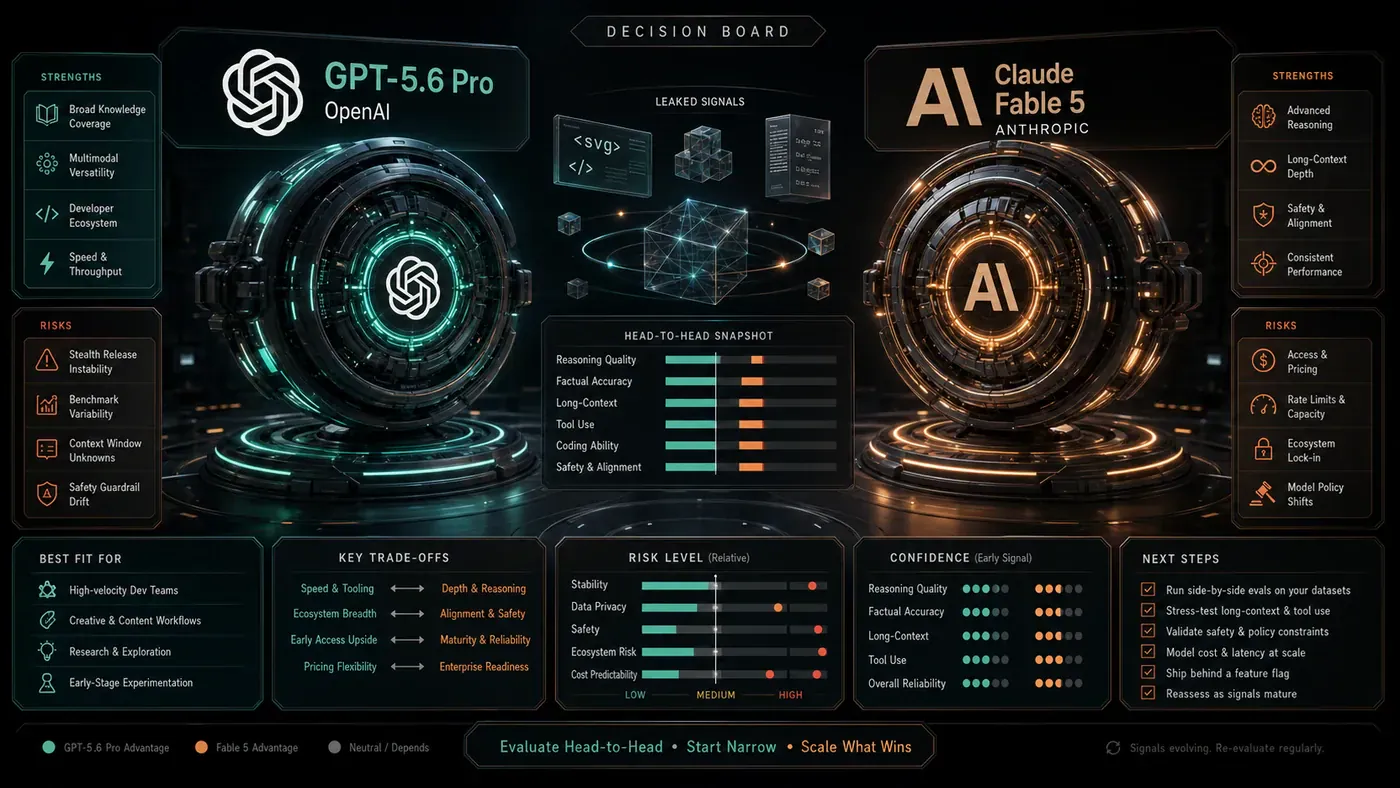
Honest assessment requires acknowledging limitations, and GPT-5.6 Pro has them. No model is universally superior, and the leaks reveal specific domains where OpenAI's challenger remains a step behind.
Front-End Web Development: The Persistent Gap
Front-end web development - the bread and butter of countless developer workflows - remains an area of relative weakness. Multiple testers noted that GPT-5.6 shows only a "minor improvement" over GPT-5.5 in this domain, and it does not consistently match Fable 5's output quality when building websites, user interfaces, and interactive web applications.
This is not entirely surprising. OpenAI has historically prioritised reasoning and general intelligence over specialised coding proficiency. Sam Altman's infamous tweet about IQ being "mocked" set the tone: OpenAI models are designed to be smart first, domain-experts second. That philosophy yields exceptional results on reasoning benchmarks but leaves gaps in practical tasks like CSS layout and responsive design.
The strategic rationale, however, is sound. GPT-5.6 is expected to power Codex, OpenAI's autonomous coding agent. For Codex workflows - long-horizon engineering tasks requiring planning, debugging, and architectural reasoning - raw IQ matters more than front-end polish. OpenAI appears to be building a model optimised for the future of autonomous development rather than the present of assisted coding.
Generation Time: The Efficiency Question
One concerning data point is the reported generation time of 20–40 minutes for complex outputs. If accurate and representative, this would be a significant regression in user experience. Modern developer workflows are built on rapid iteration; waiting half an hour for a single generation undermines that cadence.
The important caveat is that this may be an artefact of stealth testing infrastructure rather than the production model. Backend routing, capacity constraints, and debugging overhead during A/B tests can all inflate latency. Until GPT-5.6 Pro launches officially and users can test it under normal conditions, treating this figure as preliminary is prudent. Still, it is a data point worth monitoring closely.
Strategic Analysis: What OpenAI Is Really Building
Stepping back from individual test cases, a clearer strategic picture emerges. OpenAI is not trying to build a model that beats Fable 5 on every benchmark. It is building a model that excels where OpenAI's ecosystem is heading - autonomous coding agents, complex reasoning workflows, and multimodal creative tasks.
The emphasis on SVG and 3D generation is telling. These are capabilities that feed directly into visual programming tools, game engines, design systems, and educational platforms. They are capabilities that differentiate GPT-5.6 from being "just another coding model" and position it as a general-purpose creative reasoning engine.
The deprioritisation of front-end web development, while frustrating for web developers, aligns with this vision. Building yet another model that generates competent React components would be incremental. Building a model that can reason about three-dimensional space, simulate physics, and generate interactive visualisations from natural language is transformational.
Whether this bet pays off depends on execution. If Codex integration is seamless and autonomous coding workflows deliver on their promise, the front-end gap becomes irrelevant. If not, developers may continue to split their attention - GPT-5.6 for reasoning and planning, Fable 5 for implementation and UI work.
What This Means for Developers
For the practising developer, the emergence of GPT-5.6 Pro is unequivocally positive news. Even if it does not dethrone Fable 5 across every dimension, it raises the competitive bar and expands the toolkit available for AI-assisted development.
The practical recommendation is to evaluate both models against your specific use case. If your work centres on front-end web development, Fable 5 likely retains an edge. If you are building 3D visualisations, interactive simulations, or complex reasoning workflows, GPT-5.6 Pro deserves serious attention. If both models become widely available simultaneously, the optimal strategy may be a hybrid approach - routing different task types to the model best suited for them.
The wildcard remains timing. If GPT-5.6 Pro launches next Thursday as suggested, the competitive landscape shifts immediately. If the launch is delayed - a distinct possibility at this scale - Fable 5's return may temporarily restore the status quo. Either way, 2026 is shaping up to be the most competitive year yet in the frontier model race.
Conclusion: A Genuine Contender Enters the Ring
GPT-5.6 Pro is not a Fable 5 killer. The leaks make that clear. But it is something equally significant: a genuine competitor that narrows the gap in critical areas while carving out distinct advantages. The SVG generation is dramatically improved. The 3D and interactive coding capabilities are genuinely impressive. The reasoning enhancements position it well for the autonomous coding future OpenAI is betting on.
Its weaknesses - front-end web development, occasional element bloat, and potential latency - are real but not fatal. They are limitations that can be addressed through iterative improvement and prompt refinement.
The broader significance lies in what this launch represents. OpenAI has heard the criticism of GPT-5.5's coding limitations and responded with a model that meaningfully advances the state of the art. Anthropic, meanwhile, has demonstrated that even the best models can be temporarily withdrawn, creating openings for competitors. The result is a market more dynamic, competitive, and favourable to developers than at any point in the past two years.
For those tracking these leaks, the advice is simple: keep watching. If you are a ChatGPT Plus or Pro subscriber, try selecting GPT-5.5 Pro in the coming days. You might just find yourself served by something newer, smarter, and more capable than the label suggests. And in an industry where the only constant is change, that is the best kind of surprise.
Helpful Resources
Leak Sources & Community Reports:
- @chetaslua on X (opens in a new tab) - Early GPT-5.6 Pro leak source and comparison screenshots
- @mirochill on X (opens in a new tab) - SVG and 3D generation leak source
- @HarshithLucky3 on X (opens in a new tab) - Front-end and reasoning comparison leaks
- @CallofdutyFan32 on X (opens in a new tab) - Game simulation and interactive code leak source
Official Platforms:
- ChatGPT (opens in a new tab) - Access GPT-5.5 Pro (potential GPT-5.6 Pro stealth testing)
- OpenAI Codex (opens in a new tab) - Autonomous coding agent expected to integrate GPT-5.6 Pro
- Anthropic Claude (opens in a new tab) - Access Claude models including Fable 5 (when available)
Video Source:
- "OpenAI's GPT-5.6 Pro Is Coming. Can It Beat Fable 5?" by Universe of AI