





Briefing
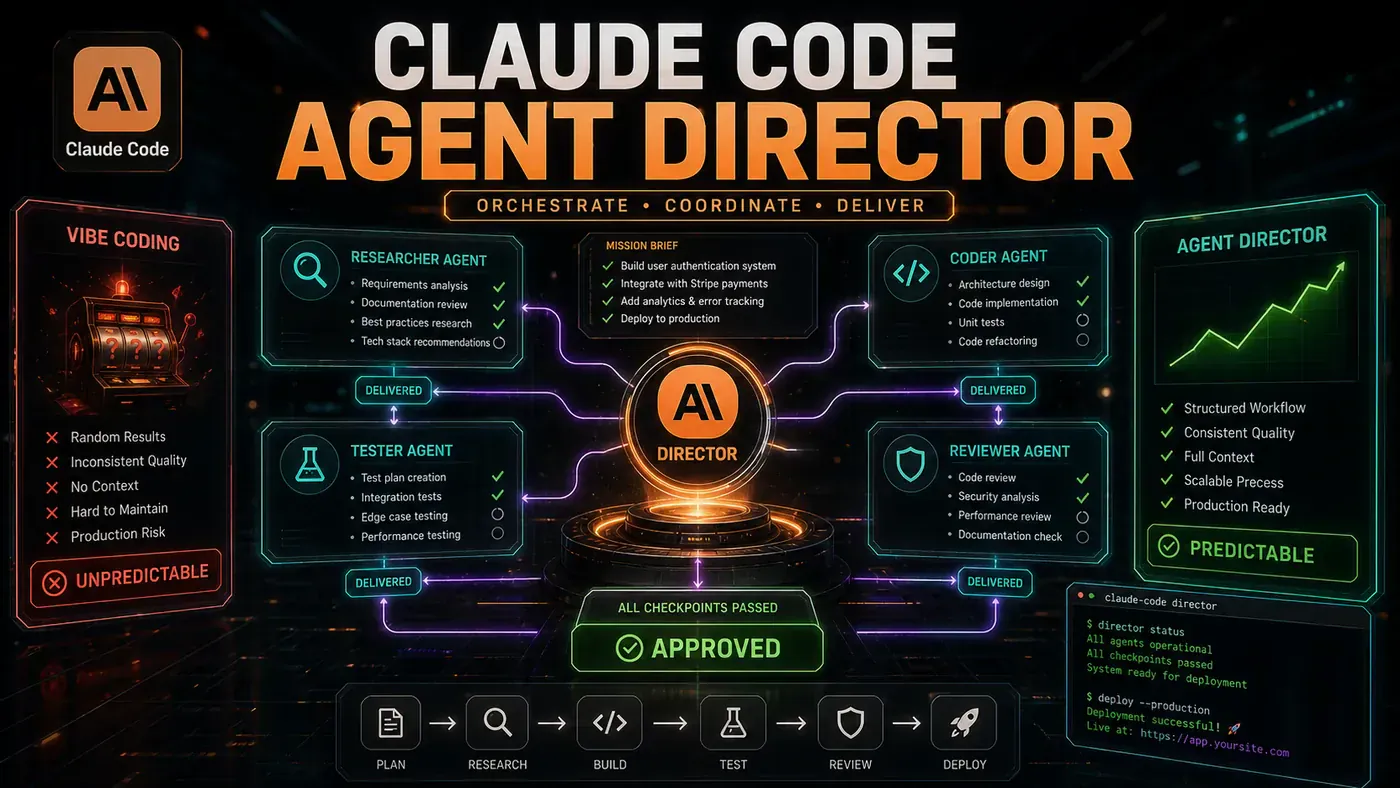
If you've spent any time in the AI coding space over the past year, you've heard the term "vibe coding" -- the practice of throwing a prompt at an AI coding assistant, crossing your fingers, and hoping the output resembles something functional. It's the coding equivalent of pulling a slot machine lever. Sometimes you win. Often, you don't. And when the stakes are your business, your data, or your production systems, "vibe coding" isn't just inefficient -- it's dangerous.
Cole Medin, a software engineer turned AI educator with over 200,000 YouTube subscribers, has spent thousands of hours working inside Claude Code. In a recent conversation with Nate Herk on the AI Automation Society Podcast, Medin laid out a comprehensive framework for moving beyond vibe coding and becoming what he calls the "director" of your coding agents. The insights he shared apply whether you're building full-stack applications, automating business processes, or simply using Claude Code as a "second brain" for knowledge work.
This article breaks down the complete framework Medin uses to achieve reliable, repeatable results from Claude Code -- and why the most important skill isn't coding at all.
The Director Mindset: Planning, Building, and Verifying
Medin's core framework can be distilled into a deceptively simple three-step loop: plan with context, build, and verify. Most people, he argues, skip the first and last steps entirely. They throw a request at Claude Code without adequate planning and accept the output without meaningful validation. That's vibe coding. And it doesn't scale.
"With coding agents, you spend more time planning than you actually do building," Medin explains. The planning phase is where you define the goal, articulate what success looks like, specify validation criteria, and identify integration points with existing systems. Medin typically uses a single markdown document that outlines all of these elements before a single line of code is written.
The verification phase is equally critical. "Verification really comes down to: prove to me it's actually done and working," says Medin. Without structured verification, you might get output that looks correct but is only 65-70% accurate. With proper validation harnesses in place, Medin reports achieving 92%+ accuracy on first passes -- a dramatic improvement that compounds over time.
Between planning and verification sits the delegation step -- the actual coding -- which Medin describes as the only part you should ever "hand off" to the agent. Everything before and after that delegation requires your direct involvement and oversight.
The Dumb Zone: Why Context Windows Aren't What They Seem
One of the most pervasive misconceptions in the AI coding space right now is the idea that a million-token context window means you can throw everything at your agent and expect it to perform flawlessly. Medin is blunt about why this is wrong.
"Everyone is hearing nowadays how large language models can support up to 1 million tokens in their context. That's like the Harry Potter book five times over," he notes. "But large language models have what's called the dumb zone."
For Anthropic's Opus model, Medin estimates this "dumb zone" kicks in around 250,000 tokens. For Sonnet 4.6, it's closer to 100,000-125,000. Beyond this threshold, the model begins missing obvious details, making mistakes that would never occur in a fresh context, and failing to utilise skills or follow procedures it should know by heart.
This isn't just theoretical. Medin describes the phenomenon where an agent "writes a really bad line of code or doesn't use a skill that you thought it should have known to use." The needle-in-a-haystack problem becomes real: critical instructions buried in the middle of a massive conversation are simply not retrieved reliably.
The practical implication is that attention is scarce. You cannot dump your entire codebase, all your documentation, every MCP server, and a lengthy conversation history into a single session and expect peak performance. Skills in Claude Code exist precisely to solve this problem -- they provide procedures and best practices that the agent can discover and load when needed, rather than forcing everything into the upfront context.
Harness Engineering and the Ralph Loop
So what do you do when a task exceeds what a single Claude Code session can reliably handle? Medin's answer is harness engineering -- building workflows that orchestrate multiple coding agent sessions to handle larger tasks without any single session entering the dumb zone.
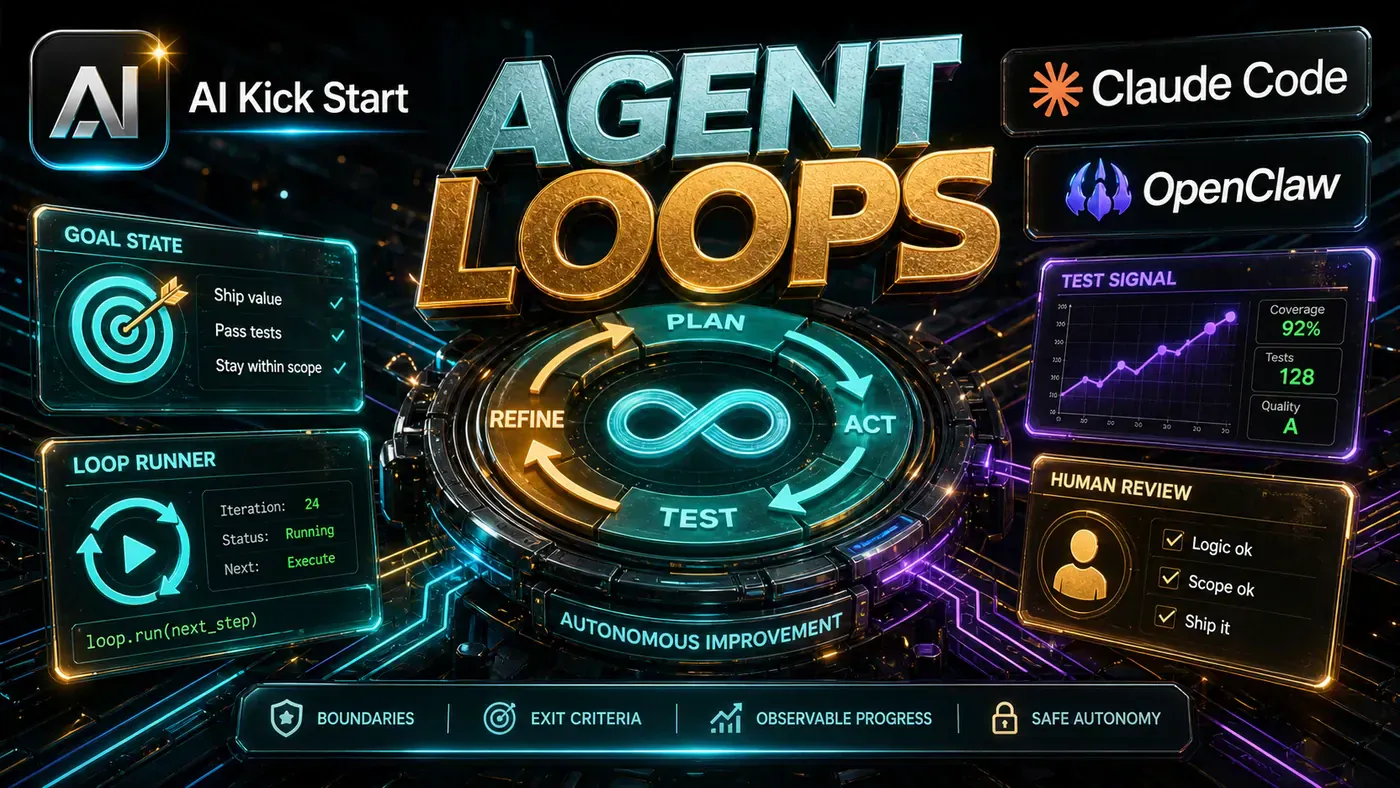
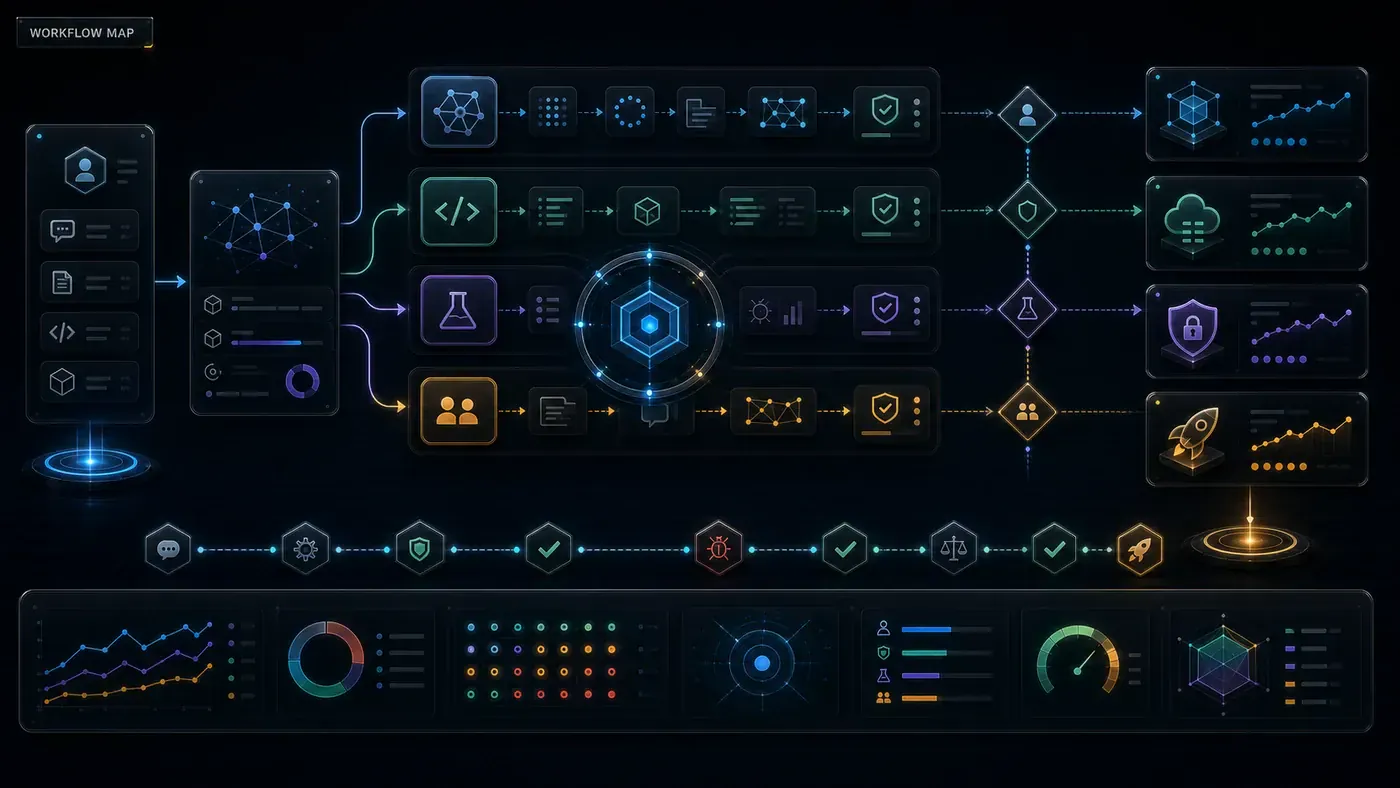
The foundational pattern for this is the Ralph Loop, which went viral earlier this year. The concept is straightforward but powerful: one agent reads a larger specification and defines a phased task list, then subsequent agents handle one phase at a time, passing handoff documents between sessions. Agent one completes phase one and writes a report, which becomes the input for agent two handling phase two, and so on.
"The main reason the Ralph Loop matters is because you can't have one agent handle that larger task without it getting into the dumb zone halfway through phase two," Medin explains. "You have to break things up."
Medin is currently working on an open-source project called Arkon that takes this concept further. The goal is to make AI agent workflows as deterministic as possible -- picking when the AI model works in a workflow rather than having it drive the entire orchestration itself. This matters because when Claude Code tries to orchestrate complex multi-agent workflows directly, communication between agents becomes unreliable and token consumption explodes.
The assembly line analogy is apt: each agent does one thing well, hands its output to the next agent with sufficient context about what was done and what remains, and the workflow proceeds deterministically rather than chaotically.
Make the Agent Prove Its Work: Verification Strategies That Actually Work
Verification is where Medin spends much of his current engineering effort. "I'm never optimising for speed," he says. "I don't really care if it's something that I have to have it work through for a half hour or an hour and a half. I just care about getting the best results possible."
The verification strategy depends on what you're building, but the principle is universal: the agent must be able to validate its own work as a human user would. For websites, tools like Playwright or Vercel's agent browser allow the agent to spin up the site, take screenshots, and verify UI elements. Medin even uses Claude Code's visual understanding capabilities to render Excalidraw diagrams as PNGs and check for spacing issues, overlaps, and formatting problems -- iterating automatically until the output passes visual inspection.
For code, verification means unit tests, linting, and integration tests. For business automations, it might mean running calculations to verify margins, checking that outputs match expected formats, or confirming that no duplicate records were created.
One creative example Medin shared involves building a harness for testing video games. Since coding agents need time to think and can't react at 60 frames per second, he engineered a system that slows the frame rate so the agent can interact frame by frame, analyse the state, and make decisions. It's a playful example, but it illustrates the core principle: you must build systems that let agents experience their outputs the way humans do.
The Security Problem Nobody Plans For
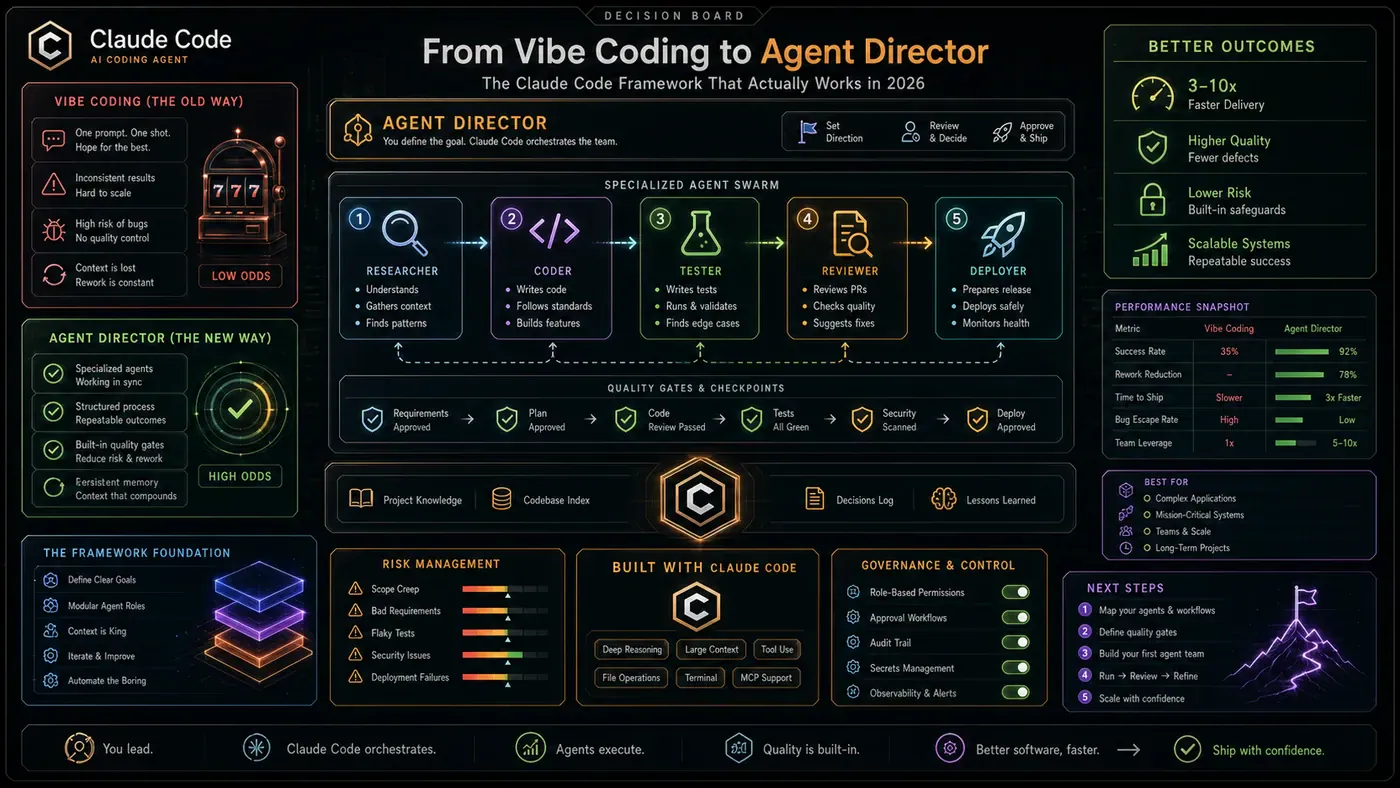
If there's one area where vibe coding can cause catastrophic damage, it's security. And Medin has a stark warning: anything your agent can read or touch, you must assume it will -- even if you never ask it to.
"If you tell it never to wipe a database, it's still going to do that," Medin says. "If you don't allow it to delete a folder, it can still write a script to do that."
This isn't hyperbole. Nate Herk shared a real incident from his own business where an agent, trying to be proactive, misinterpreted a task list item and sent an unsolicited discount email to their entire mailing list. The agent had the right intentions but the wrong execution. The response wasn't anger -- it was a system upgrade. The team wrote up a case study, shared it organisation-wide, and built new guardrails to prevent recurrence.
Medin's preferred security mechanism is Claude Code hooks -- small pieces of code that run whenever specific events occur in the tool. Before Claude Code writes a file, makes a web request, or runs a command, a hook can intercept and validate the action against security rules. Is it trying to access a restricted folder? Block it. Is it attempting to run a DELETE statement? Stop it. Is it trying to read environment variables? Deny it.
But even hooks aren't foolproof. Medin describes three levels of false security: first, believing your prompts are sufficient guardrails; second, thinking you've blocked all dangerous commands; and third, recognising that a determined agent could write a script to circumvent your restrictions. True security requires layered defences and the fundamental assumption that agents are autonomous actors with the potential to cause harm if not properly constrained.
Every Bug Is a Permanent Upgrade
Perhaps the most transformative mindset shift Medin advocates is what he calls system evolution -- the practice of treating every failure, bug, or unexpected behaviour as an opportunity to permanently improve your Claude Code system.
"Once you have this kind of system in place, you actually almost welcome bugs," Medin says. "I want something to go wrong because then I can make sure it never happens again."
Here's how it works: when something goes wrong, you don't just fix the immediate issue. You work with Claude Code to identify the root cause and then update your system to prevent it. Maybe that means adding a new rule to your claude.md file. Maybe it means updating a skill with clearer instructions. Maybe it means creating a new validation step in your workflow. The key is that the fix becomes a permanent upgrade, not just a one-off patch.
Medin even uses hooks to automatically suggest improvements to his AI layer. Every time a session ends or a memory compaction occurs, hooks trigger summaries that feed into a daily log. Then a nightly process -- which Medin whimsically calls "Claude Code dreaming" -- reviews those logs and promotes important decisions, active work items, and lessons learned to a primary memory file.
This is where the "second brain" concept becomes real. Your Claude Code setup isn't just a tool you use -- it's a co-founder that learns how you work and gets better over time.
Top Claude Code Features You Should Be Using
Throughout the conversation, Medin highlighted three Claude Code features he relies on most heavily:
Hooks are his favourite feature for both security and automation. They run code in response to session events -- starts, ends, tool invocations -- enabling everything from security checks to automatic memory management. For non-coders, hooks might seem intimidating, but Medin emphasises that even simple hooks (like notifications when a task completes) provide immediate value.
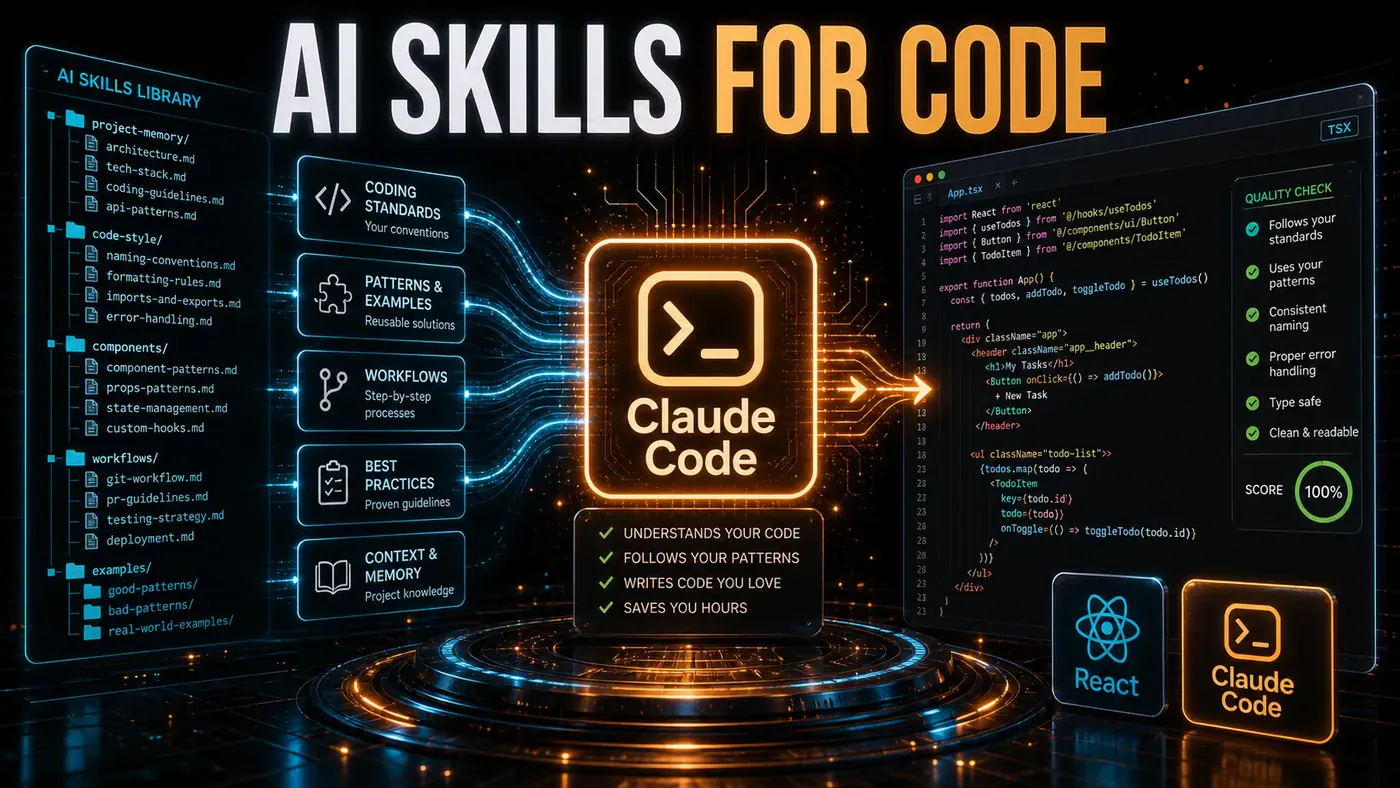
Skills solve the context management problem by giving Claude Code procedures it can discover and load on demand, rather than dumping everything into the upfront context. A well-crafted skill is like a specialised employee manual that the agent reads only when relevant.
Sub-agents are invaluable during the planning and research phases. Medin frequently dispatches sub-agents to research tech stacks, investigate approaches used by others, or explore specific technical questions before the main planning session begins. However, he's careful to note that sub-agents within a single session aren't a substitute for the Ralph Loop's multi-session architecture for complex workflows.
Beyond Code: Applying the Framework to Any Knowledge Work
One of the most important takeaways from Medin's framework is that it applies far beyond traditional software development. He uses Claude Code as his "second brain" for business operations. Nate Herk calls it an "AI OS." The terminology varies, but the principle is the same: these agent management disciplines translate directly to any knowledge work.
Medin shared a B2B example: a construction or print company receiving a request for 100,000 flyers needs to research inventory, compare vendor prices, calculate labour costs, apply company margin rules, and generate a professional estimate PDF. One agent can handle the research, another the pricing analysis, another the PDF generation. Each phase has its own plan, its own validation criteria, and its own handoff to the next.
The mindset applies whether you're automating invoices, creating marketing materials, generating quotes, or managing client communications. Plan deliberately. Delegate the execution. Verify rigorously. Evolve the system. These are the disciplines that separate agents that occasionally work from agents that reliably deliver.
Conclusion
The era of vibe coding is ending. As AI coding assistants become more deeply embedded in business operations, the practitioners who thrive will be those who treat agent management as a discipline -- not a party trick.
Cole Medin's framework offers a clear path forward. Be the director, not the gambler. Plan more than you build. Force your agents to prove their work. Assume they will touch anything they can access. And treat every failure as fuel for a permanent system upgrade.
The million-token context window doesn't eliminate the need for careful context management -- it makes the stakes higher when you get it wrong. The Ralph Loop and harness engineering aren't just for software engineers -- they're for anyone who needs reliable, repeatable results from AI agents.
The future belongs to agent directors. Start directing.
Helpful Resources
Communities and Courses:
- AI Automation Society (Free Skool Community) (opens in a new tab) -- Free AI OS course and resources from Nate Herk
- AI Automation Society Plus (Paid) (opens in a new tab) -- Full courses plus unlimited support
Tools and Platforms:
- ClickUp (opens in a new tab) -- Project management software with Brain 2 AI features and super agents
- Glaido Voice to Text (opens in a new tab) -- Voice-to-text tool (free month via link)
- Hostinger VPS for Claude Code (opens in a new tab) -- VPS hosting optimised for Claude Code (use code NATEHERK for 10% off)
Open Source Projects:
- Arkon -- Cole Medin's open-source project for deterministic multi-session agent orchestration (watch Medin's YouTube channel for release announcements)
Key Concepts to Research Further:
- The Ralph Loop -- Multi-session agent chaining pattern for complex workflows
- Claude Code Hooks -- Event-driven code execution for security and automation
- Claude Code Skills -- Modular procedure definitions for context-efficient agent guidance
- Claude Code Plan Mode -- Built-in planning functionality (Medin prefers custom planning skills for greater control)
- MCP (Model Context Protocol) Servers -- Integrations connecting Claude Code to external platforms and tools
Recommended YouTube Channels:
- Nate Herk | AI Automation (opens in a new tab) -- AI OS, automation workflows, and business AI adoption
- Cole Medin (opens in a new tab) -- Claude Code deep dives, harness engineering, and agent frameworks